

Learning how to grill NY strip steak is easier than you might think, and it’s one of the best steaks to throw over live fire. This guide breaks it down step by step, with:
Grilling times, a temperature chart, and answers to the questions I get asked most in the comments. I’ll also show you my multi-flip technique, which delivers edge to edge doneness that the flip-it-once crowd can’t touch.
What Is a New York Strip Steak?
The NY strip comes from the short loin, a muscle that doesn’t do much work on the animal. That makes it naturally tender with big beef flavor and a satisfying chew.
You’ll also see it sold as a Kansas City strip, top loin, or hotel cut, but it’s all the same steak. If you’re curious about the naming debate, including the little-known Boston strip steak, I settle it in my Kansas City vs New York vs Boston strip steak breakdown.
What makes the strip special for grilling is uniformity. It’s a single muscle with consistent thickness from end to end, which means it cooks evenly in a way a ribeye or skirt steak never will. That uniformity is exactly why the method below works so well.
What You’ll Need
- NY strip steaks, 1¼ to 1½ inches thick, USDA Prime or Certified Angus Beef if you can get it
- Kosher salt
- Herb compound butter (recipe below, don’t skip it)
- A reliable instant-read thermometer
- Long tongs, because we’re working over serious heat
How to Grill NY Strip Steak
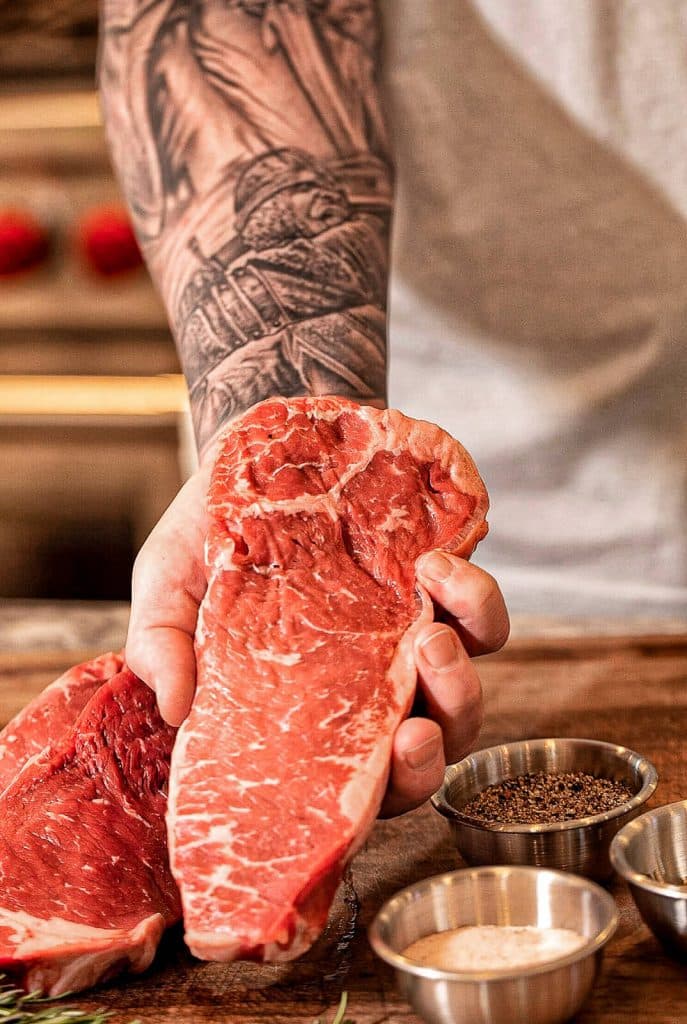
Step 1: Choose the right steak. Pick a thicker cut strip with good marbling. Steaks around 1¼ inches thick grill the most evenly with this method.
Step 2: Pat it dry and season with salt. Dry the surface with a paper towel and season generously with kosher salt. Hold the black pepper until after grilling, since it scorches over high heat and turns slightly bitter. If you happen to love that charred pepper edge, I cover both camps in the FAQ below.
Step 3: Grill over direct heat, flipping often. Preheat your grill for direct high heat, then place the steak right over the flame and flip it every 30 seconds. Move it to a fresh spot on the grate with every flip. This builds a deep crust without overcooking the outside, and it cooks the steak evenly from edge to edge.
Step 4: Monitor internal temperature. Use a reliable instant-read thermometer and pull the steak early. For medium rare, pull at 120°F and let carryover cooking finish the job while it rests. The full temperature chart is below.
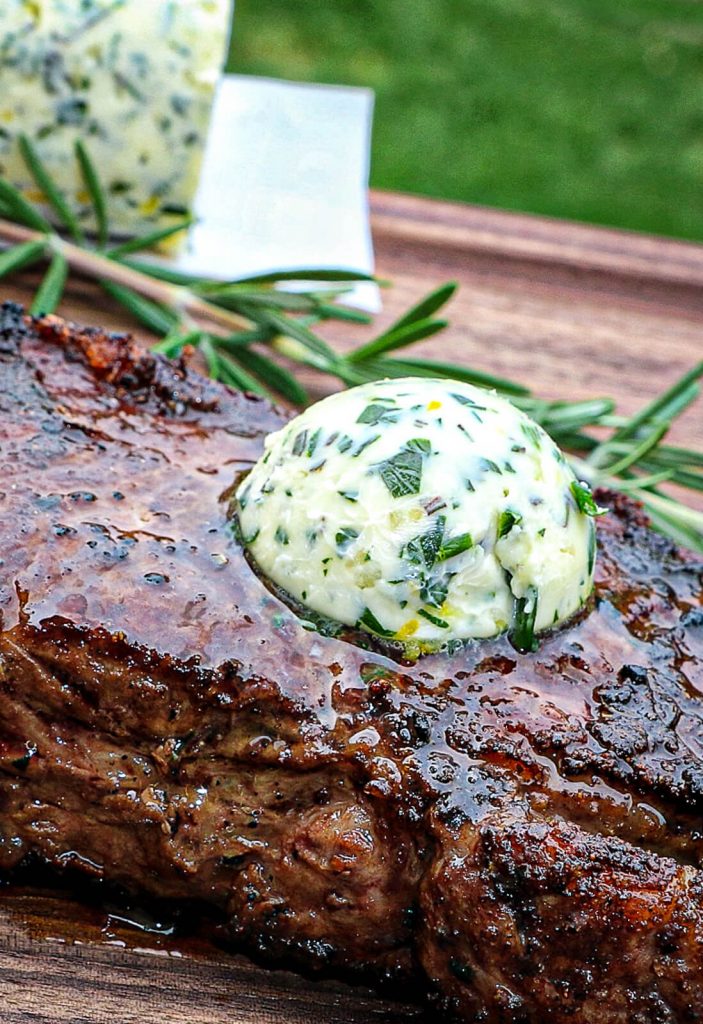
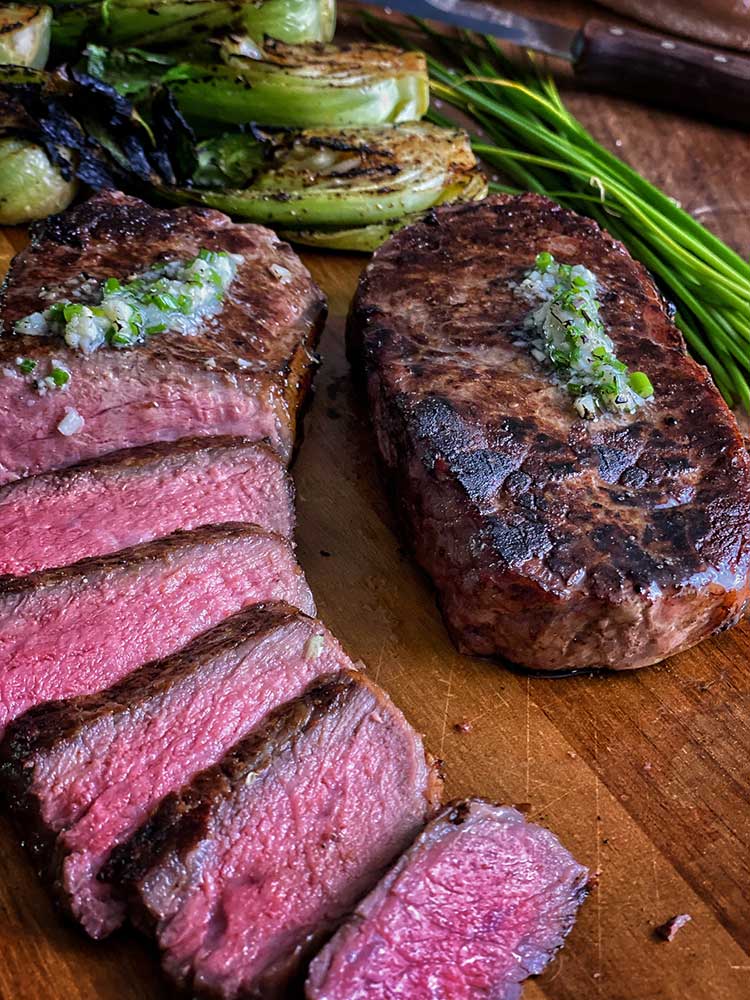
Step 5: Rest on compound butter. Set the steak on top of a spoonful of herb compound butter and rest it for 5 to 10 minutes, indoors and uncovered. Skip the foil tent, since trapped steam softens the crust you just built. The butter melts up into the meat while the juices redistribute.
Step 6: Slice and serve. Slice against the grain, hit it with fresh cracked pepper, and serve while it’s warm and juicy.
How Long to Grill New York Strip Steak
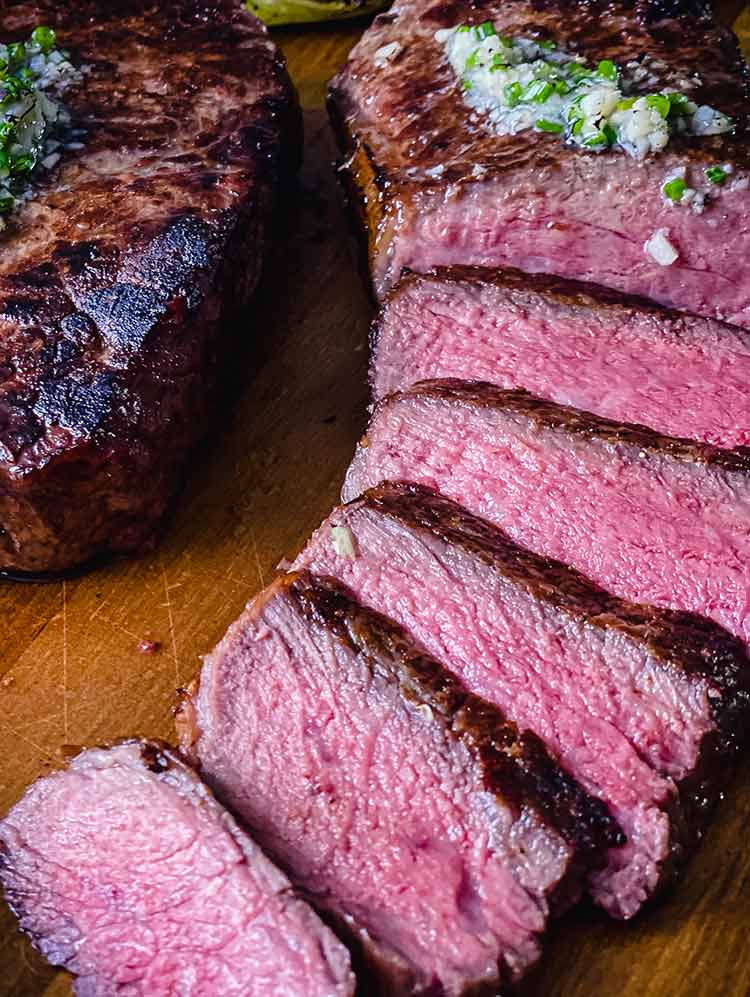
A 1¼ inch strip steak takes about 8 to 10 minutes total over direct high heat with the multi-flip method. That’s roughly 16 to 20 flips at 30 second intervals, which sounds like work but goes fast once you’re standing there with tongs in hand.
Thicker steaks take longer and every grill runs a little different, so time is only a guideline. Cook to temperature, not the clock. That’s the whole reason the thermometer is the one tool I talk about more than any other.
NY Strip Steak Temperature Chart
Here’s the part most steak guides get wrong. Your steak keeps cooking after it comes off the grill, rising another 8 to 10 degrees while it rests.
So you pull it early and let carryover do the rest. Charts that tell you to pull at your final target temp are handing you an overcooked steak.
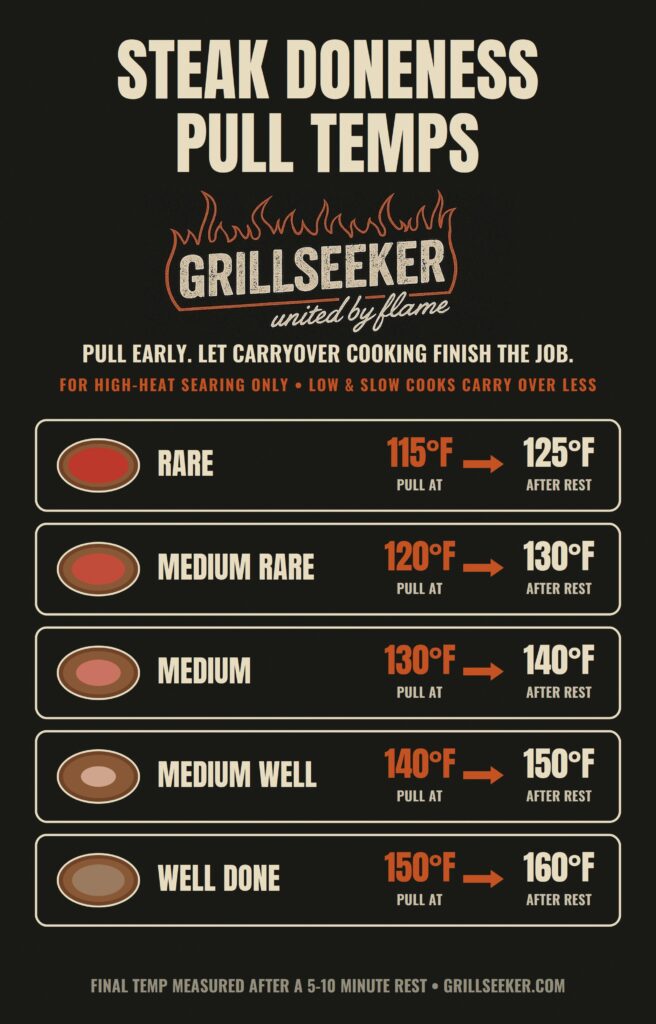
One important note: these pull temps are built for high-heat direct grilling like the method in this post. A ripping hot fire pumps a ton of energy into the steak, and that stored energy is what drives the temperature climb during the rest. Cook the same steak low and slow and it might only carry over 2 to 5 degrees, so pull temps for smoked recipes are a different conversation.
If you want the full breakdown of what affects it, I cover all four factors in my carryover cooking post. I recommend medium rare or medium for a strip steak. Past medium, the meat starts drying out and getting tough.
The Multi-Flip Technique: Why I Don’t Flip Just Once
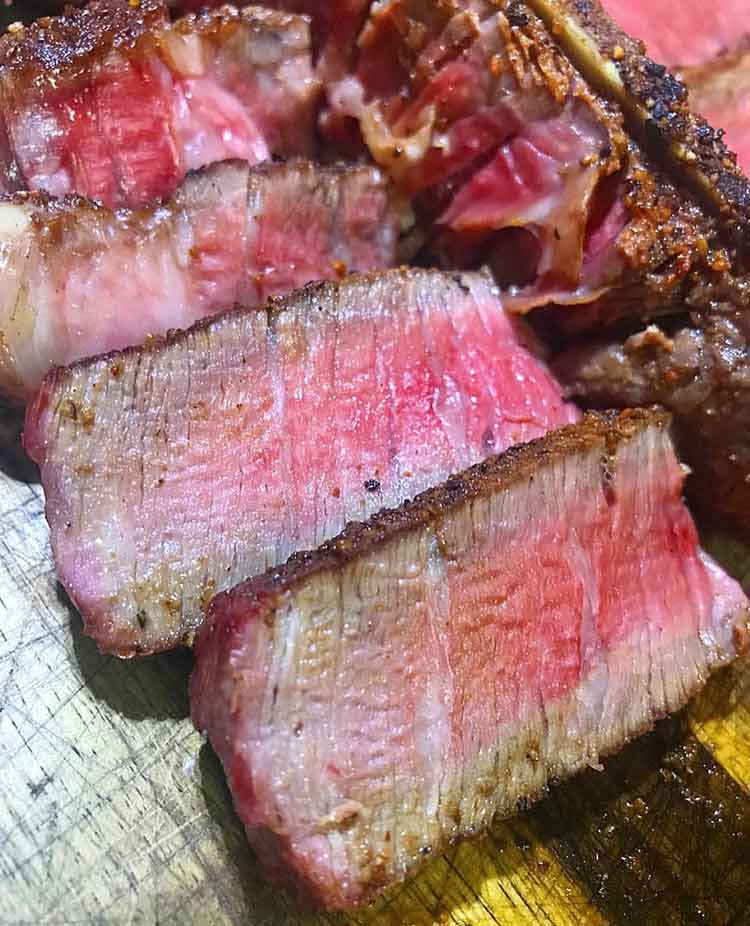
There’s an old myth that you should only flip a steak one time. That’s not great advice. In fact it’s horrible advice, and it often results in a steak that’s overcooked on the outside and raw in the center; like this:
The multi-flip technique is as simple as it sounds. Flip the steak every 30 seconds or so, landing it on a different spot on the grate each time. Neither side ever sits over the fire long enough to overcook, but the crust keeps building with every pass.
There’s some simple science behind why this works, because your steak is actually cooking a few ways at once out there. Where the meat touches the grate, hot metal browns it through direct contact, which is called conduction heating.
Everywhere between the bars, radiant heat coming off the fire is browning the surface, with an assist from convection as hot air rises past the steak.
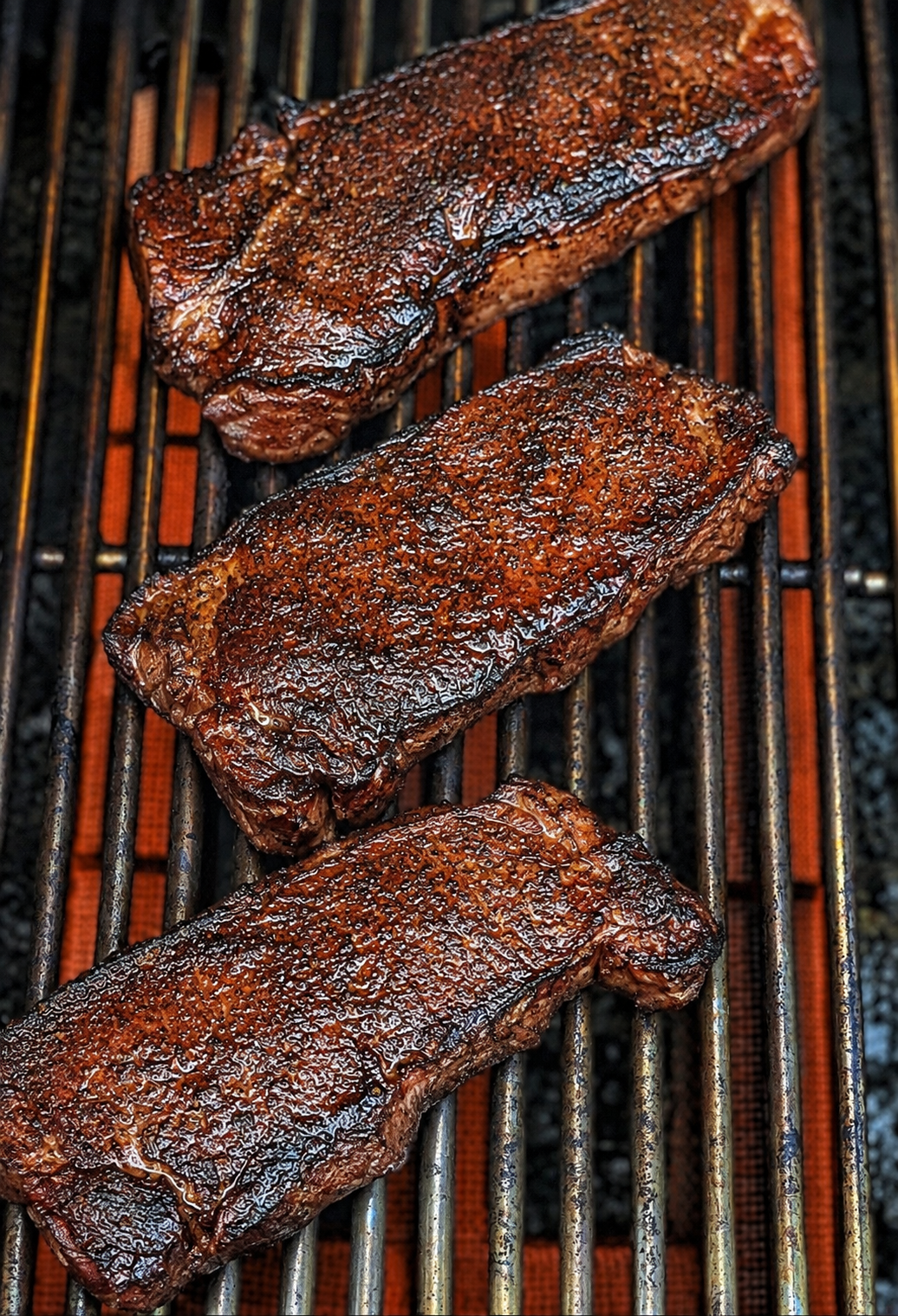
Because the steak lands on a fresh, hot section of grate every 30 seconds, those conduction sear marks overlap and stack across the whole surface. Meanwhile, radiant heat is browning everything in between. You end up with an all-over crust instead of stripes, and that crust is where the flavor lives.
This is also why I don’t use the reverse sear method here, even though I’m a big fan of it. A typical strip steak isn’t cut thick enough to take advantage of that technique.
Multi-flip is the move for any steak under 1½ inches, and it’s great if you’re basting with a sauce like this bourbon molasses steak.
What Temperature Should the Grill Be? (Gas or Charcoal)
Here’s the principle behind this whole method: the hotter the grate, the less time the steak spends over the fire. Less time over the fire means an incredible char without overcooking the inside.
So the answer to “how hot” is simple. As hot as your grill will go.
Now for some honesty you won’t find in most steak guides. You’ll see recipes calling for 900 or even 1000 degree grates, and while I’d love a surface that hot, 95% of gas grills simply can’t get there.
Don’t feel like you’re doing it wrong because your grill tops out lower. Max out what you have and cook to temperature, not the clock.
Charcoal: This is where you get closest to that ideal. Light a full chimney, bank the coals tight under your cooking zone, and let the grate get screaming hot before the steak goes on.
Gas: All burners on high, lid closed for 10 to 15 minutes to preheat, which gets most gas grills to 500-600°F at the grate. Then lid open for the whole cook, since you’re flipping every 30 seconds anyway. It’ll take a minute or two longer than charcoal, and that’s fine, because your thermometer keeps you honest either way.
Herb Compound Butter for Steak
This butter is the finishing move, and it’s the same recipe from my best compound butter for steak post, one of the most loved recipes on this site. The lemon zest is the secret, so don’t skip it. Here’s what goes in it:
1 stick unsalted butter, room temperature
1 tbsp extra virgin olive oil
2 cloves garlic, grated
2 tsp lemon zest
2 tbsp fresh parsley, finely chopped
2 tbsp fresh chives, finely chopped
2 tbsp fresh rosemary, finely chopped
1 tsp kosher salt
Mix everything into the softened butter with a fork, then roll it into a log in plastic wrap and refrigerate until firm. It makes more than two steaks need, and that’s on purpose, since it freezes beautifully for months. The full post covers butter selection, freezing, and everything else you can put it on.
Tips for Grilling the Perfect NY Strip Steak
Know your steak’s temperature. Grilling the perfect steak with consistency is impossible without a reliable meat thermometer. It’s the one tool I recommend more than anything else.
Be careful. We’re cooking at high temperatures, so use a long set of tongs to flip your steak.
Be patient. The meat comes off the grill tight from all that heat. The rest period is a must, and you’ll lose all the juices if you slice too early.
Keep it moving. Land the steak on a fresh, hot spot on the grate with every flip. It makes a real difference in the char.
Why the NY Strip Might Be the Best Steak for Grilling
The strip steak is uniform in shape, similar to this bourbon basted London broil but unlike a skirt or flap steak, which are nearly impossible to cook to an even doneness. It’s also not cut as thick as a filet mignon, which usually needs more advanced techniques to cook evenly.
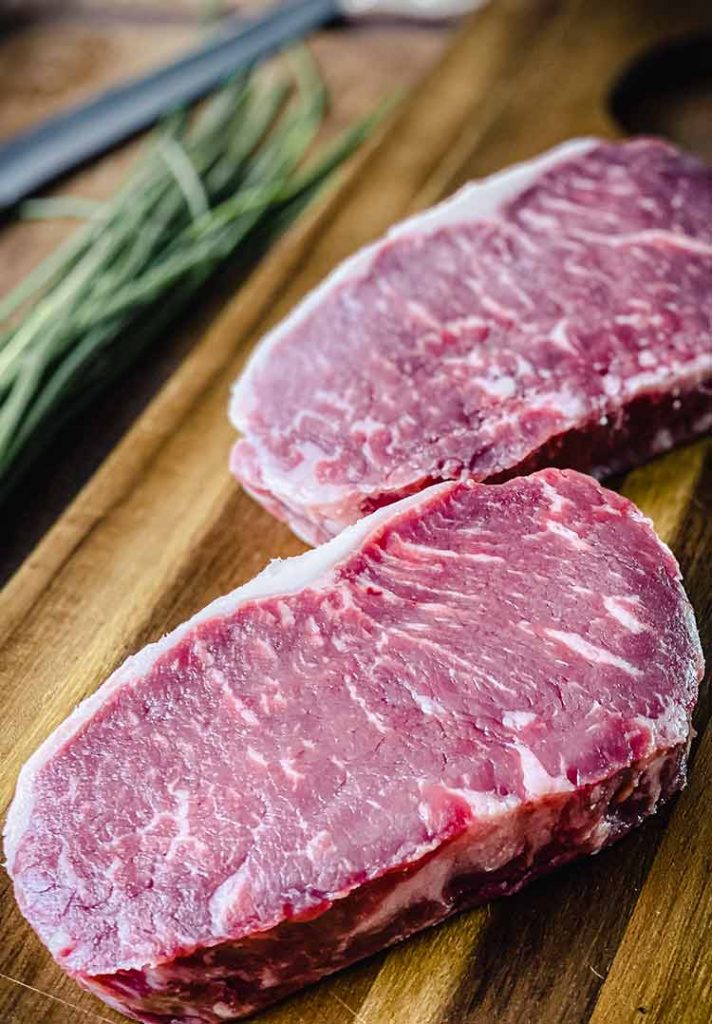
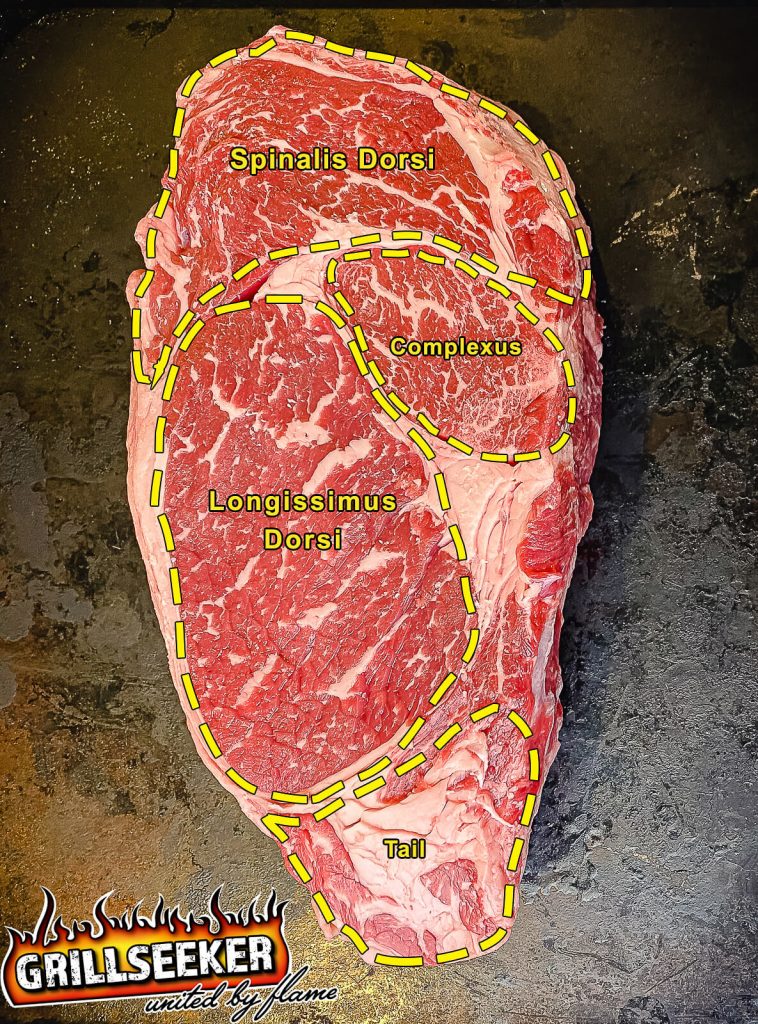
And unlike a ribeye, the strip is a single muscle. The ribeye cap cooks much faster than the eye, so getting consistent doneness on that cut is a challenge. The strip gives you near ribeye-level flavor with filet-level predictability, which is why it might be the best all-around steak for the grill.
What to Serve with Grilled Strip Steak
My go-to move lately is serving sliced strip steak over creamy corn polenta. The steak juices running into the polenta is about as good as it gets.
A spoonful of maple bourbon bacon jam on top of the steak is another cheat code, or keep it simple with grilled vegetables straight off the same fire.
Storing and Reheating Leftovers
Leftover steak keeps in the fridge for 3 to 4 days in an airtight container. Honestly, cold sliced strip steak on a sandwich or in my grilled romaine steak salad might be the best way to eat it. No reheating means no risk of overcooking, and the crust stays intact.
But if you want that steak warm, skip the oven and the microwave, because both just keep cooking it. Instead, bring about 1½ cups of beef stock to a boil in a saucepan, then pull it off the heat entirely. Drop the cold steak into the hot stock and let it sit for a few minutes until warmed through.
Because the stock is off the heat and cooling the whole time, it warms the steak without pushing it past your original doneness, and the meat stays juicy instead of drying out.
The trade-off is the crust, which won’t survive the bath. But the flavor is still damn good, and a juicy medium rare steak with a soft crust beats a gray, dried out one with no argument from me.
Frequently Asked Questions
Lid open. With the multi-flip method you’re turning the steak every 30 seconds, so the lid stays up and the steak cooks from the direct heat below. Closing the lid adds oven-style heat that pushes past your target doneness fast.
About 8 to 10 minutes total for a 1¼ inch steak over direct high heat, flipping every 30 seconds. Always cook to internal temperature rather than time.
As hot as your grill will go. For most gas grills that’s 500-600°F at the grate, and a tightly banked charcoal fire can run hotter. The hotter the grate, the less time over the fire, which is how you get a hard char without overcooking.
Pull at 120°F when grilling over high direct heat. Carryover cooking brings it up to about 130°F while it rests, which is a perfect medium rare. Low and slow cooks carry over less, so this pull temp is specific to hot-and-fast grilling.
Black pepper scorches over direct high heat and turns bitter. Salt before, pepper after. If you like that slight char bitterness, go ahead and pepper first, but try it my way once.
Pulling them out of the fridge 20 to 30 minutes ahead helps them cook a little more evenly, but it’s not a dealbreaker. Drying the surface and using a thermometer matter far more.
Bring beef stock to a boil, take it off the heat, and submerge the cold steak until warmed through. The cooling stock warms the meat without cooking it further, though the crust won’t survive. For crust lovers, cold sliced steak on a sandwich is the better move.
Pepper after grilling gives you pure, clean pepper flavor, which is why that’s how I write my recipes. But pepper before grilling over high heat chars and turns slightly bitter, and some people genuinely love that roasty edge. It’s a style choice, not a rule.
Ingredients
- 2 1¼" thick New York strip steaks
- 1 tbsp extra virgin olive oil
- 1 tbsp kosher salt or enough to season generously
- 2 tsp fresh cracked pepper before or after grilling
Compound Butter
- 1 stick unsalted butter room temperature
- 1 tbsp extra virgin olive oil
- 2 cloves garlic grated or finely chopped
- 2 tsp lemon zest
- 2 tbsp fresh parsley finely chopped
- 2 tbsp fresh chives finely chopped
- 2 tbsp fresh rosemary finely chopped
- 1 tsp kosher salt
Instructions
- Mix the olive oil, garlic, lemon zest, herbs, and salt into the softened butter with a fork. Place a spoonful on the serving plate for each steak, then roll the rest into a log in plastic wrap and refrigerate.
- Pat the steaks dry with a paper towel. Evenly coat steaks with olive oil and season generously on both sides with kosher salt. Pepper now or later, personal preference based on FAQ reading.
- Set up for direct high heat, as hot as your grill will go. Charcoal: full chimney banked tight under the cooking area. Gas: all burners high, lid closed, 10 to 15 minutes.
- Place the steaks directly over the heat with the lid open. Flip every 30 seconds, landing on a fresh, hot spot on the grate each time.
- Start checking around the 7 minute mark. Pull at 120°F for medium rare or 130°F for medium.
- Set each steak on a slice of compound butter and rest 5 to 10 minutes, uncovered. No foil tent, since trapped steam softens the crust.
- Slice against the grain, season with fresh cracked pepper, and serve immediately.
Notes
- Pull temps assume 8 to 10 degrees of carryover from a high-heat sear. Low and slow cooks carry over much less, so these numbers are specific to hot-and-fast grilling.
- Keep the lid open the entire cook. You’re flipping constantly, so the steak cooks from direct heat only.
- Rest uncovered. A foil tent traps steam and softens the crust you just built.
- The butter recipe makes a full log, far more than two steaks need. That’s intentional, since it freezes for months. Full details in my compound butter for steak post.
- This method is best for steaks under 1½ inches thick. For thicker cuts, use the reverse sear instead.
Best steaks I’ve ever grilled myself!
I love hearing this, thanks for sharing.
-M
Kalamazoo grill, huh… you boujee…
I sure wish I could say it was mine! lol
-M
I’m not sure what went wrong?? I followed everything exactly and removed them at 115° tented for 5min. They were more rare than medium rare and very tough. I used a gas grill that preheated to 500° and even used my timer for 20sec. Should the grill be left open? I usually grill whole tenderloin and it’s always perfect. My wife bought these NY strips with a couple of T-bone on sale?? The T-bones always turn out perfect but not on continuous high heat.
Hey David, sorry to hear you didn’t get the results you want. There are a couple things at play, including thickness of the steaks, quick read thermometer (some are way better than others) and grill lid. You definitely don’t want to close the lid between flips. I promise this method works well, feel free to shoot me an email with any other questions and lets get to the bottom of this!
-M
Wow!! You made me a believer. I was always a proponent of the 45 degree angle cross-hatch routine, leaving them in place 3-4 minutes. I just tried you method with two prime NY Strips. Blew me away!! Cooked perfectly end to end. Without a doubt the BEST steaks I’ve ever grilled at home. Thanks for the tip.
Thanks for the kind words Jim, so glad you loved them!
-M
Worked great, even though as seniors we skipped the butter.
Hey Tom – I’m so happy it worked out for you!
-M
I’m trying this tonight minus the herbs, because I forgot them at the store!!
Worked perfectly.
Never done the multi-flip as you describe for these, but it turns out that it was a big hit with the family.
I am going to try this method on a 45 year old Weber charcoal grill tonight. I have 6 VERY prime NY steaks. My husband is a butcher at the local grocery store and received some beautiful steaks today so he brought them home. I will let everyone know how they turned out. 😉
I hope you loved them!
-M
I closed the lid between the flips and still got grate results (see what I did there?). We had some grass fed beef and usually they don’t like that high heat as it seems to toughen them up but this time things turned out perfectly. Well worth the effort. My wife and kids were really pleased. Thank you!
Really glad it worked out for you Dan, that’s awesome. Thanks for letting me know!
-M
Been grilling steaks for years and know my way around the grill. I’m not to proud to say, I’m 56 years old and I learned a few things from reading this. Great article
Thanks Al, I sure appreciate you checking this out and the kind words.
-M
Best steaks I’ve ever cooked right here.
Thank you for checking this out Jason, so glad you enjoyed the steaks.
-M
Absolute perfect steaks!
This was exactly what I needed before cooking steaks for my father in law over the weekend. Best steaks I’ve made.
Thanks for checking it out Ronald – impressing the FIL is always a shining moment. lol
-M
Amazing. So tender you almost didn’t need a knife. Did close grill so the cherry wood would smoker it some. Continually flipping it was a game changer
So glad this worked out for you Tammy, thanks for checking it out!
-M
This guide was money! Loved the steaks and the butter was bang on.
Thanks for checking it out Henry. Glad the guide was helpful and thank you for the kind words about the butter!
-M
Love the pull chart, and the steaks were perfect with that butter.
Thanks for checking it out Dickie, so glad to hear you enjoyed the steaks and butter!
-M