

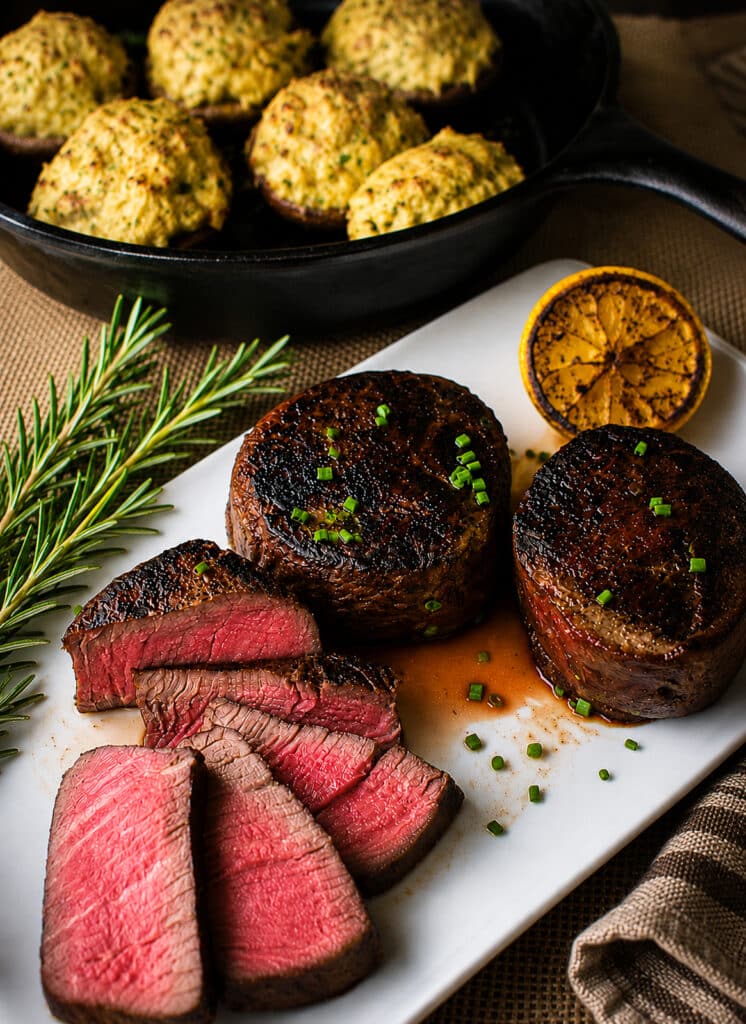
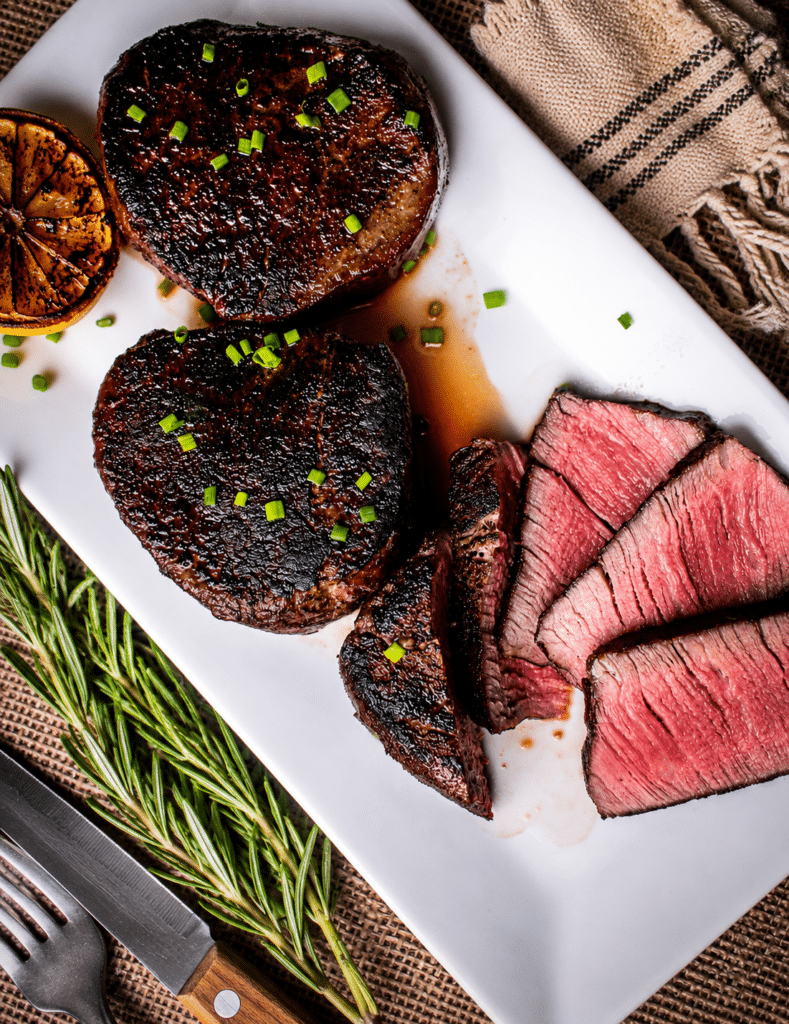
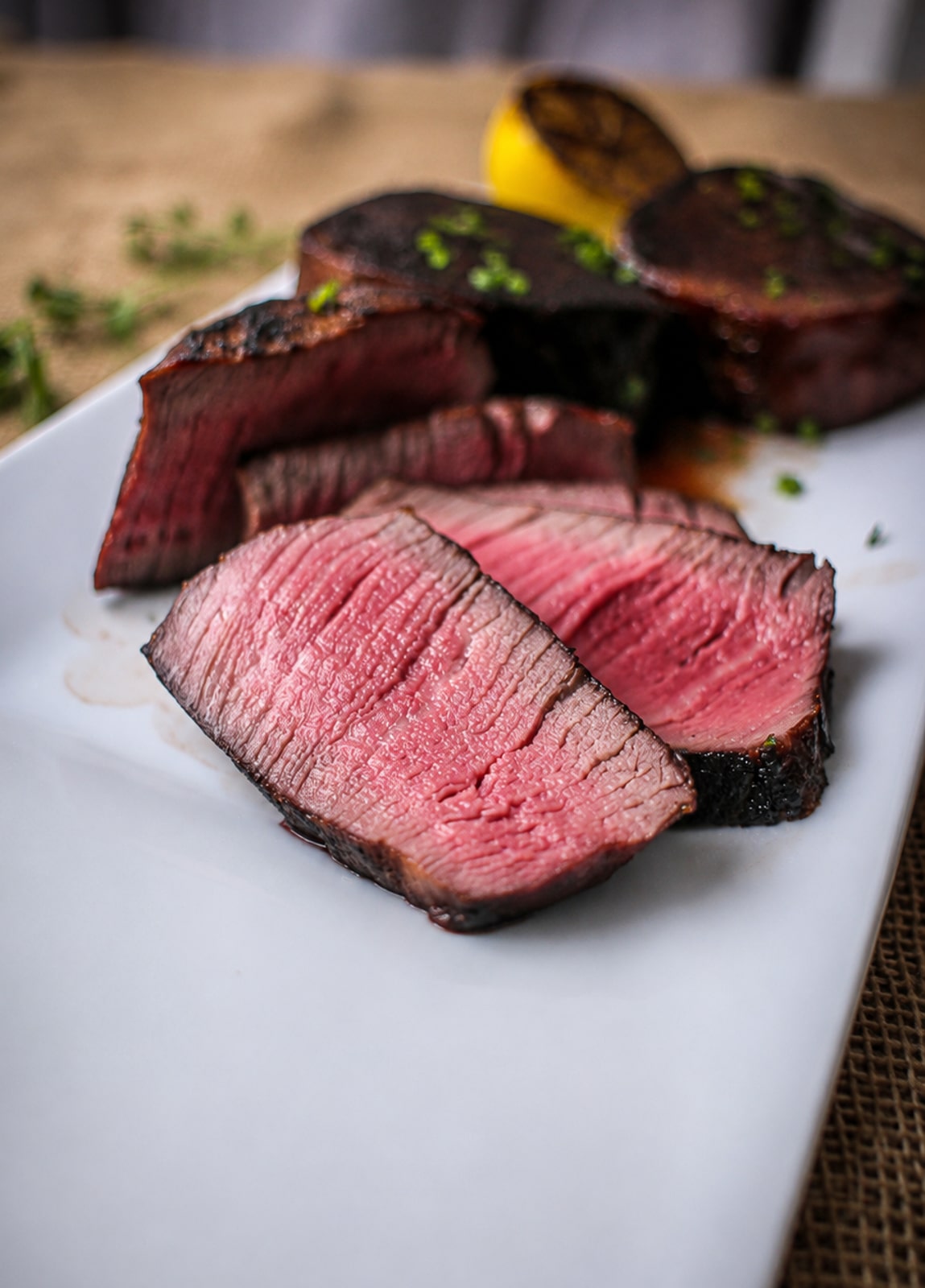
If you checked out my blog about cooking the perfect skirt steak, you know I’m a big fan of the sous vide technique. In this post, I’ll walk you through exactly how to sous vide filet mignon, including the right time and temperature and how to finish it with a proper steakhouse crust.
I’ve been cooking filet this way for years, and my method has evolved. If something I recommended in the past doesn’t hold up to testing, I’d rather update the recipe than defend it. That’s what this rewrite is.
Why Sous Vide Is Perfect for Filet Mignon
Have you ever ordered a thick filet mignon at a steakhouse, medium rare, and been disappointed? Chances are the outside was overcooked while only the very center hit your temp. That’s because most restaurants cook steaks under a broiler.
A broiler works great for building crust and kicking off the Maillard reaction. But it’s nearly impossible to nail the internal temperature of a thick cut like filet without overcooking the outside. The result is what I call the gray ring of death.
Filet makes this problem worse because it’s not only thick, it’s also very lean. There’s very little fat to keep it moist, so it dries out fast when it’s overcooked. Sous vide eliminates the guesswork completely, because the steak physically cannot go past the water temperature you set.
Why I No Longer Put Butter in the Sous Vide Bag
In the original version of this recipe back in 2022, I called for a pad of butter on each side of the steak in the bag. That wasn’t a fringe idea.
ChefSteps, Dave Arnold, and Modernist Cuisine all called for fat in the bag. It made sense, so it was the accepted best practice at the time. These are some of the sharpest minds in cooking; they pushed the whole craft forward for all of us. The science just caught up later, the way good science does.
Here’s the short version of the science: beef gets much of its flavor from fat-soluble compounds. When you cook a steak in butter, those compounds leach out of the meat and into the butter instead of the other way around.
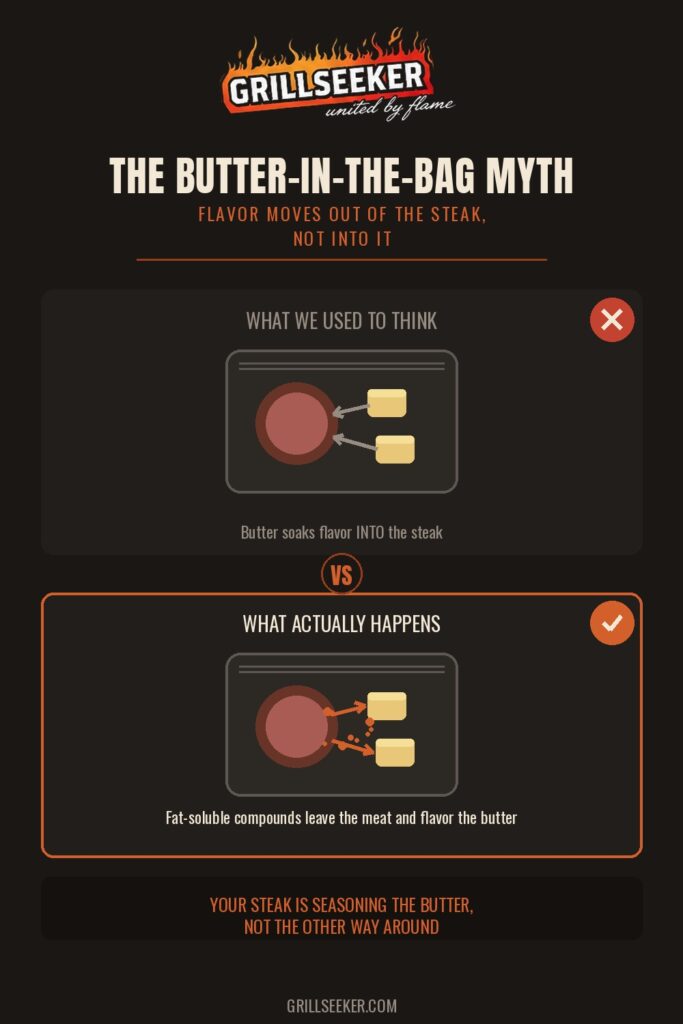
So the butter isn’t seasoning your steak. Your steak is seasoning the butter, and then most of us pour that liquid down the drain with the bag juices. Blind taste tests have consistently backed this up, and after running my own side-by-side comparisons, I agree with the results. The difference is subtle, but the steak cooked without butter tastes beefier.
The fix is simple. All that butter flavor you’re after gets added at sear time as a baste, where it coats the crust instead of pulling flavor out of the meat. I’ll show you exactly how in the searing section below.
One quick note on the comments below this post: a few readers called out the bag butter before I made this change. Credit where it’s due. You were right, and this rewrite reflects it.
Sous Vide Filet Mignon Time and Temperature
So how long does it take to sous vide filet mignon? For a steak about two inches thick, 90 minutes to 2 hours in the water bath is the sweet spot. Filet is already an extremely tender cut, so unlike tougher cuts such as skirt steak or corned beef, more time doesn’t help. Go too long and the texture starts turning mushy.
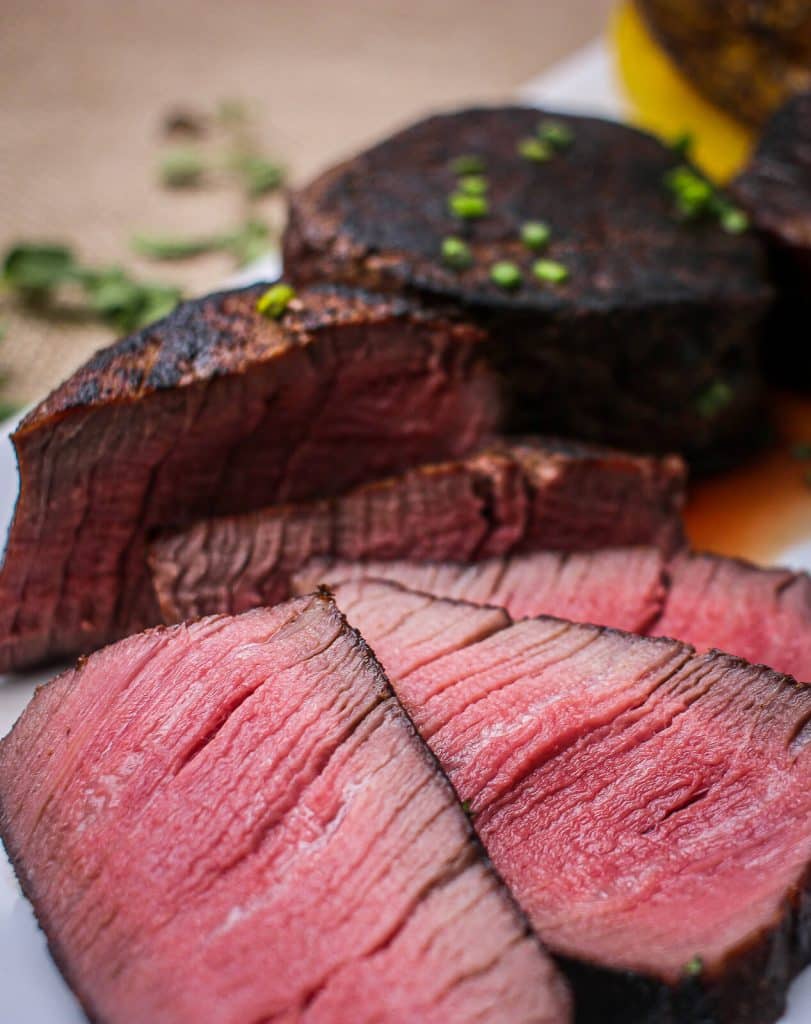
I never recommend taking filet past medium, and I try to stay right at medium rare. Lean cuts do best at lower temperatures. Here’s the chart:
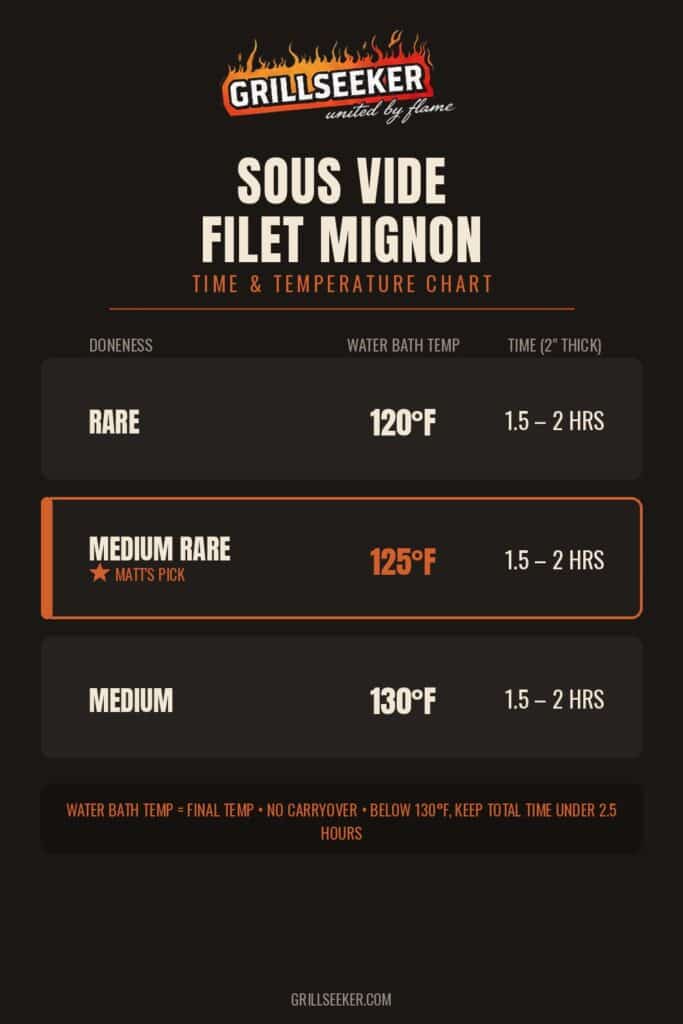
My recommendation is 125°F. The quick sear at the end adds a few degrees to the surface, and you end up with perfect edge to edge medium rare.
One food safety note. When cooking below 130°F, keep the total bath time under 2.5 hours. That’s not an issue here since filet only needs 2 hours max, but it’s worth knowing if you’re tempted to let it ride.
Is Sous Vide Better Than Reverse Sear?
I’ve blogged extensively about the reverse sear method, which also prevents overcooking the outside. I’ve covered how to reverse sear on a gas grill and even in an oven with a cast iron skillet.
So is sous vide better? It’s not better, it’s different. Sous vide gives you a wider window and total walk-away freedom. Your steak holds at a perfect temperature while you handle sides, pour a drink, or chase the dog out of the kitchen.
When the water bath is done, you’re three to five minutes of searing away from eating. Reverse sear requires more attention but doesn’t need any special gear. Both beat the daylights out of guessing over direct heat.
How to Sous Vide Filet Mignon
Step 1: Following the manufacturer’s instructions, prepare a water bath at 125°F for medium rare. See the chart above for other doneness levels.
Step 2: Season the filets on both sides with kosher salt and fresh ground black pepper. Salt actually penetrates the meat, unlike pepper and herbs that mostly sit on the surface, so don’t be shy with it.
Step 3: Place the filets in a sealable bag in a single layer. If you’re using a zip-top bag instead of a vacuum sealer, use the water displacement method: slowly lower the bag into the water with the top open, let the pressure push the air out, then seal it just before it goes fully under.
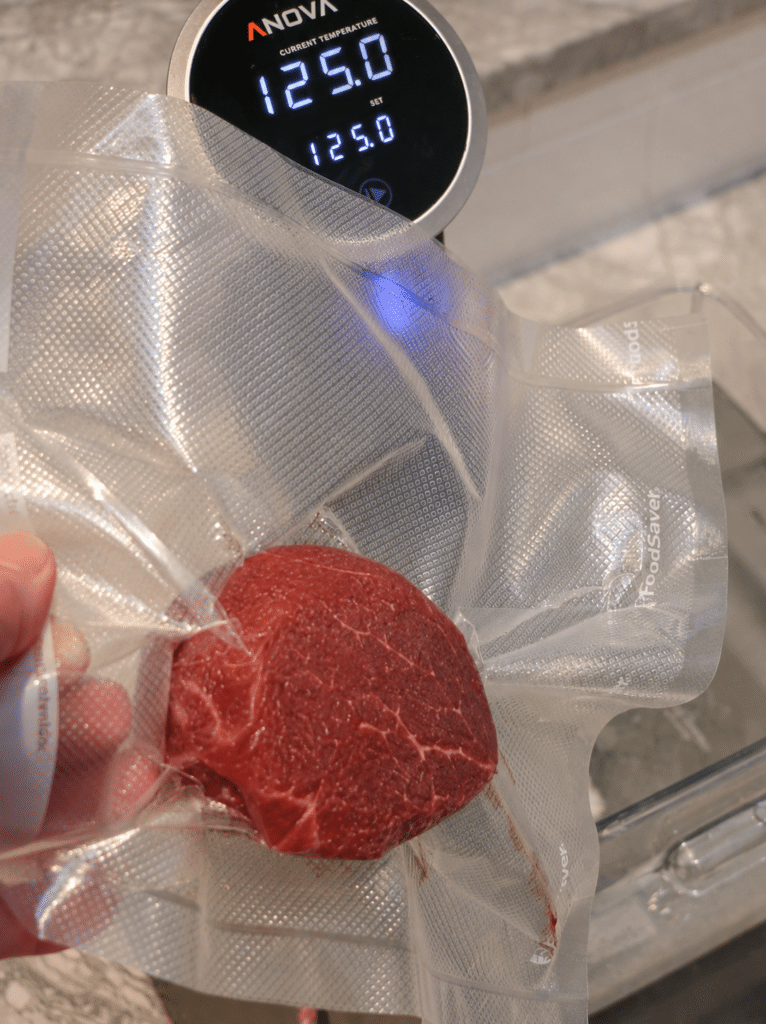
Step 4: Submerge the sealed bags in the water. You may need to clip the bags to the side of your container to keep them down. Binder clips work, or a few cheap magnets stuck to the bottom of the bag. They anchor it right to the floor of the container and keep the whole steak under water.
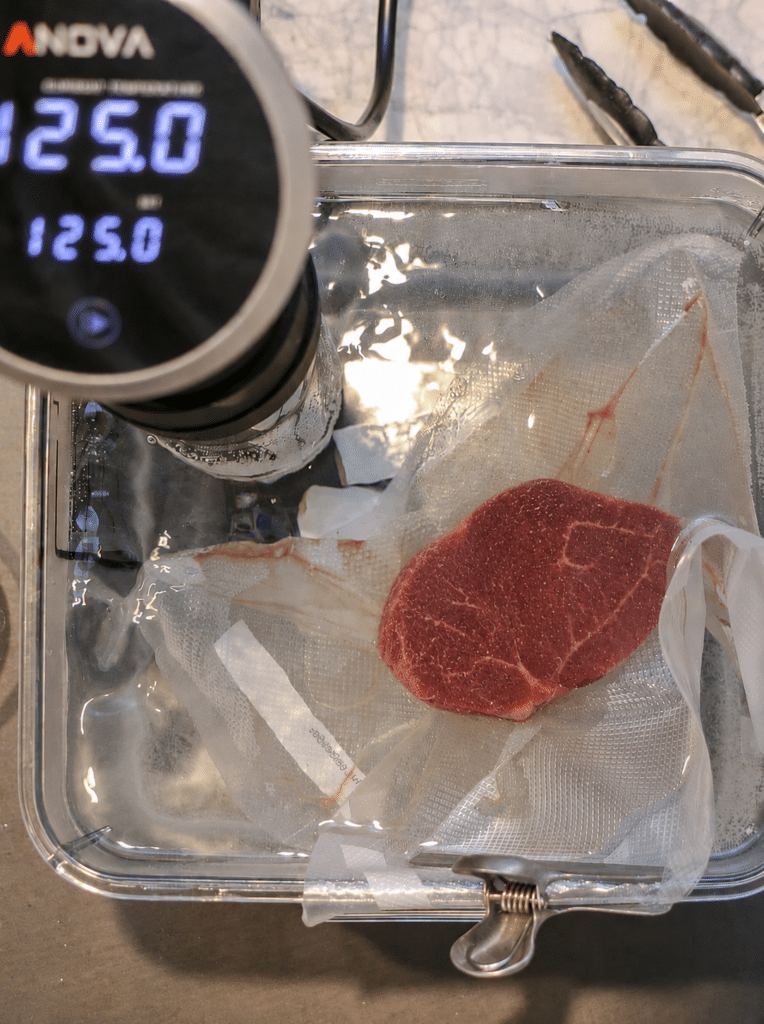
Step 5: Let the steaks cook for 1.5 to 2 hours.
Step 6: Remove the steaks from the bags and pat them completely dry with paper towels. This step matters more than people think. A wet steak steams instead of sears, and moisture is the enemy of crust.
How to Sear Filet Mignon After Sous Vide
The water bath only gets you halfway. The sear is what makes sous vide filet mignon taste like it came out of a steakhouse, and it’s where the butter comes back in.
Step 1: Get a cast iron skillet ripping hot, 450°F to 500°F, or set your grill for high direct heat. Check it with an infrared thermometer, or preheat over high heat for a solid five minutes. The surface has to be at temperature before the steak hits it, not climbing toward it.
Step 2: Coat the pan with avocado oil and lay the steaks in. Sear 30 seconds, then flip, moving to a fresh hot spot each time. Repeat until the crust is where you want it, about 2 to 3 minutes total.
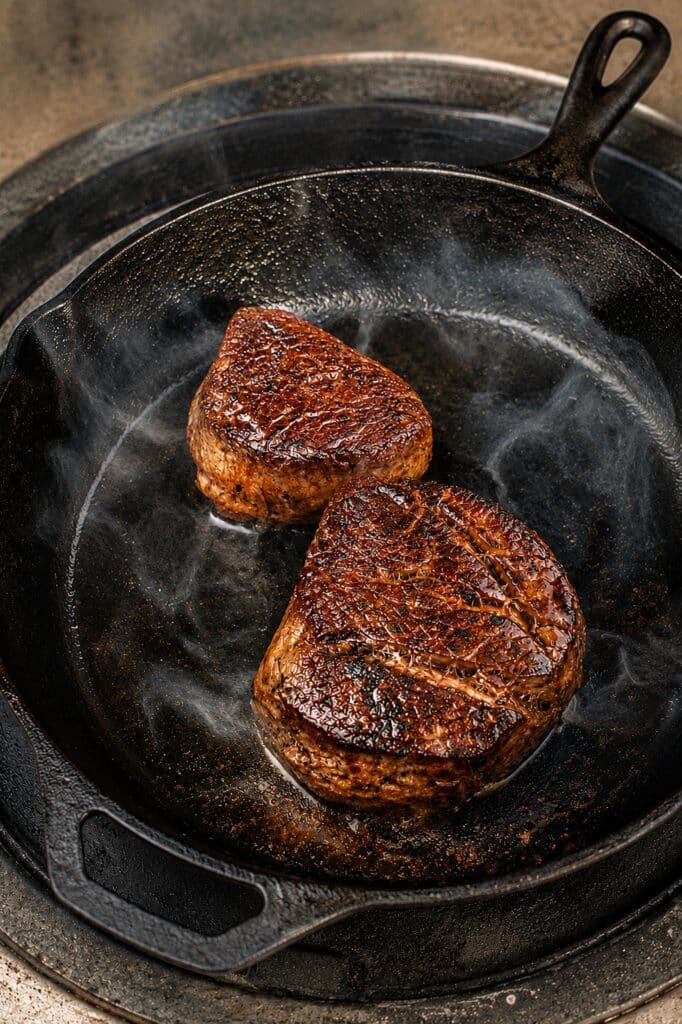
Step 3: For the last minute, drop the heat to medium and add the butter and rosemary. Once it foams, tilt the pan and spoon it over the steaks. That baste is how you get real butter flavor on the meat.
Why sear in oil and baste with butter instead of just searing in butter? Butter’s milk solids burn at crust-building temps. Avocado oil takes the heat, then butter comes in at the end once the hard work’s done.
Step 4: Rest the steaks a few minutes. Top with compound steak butter and serve hot.
Can You Sous Vide Filet Mignon From Frozen?
Yes, you can sous vide filet mignon straight from the freezer, and it’s one of the best things about this method. Season your filets before freezing them, vacuum seal, and they’re ready to go from the freezer to the water bath.
Add about one hour to the cook time for a frozen two inch filet, so plan on 2.5 to 3 hours total. Everything else stays exactly the same, including the sear. This is my favorite move for keeping restaurant quality steak on standby without a trip to the store.
What to Serve With Sous Vide Filet Mignon
Filet is lean and mild, so I like sides with some richness or a little attitude. My spicy sweet corn polenta or creamed spinach is the move here, creamy enough to feel like a steakhouse side with enough heat to keep things interesting.
A simple grilled vegetable, asparagus or broccolini, rounds out the plate without competing with the steak.
And whatever you serve, don’t skip the compound butter. One slice melting over a rested filet does more than any sauce.
Frequently Asked Questions
No. Butter in the bag pulls fat-soluble flavor compounds out of the steak, so you end up with beef flavored butter instead of butter flavored beef. Add butter as a baste during the last minute of the sear instead.
125°F is my recommendation for medium rare, which is where filet shines. It’s a lean cut, so I never take it past 130°F for medium. See the time and temperature chart above for the full range.
1.5 to 2 hours for a two inch thick filet. Don’t go much longer, since extra time breaks down the texture and turns it mushy. And when cooking below 130°F, keep total bath time under 2.5 hours for food safety.
Before. Salt dissolves into the meat and works its way in, while pepper and herbs mostly flavor the surface. Season generously with salt and pepper before bagging, then adjust after the sear if needed.
Yes. After the water bath, drop the sealed bags in an ice bath for 20 to 30 minutes, then refrigerate for up to two days. When you’re ready to eat, sear straight from the fridge, adding about a minute to the total sear time.
No. A quality zip-top freezer bag with the water displacement method works fine for a two hour cook. A vacuum sealer is worth it if you cook sous vide often or want to freeze seasoned steaks ahead of time.
Ingredients
- 2-4 8 oz filet mignon steaks
- 1 tbsp kosher salt
- 1 tbsp fresh cracked black pepper
For the Sear and Baste
- 1 tsp avocado oil
- 2 tbsp unsalted butter
- 2 sprigs fresh rosemary
Instructions
- Following the manufacturer's instructions, prepare a water bath at 125°F for medium rare. While water is warming, season the filets on both sides with kosher salt and black pepper.
- Place the filets in a sealable bag in a single layer. Vacuum seal, or use the water displacement method with a zip-top freezer bag.
- Submerge the sealed bags in the water bath, clipping them to the container if needed to keep them underwater for 1.5 to 2 hours.
- Remove the steaks from the bags and pat completely dry with paper towels.
- Heat a cast iron skillet to 450°F to 500°F, or prepare a grill for high direct heat. The surface must be fully at temperature before the steaks go on.
- Lightly coat the pan with avocado oil. Sear the steaks 30 seconds per side, moving to a fresh hot spot with each flip, for 2 to 3 minutes total.
- Reduce the heat to medium and add the butter and rosemary. When the butter foams, tilt the pan and spoon it over the steaks for about 1 minute.
- Rest the steaks for a few minutes, top with optional compound butter, and serve hot.
DO NOT PUT BUTTER IN THE BAG. USE BUTTER TO SEAR ONLY AFTERWARDS
Butter by itself is actually NOT good for searing. Butter has a low smoke point and the milk solids will burn at the temperatures required to sear a steak. Mixing butter with oil will help to increase the smoke point, slightly – but it’s a modest increase at best. Clarified butter is fine, or butter as a quick baste at lower heat is great too.
The oil raises the smoke point of the butter so that high-heat sear is possible. Avocado oil is best, and I always use Ghee instead of regular butter.
When I first got my sous vide, I’d add some sort of fat to the meat, be it butter or oil, and I was less than impressed. Some time ago I decided to leave out the butter or oil and just add it at sear time. Much better results. I do everything as in this website except for the butter in the bag. Delish.
As others have said DO NOT PUT BUTTER IN THE BAG!
You’re right Grillz, 100%. You’re looking at an older version of this recipe when adding butter was a best practice. I’ve (as have others) learned more about this technique since 2022 and have updated the blog to reflect that. Thanks for checking it out and for the call out!
-M