
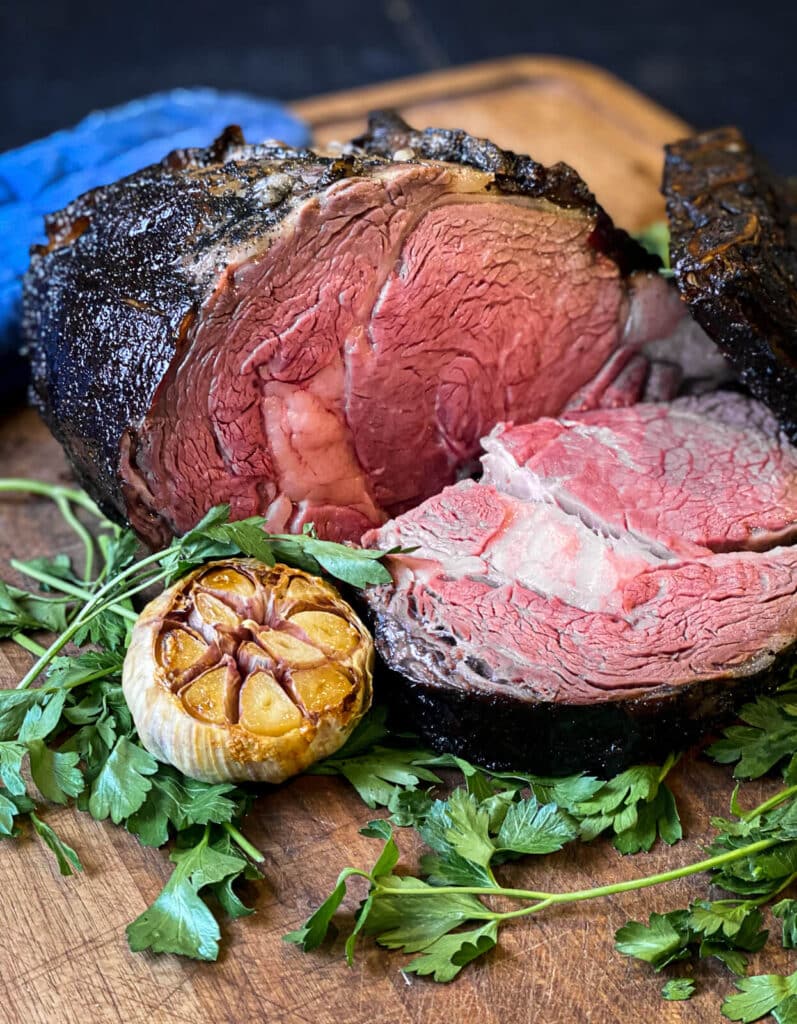
You’ll see me refer to carryover cooking often in my recipes, and it’s an important concept to understand. Not accounting for this can, and likely will, result in two things: a ruined meal and extreme embarrassment when you slice into that “medium rare” prime rib and it’s actually medium well.
So what is carryover cooking? Simply put, it’s the cooking that takes place after you’ve removed your food from the heat source. That could be an oven, a grill, or even the burner on the stove.
As food is cooking and increasing in temperature, removing it from the heat source doesn’t instantly stop that increase. The internal temperature of food will continue to rise for a period of time, even after being removed from the heat.
How long food will continue to cook, and how many degrees it will increase? That’s the million dollar question, and I’ll answer it now.
How Much Does Carryover Cooking Raise Temperature?
And the answer is… it depends. I know that’s not helpful, so let me explain further. How long a food continues to cook, and how many degrees it increases in temperature after being removed from a heat source, depends on a few things.
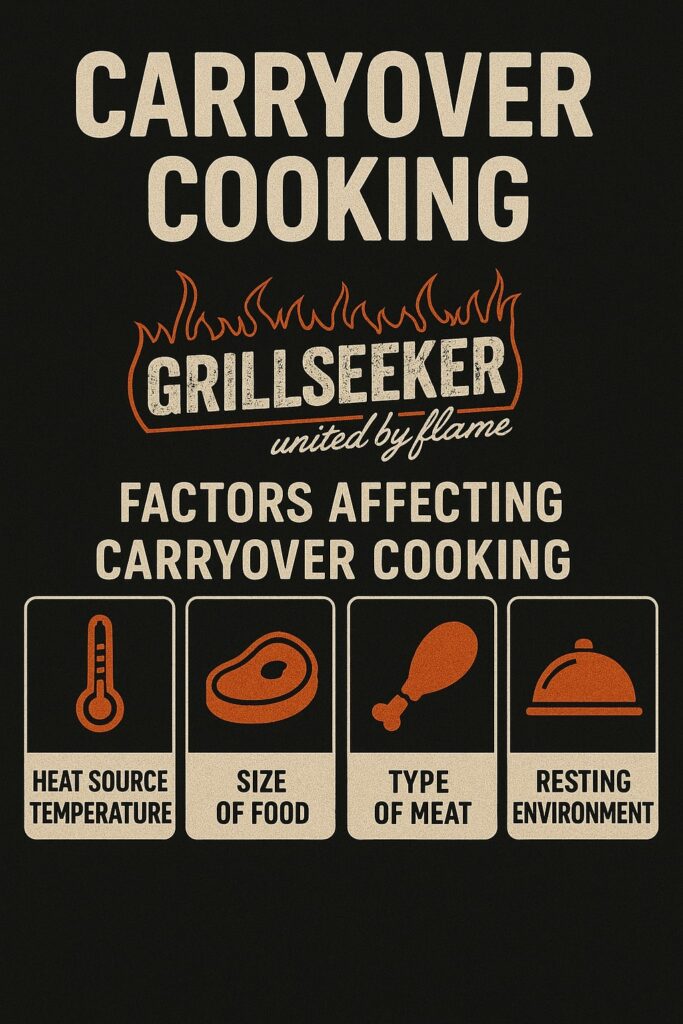
There are four major factors that have the biggest influence on carryover cooking:
First, the temperature of the heat source. Let’s say you cook two 16-ounce ribeyes, as close to identical as possible, on two separate grills. One steak is cooked at a grill temp of 400°F, the other at 200°F. If both steaks are removed from their respective grills at an internal temp of 125°F, the steak that was cooked on the 400°F grill will carry over longer and to a higher temperature. This is because of the amount of heat energy that steak has absorbed compared to the one cooked on the cooler grill.