

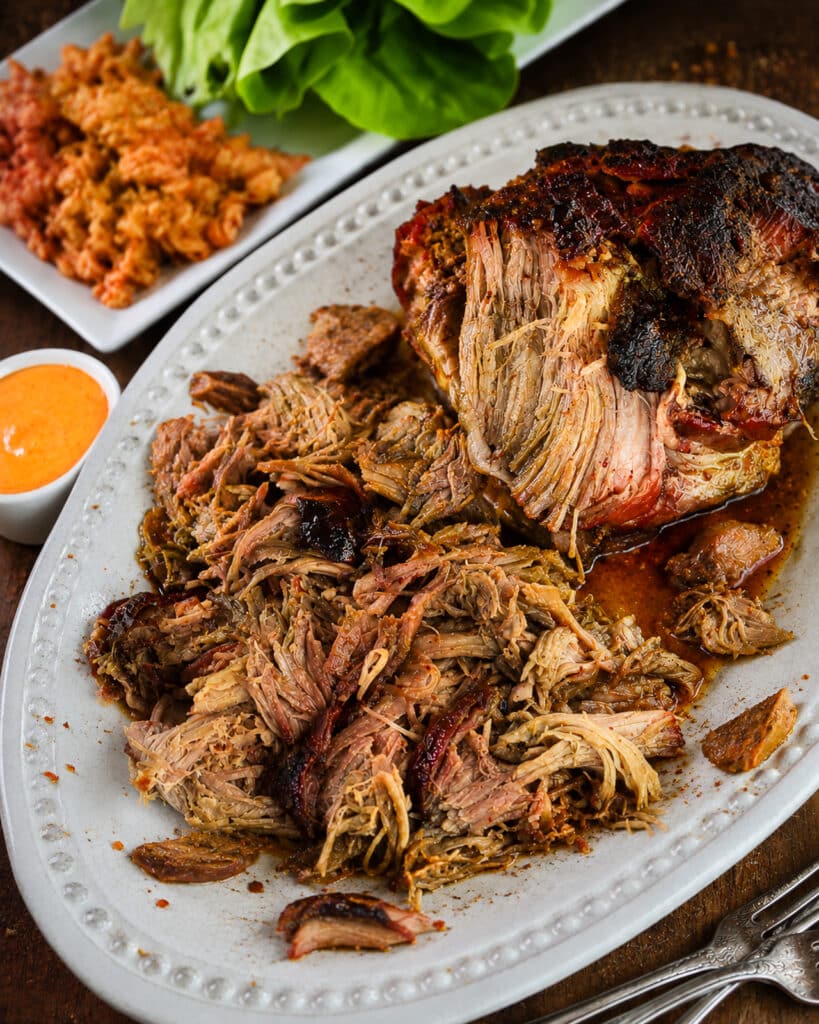
Most every Korean pulled pork recipe you’ll find online uses a slow cooker. This one doesn’t.
This recipe starts with a 24-hour dry brine of equal parts kosher salt and sugar that seasons the pork shoulder all the way through before it ever sees heat. Then it goes on the grill with a touch of pecan smoke, low and slow, until it’s fall-apart tender.
The finish is a coat of brown sugar and gochugaru that caramelizes into a sticky, spicy crust that no slow cooker can replicate.
Serve it in bibb lettuce cups, pile it onto slider buns, stuff it into tacos, or put it on rice. This recipe feeds a crowd no matter which way you go..
No grill, no problem. The oven works too, and I’ll cover that below.
How To Dry Brine a Pork Shoulder
Dry brining seasons meat similarly to wet brining, but without the liquid. Coat the pork shoulder with equal parts kosher salt and sugar and let it rest for 24 hours.
The salt initially draws moisture out of the meat, then dissolves into it and slowly reincorporates back in, carrying flavor deep into the muscle.
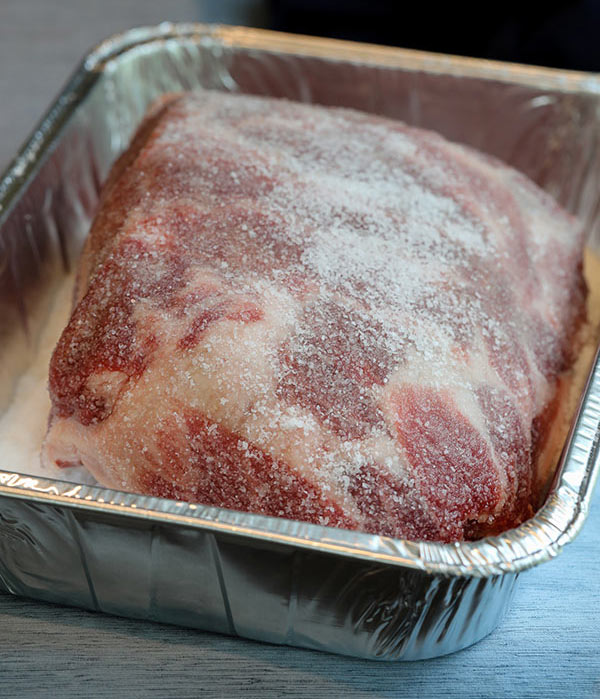
To do it: place the pork shoulder in a raised edge pan, coat all sides heavily with the salt and sugar mixture, cover with foil, and refrigerate for at least 8 hours. Twenty-four hours is significantly better if you have the time.
One important note on salt: I use Diamond Crystal kosher salt for my recipes. If you’re using Morton’s kosher salt, use about half the amount. Morton’s is significantly denser and you’ll end up with an oversalted shoulder if you substitute it 1:1. For a deeper dive on why this matters, check out my post on kosher salt brands.
What Makes This Korean Pulled Pork Different?
Most Korean pulled pork recipes are essentially a braise. Pork shoulder goes into a slow cooker or Dutch oven with gochujang sauce, cooks low and slow in liquid, and comes out tender and flavorful. Nothing wrong with that, it’s a solid technique.
This recipe takes a completely different approach. The dry brine seasons the meat all the way through before cooking starts, working from the surface inward over 24 hours.
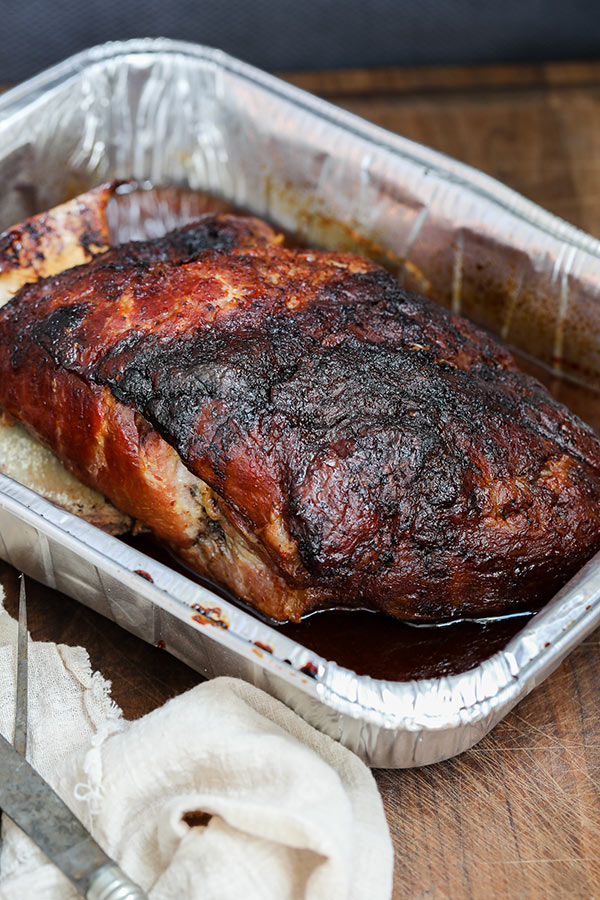
The brown sugar and gochugaru crust at the finish gives you a bark on Korean pulled pork that’s more BBQ than braised. It’s a fusion of Korean flavors and American BBQ technique that produces something genuinely worth the 24-hour wait.
What Is Gochugaru?
Gochugaru is a Korean chili powder traditionally made from sun-dried red peppers. It’s the backbone of kimchi and a staple in traditional Korean cooking.
The flavor is fruity, slightly sweet, and mildly spicy. Very different from the sharp heat of standard red pepper flakes. Because the seeds are removed before grinding, the heat level is much less than traditional red pepper flakes.
You can find it at Korean or Asian grocery stores, or online on Amazon. Don’t substitute regular red pepper flakes. The flavor profile is completely different and you’ll get a much hotter, less complex result. It’s worth tracking down the real thing.
What Is Gochujang?
Gochujang is a fermented Korean chili paste and it’s made from gochugaru, glutinous rice, fermented soybeans, and salt. It’s thick, savory, mildly spicy, and has a complexity from the fermentation process that regular chili paste doesn’t have.
Think of it less like a hot sauce and more like tomato paste. It’s a concentrated, savory building block that makes everything around it taste deeper and more complex.
It lives in a red tub or jar in the international aisle of most grocery stores, at Korean or Asian markets, or online on Amazon. Once you have it, you’ll find reasons to put it in everything. The aioli in this recipe is the best example of that.
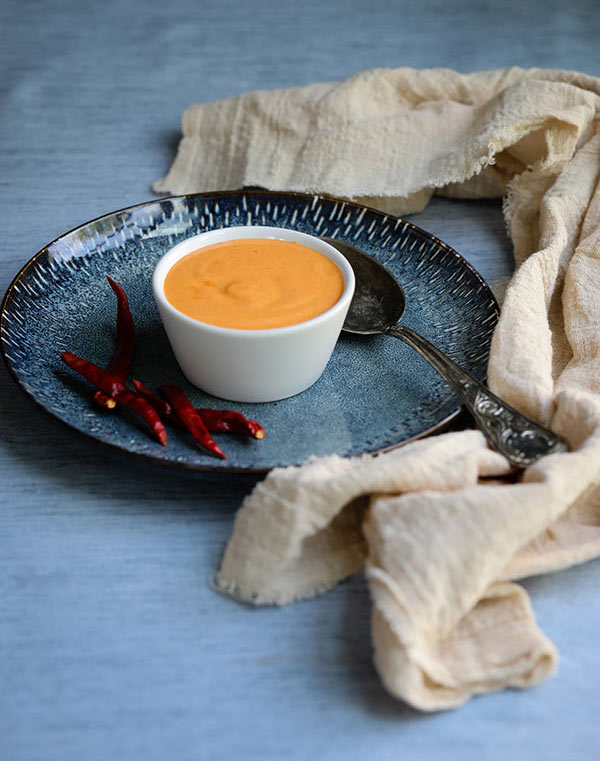
Gochujang, mayo, sour cream, garlic, lemon juice, and just a teaspoon of sesame oil makes a sauce that’s good enough to eat with a spoon. The sesame oil is a small addition that ties the aioli directly to the Korean flavor profile of the dish, so don’t skip it and don’t add more than a teaspoon. It’s there to whisper, not shout.
Can You Make Korean Pulled Pork In The Oven?
Yes. The dry brine process is identical. Coat the pork with the salt and sugar mixture, cover, and refrigerate for 24 hours.
When you’re ready to cook, place the brined shoulder in a roasting pan, apply the brown sugar and gochugaru. Roast uncovered at 235°F for 6-7 hours. Then wrap tightly in foil, increase the oven temp to 250°F, and cook until the internal temperature hits 205°F, another two hours or so.
You won’t get the smoke or the bark that the grill produces, but the dry brine still does its job and the gochugaru crust still caramelizes. For a deeper look at cooking pulled pork in the oven, check out my pulled pork in the oven post which covers the technique in detail.
What To Serve With Korean Pulled Pork
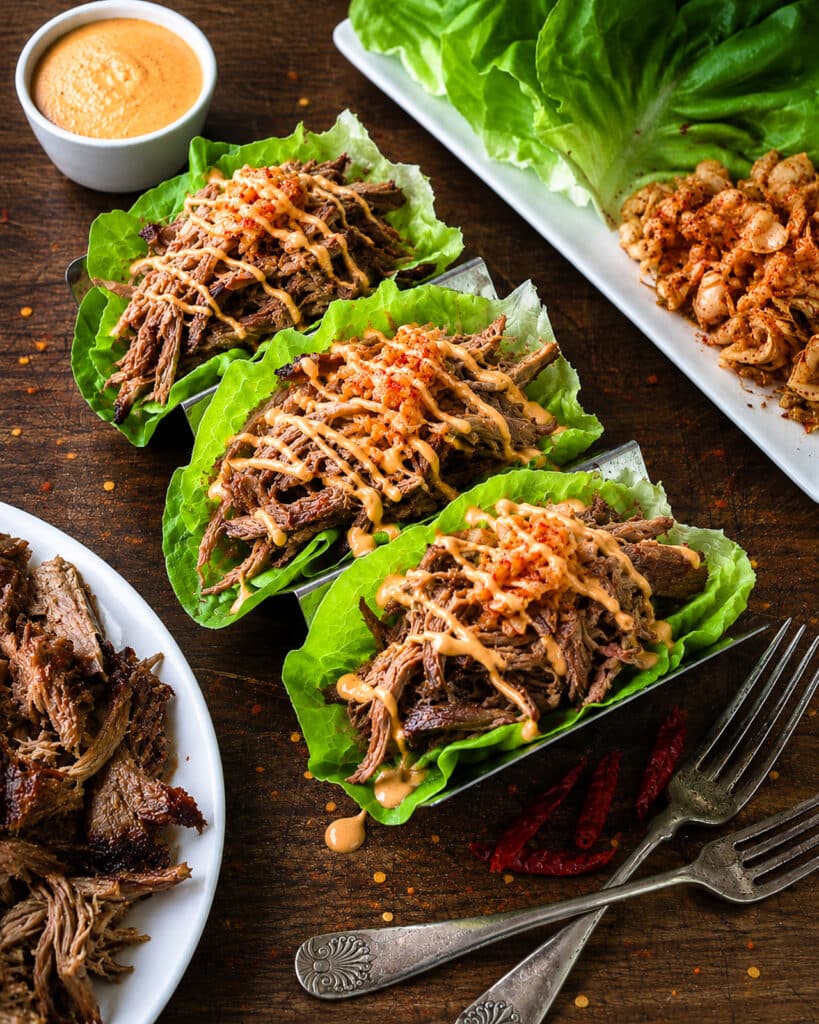
The recipe is built around bibb lettuce cups but don’t let that limit you. Here are the serving options worth knowing about:
Lettuce wraps are the lightest option and let the pork and aioli shine without competition. Bibb lettuce is the right call. It’s soft enough to fold without breaking and sturdy enough to hold the filling.
Slider buns are the crowd-pleasing move if you’re feeding a group. The sweetness of a brioche bun works perfectly with the spicy gochugaru crust. Add a little extra kimchi and a drizzle of aioli and you have one of the best sliders you’ll make all year.
Steamed rice is the most traditional Korean presentation. Pile the pulled pork over a bowl of short-grain rice with kimchi on the side and the aioli drizzled over the top.
Tacos with corn tortillas, quick-pickled cucumbers or pickled red onions, and the gochujang aioli. The acid from the pickles cuts through the richness of the pork in a way that’s hard to beat.
On the side, smoked baked beans rounds out the spread without competing with the Korean flavors.
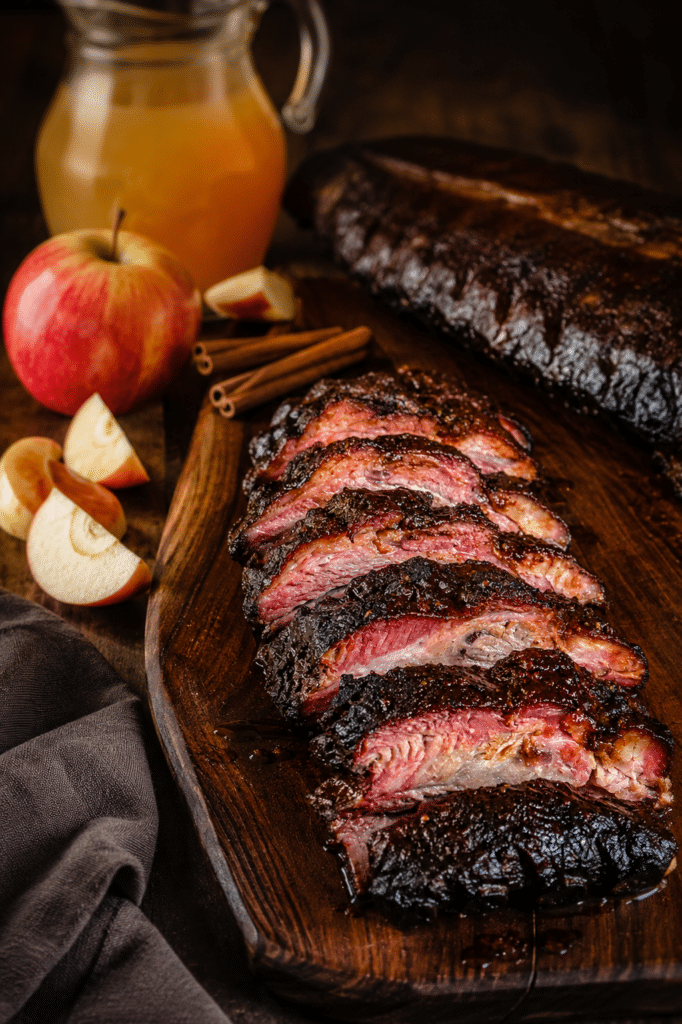
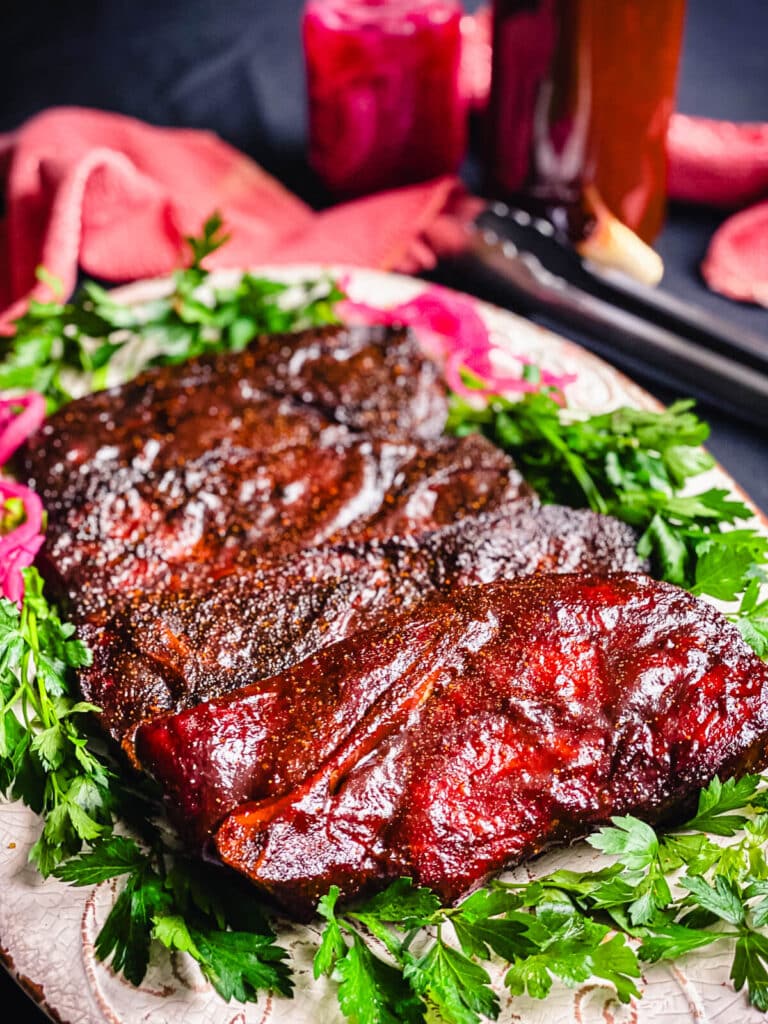
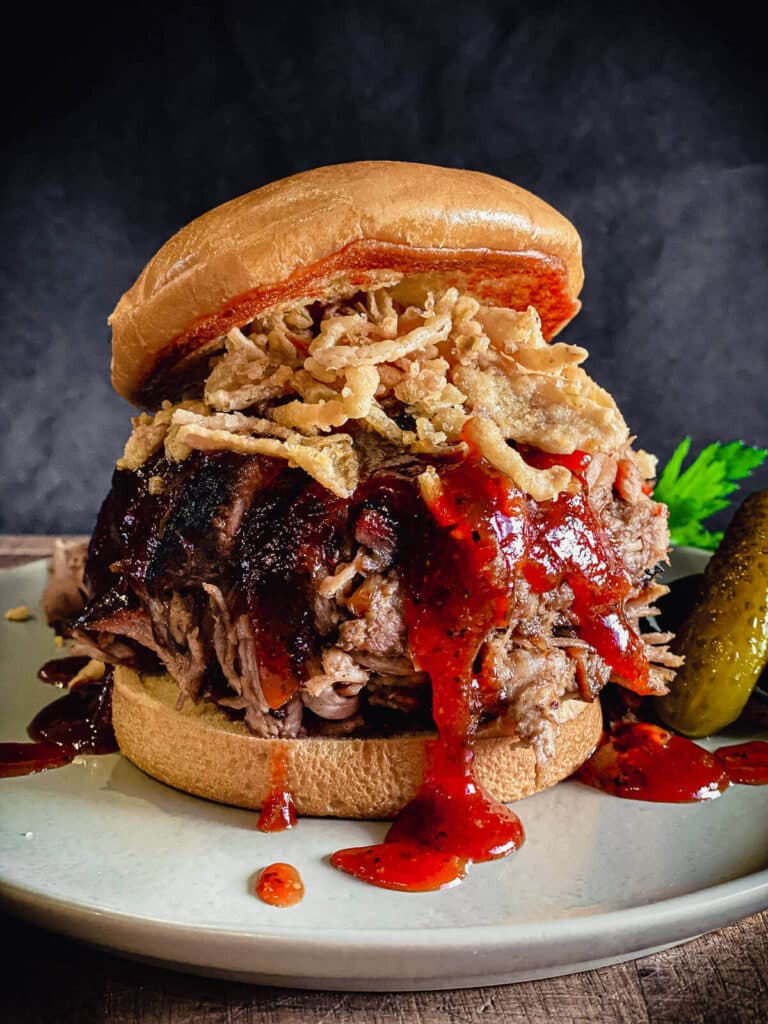
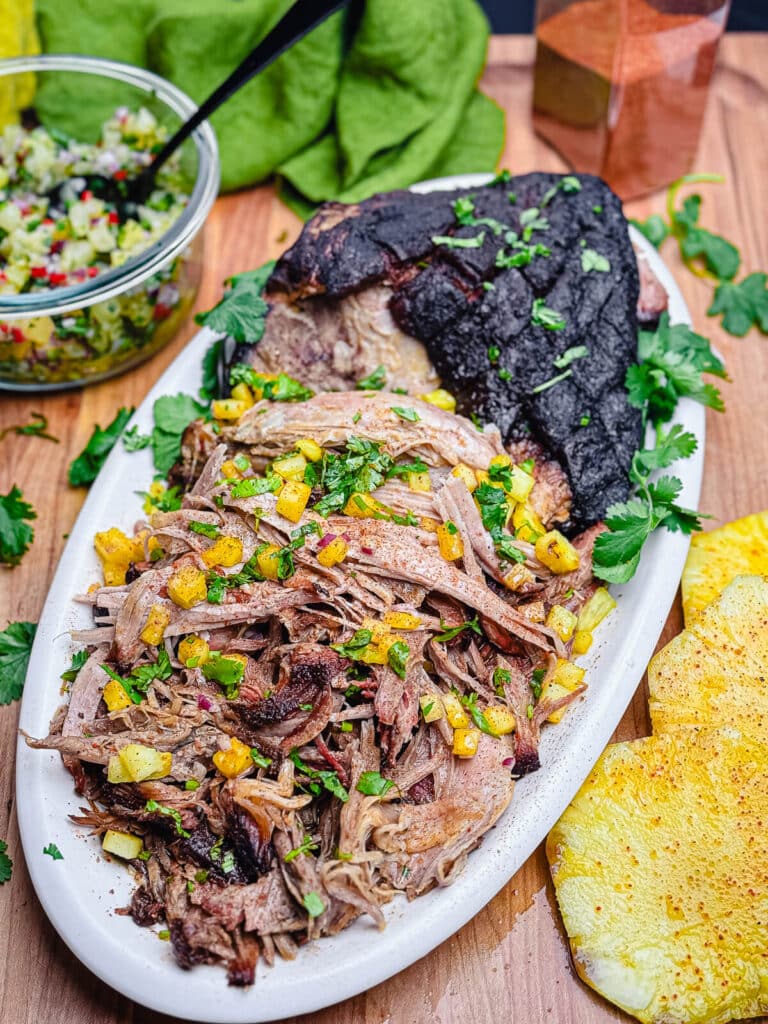
Tap Images Below For More Pork Recipes
Korean Pulled Pork FAQ
Plan for two days total. The dry brine needs at least 8 hours but 24 hours is significantly better. The cook itself runs 7 to 8 hours. It’s not a weeknight recipe but it’s mostly hands-off time. The brine and the low and slow cook do the work for you.
Yes. 8 hours is the minimum and you’ll still get noticeably better results than an unbrined shoulder. The flavor penetration improves significantly from 8 to 24 hours though. If you have the time, go the full 24.
Gochugaru is a dry chili powder. Gochujang is a fermented chili paste. Both are Korean chili products but they’re completely different in flavor and texture. The recipe uses both and they’re not interchangeable.
Yes. Portion it into zip-top freezer bags, and freeze for up to three months. Thaw overnight in the fridge and reheat low and slow in a covered pan with a splash of water or chicken stock. It reheats well and the flavors actually deepen after a day or two.
Mild to medium. Gochugaru has the seeds removed before grinding, so it’s much more mild than regular red pepper flakes. Add extra gochugaru to the crust for more heat, or cut it back for less.
Grilled Best Korean Style Pork Shoulder Recipe
Serves: 18 | Prep time: 24 hours | Cook time: 7-8 hours
Ingredients
1 7-9 lb. pork shoulder
1 cup kosher salt
1 cup white sugar
1 cup brown sugar
1/4 cup Korean red pepper flakes (gochugaru)
bibb lettuce
2 cups kimchi, chopped
Aioli
3/4 cup mayonnaise
1/4 cup sour cream
3 tbs gochujang
2 garlic cloves, grated
1 tsp sesame oil
Juice from half of one lemon
How To Make Korean Style Pork Shoulder
Step 1: In a large bowl, whisk together salt and white sugar.
Step 2: Rinse pork in cold water and trim any excess fat.
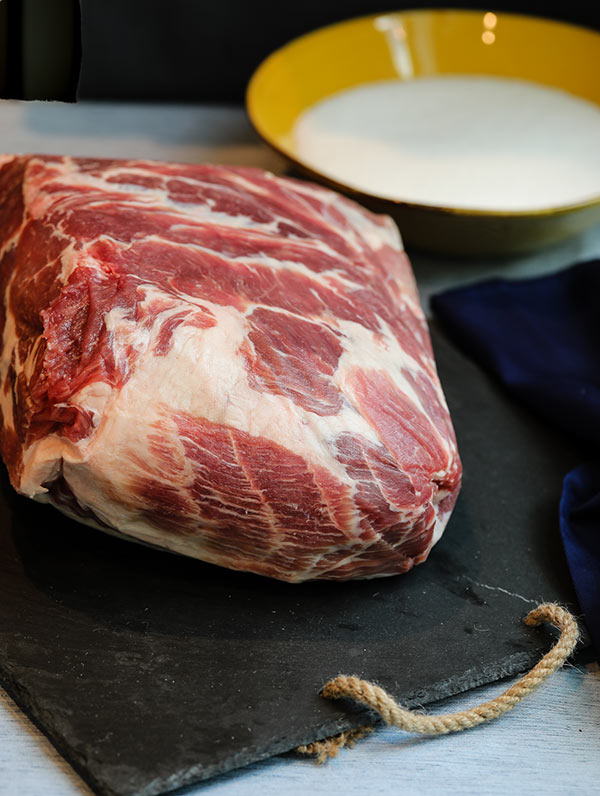
Step 3: Place pork shoulder into a raised edge pan. Coat all sides heavily with the salt and sugar mix. Cover in foil and refrigerate at least 8 hours, but leaving it to brine 24 hours is preferable.
Step 4: While the pork is brining, whisk together all ingredients for the aioli. Place the mixture in an air tight container and store in the refrigerator.
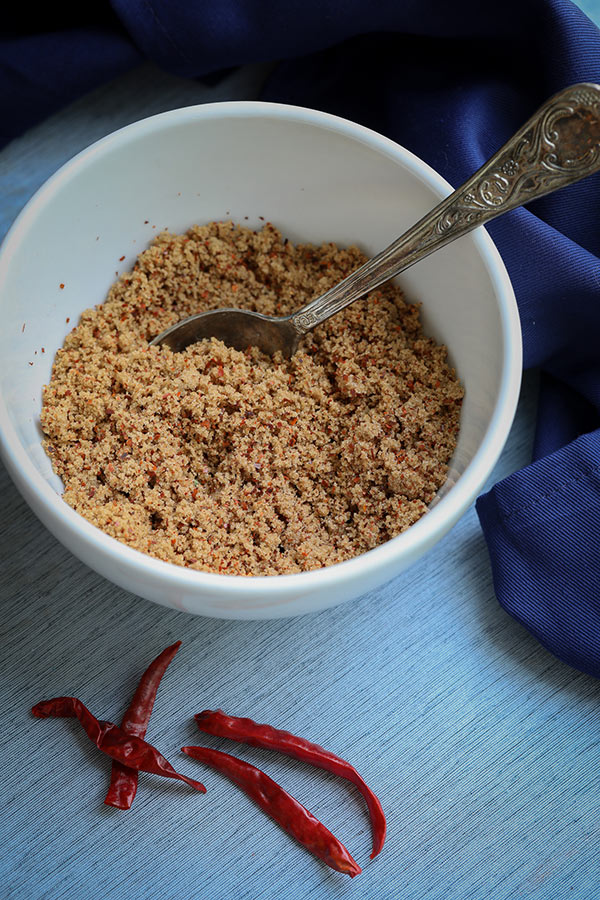
Step 5: Whisk together brown sugar and Korean red pepper.
Step 6: After the brine process is complete, drain any excess liquid and brine from the pan, and insert a reliable leave-in thermometer into the thickest portion of the meat.
Step 7: Light the grill and set up for two-zone cooking. Establish the temperature at 225°F to 250°F. Smoke on this style pork is optional, but at most I recommend a touch of pecan. I use pecan so the smoke doesn’t overpower the Korean influenced flavors.
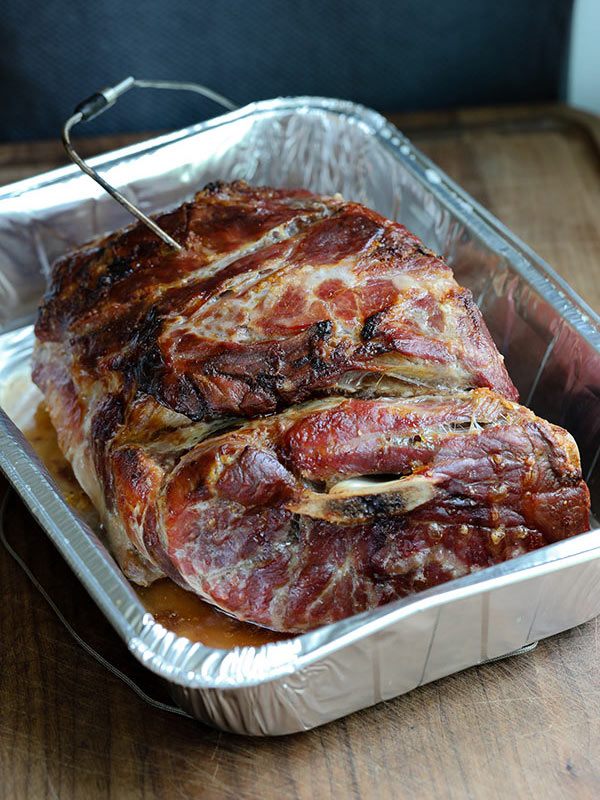
Step 8: Place pork on grill over indirect heat. Close lid and allow to cook until internal temperature is 180°F. This should take about 6 hours, at that point your pork will look about like this:
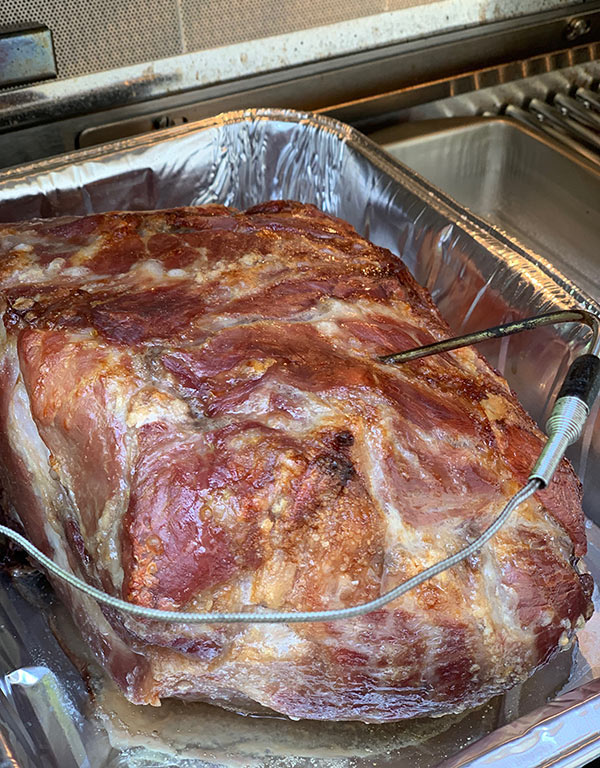
Remove the pork from the grill, baste with juices collected in the pan and coat top and sides with the brown sugar and gochugara mixture.
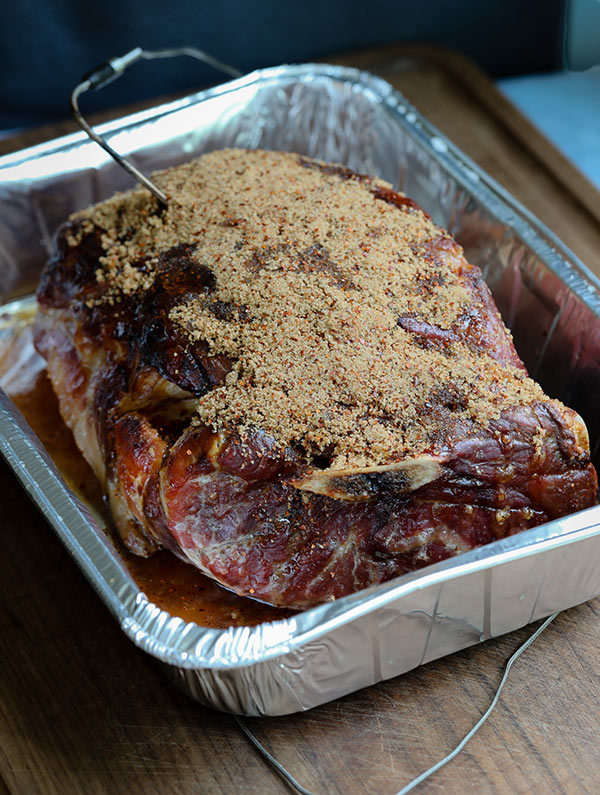
Cover the pork shoulder with foil, increase grill temperature to 285°F and put the pork back over indirect heat until an internal temperature of 205°F is achieved. This will take about another 90 minutes.
Step 9: Remove pork shoulder from grill and allow it to rest for 30-45 minutes.
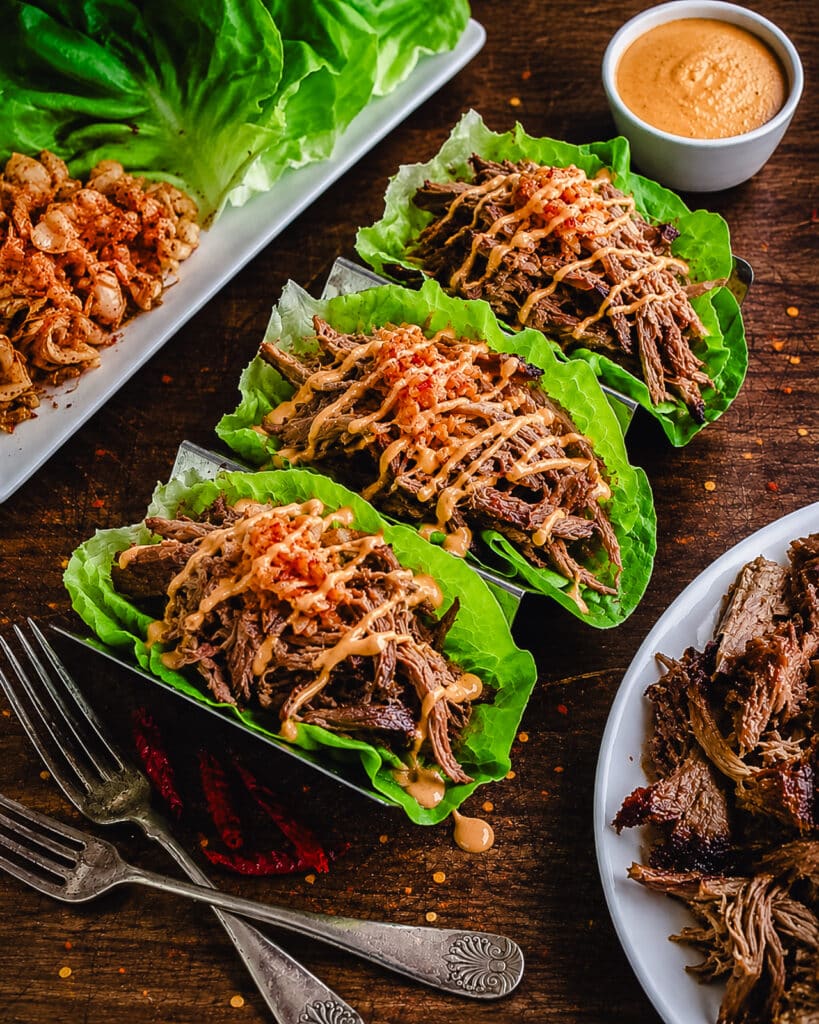
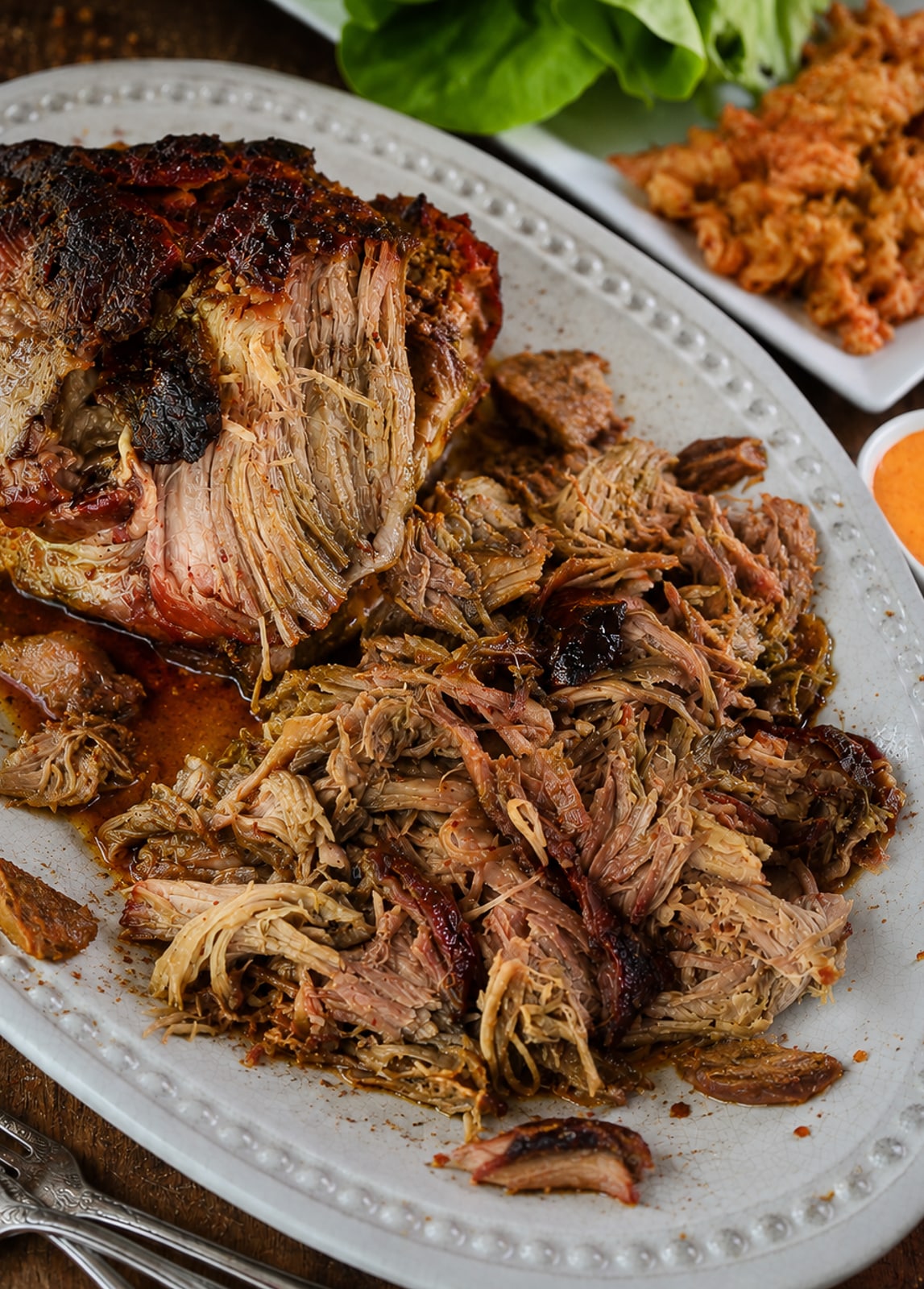
Step 10: Using a fork, pull pork into a shredded consistency and incorporate any juices from the pan. Place shredded pork inside the bibb lettuce, top with kimchi and aioli to serve.
Ingredients
- 7-9 lb pork shoulder
- 1 cup kosher salt
- 1 cup white sugar
- 1 cup brown sugar
- 1/4 cup Korean red pepper flakes (Gochugaru)
- bibb lettuce
- 2 cups kimchi chopped
Aioli
- 3/4 cup mayonnaise
- 1/4 cup sour cream
- 2-3 tbsp gochujang to taste
- 2 cloves garlic grated
- 1 tsp sesame oil
- 1/2 lemon juiced
Instructions
- Whisk together salt and white sugar in a large bowl.
- Rinse pork in cold water and trim any excess fat.
- Place shoulder in a raised edge pan. Coat all sides heavily with salt and sugar mix. Cover in foil and refrigerate at least 8 hours, 24 hours is optimal.
- Whisk together all ingredients for the aioli, seal in an air tight container in the refrigerator.
- Whisk together brown sugar and Korean red pepper.
- After brine process is complete, drain any excess liquid and brine from the pan, and insert a reliable leave-in thermometer into the thickest portion of the meat.
- Light grill and set up for two zone cooking, establishing temperature at 225°F to 250°F.
- Place pork on grill over indirect heat, close lid and allow to cook until internal temperature is 180°F.
- Remove pork from grill, baste with juices collected in the pan, and coat top and sides with the brown sugar and gochugara mixture.
- Cover with foil, increase grill temp to 285°F and return pork to indirect heat until it reaches an internal temperature of 205°F. About another 90 minutes.
- Remove from grill, allow to rest for 30-45 minutes.
- Using a fork, pull pork into a shredded consistency and incorporate any juices from the pan.
- Place the pork inside bibb lettuce. Top with kimchi and aioli to serve.