

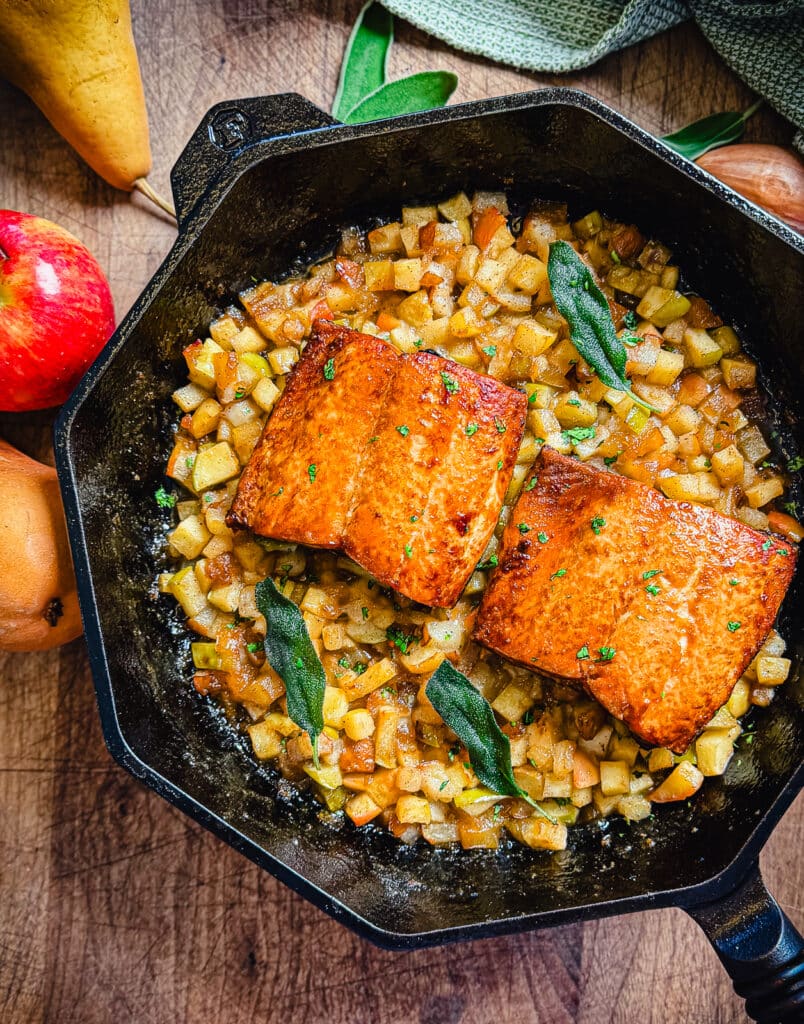
The fall salmon run here in West Michigan was winding down. I was at Robinette’s Apple Haus grabbing a jug of their fresh pressed cider, the cloudy stuff that literally tastes like you just bit into an apple. Standing there with salmon on the brain and cider in my hand, this apple cider salmon recipe pretty much wrote itself.
Salmon is rich and buttery, and apples bring the sweet and tart to cut right through it. It’s sort of like pairing pork chops and applesauce, and those two characters have been hanging out for generations.
Why This Apple Cider Pan Sauce Works on Salmon
Charred fruit, not stewed fruit. The diced fruit hits a ripping hot cast iron and sits there untouched until they brown. That char adds a little bitterness and a ton of depth, so the fruit tastes roasted instead of like pie filling.
Most of the fruit comes out before the sauce. You’ll pull about 85% of the charred fruit and leave the rest in the pan. That little bit melts into the cider and flavors the sauce, while the fruit you set aside keeps its shape and its bite.
The cider gets cooked down hard. A cup and a half of cider reduced by two thirds goes from thin and sweet to a sticky, amber sauce with some real body. Reduce it less and you get apple juice with ambitions.
Dijon keeps it honest. Cider is sweet, and so is the fruit. A spoonful of Dijon brings the tang and sharpness that will keep the apple cider salmon from tasting like dessert.
One skillet does it all. Char, sauce and broil all happen in the same pan, and it goes straight to the table. Fewer dishes, extra flavor.
Apple Cider Salmon Ingredients (Any Salmon Works)
Salmon. Any salmon works here, and I mean any. King, coho, sockeye, Atlantic, wild or farmed, fresh or frozen and thawed. I used wild sockeye salmon filets, but grab whatever you like.
Thicker cuts like king or Atlantic may need an extra minute or two under the broiler. Thinner cuts like sockeye cook fast, so watch them.
Apple cider. Fresh pressed cider from an orchard is the move in the fall. It’s cloudy, a little tart and has way more apple flavor than the clear stuff. The rest of the year, unfiltered apple juice works great, just add a teaspoon of apple cider vinegar to bring back the tartness.
Apples. One Honeycrisp for sweetness and one Granny Smith for tartness. Dice them into roughly 1/2-inch pieces so you get lots of surface for char.
Pear (optional). Half a Bosc pear isn’t required, but it’s worth grabbing. Pear brings a softer, honey-like sweetness that rounds off the tart Granny Smith and makes the sauce taste a little more grown up. Bosc holds its shape under heat better than most pears, but any ripe pear works, and if you skip it, just add a few more pieces of apple.
The sauce builders. Unsalted butter, a shallot, Dijon mustard, a pinch of cinnamon and nutmeg. Kosher salt to season. I use Diamond Crystal, so if you’re using Morton, go a little lighter.
To finish. Chopped flat leaf parsley for a pop of green and a few fresh sage leaves are just for showing off, but it’s fun.
How to Broil Salmon in a Cast Iron Skillet
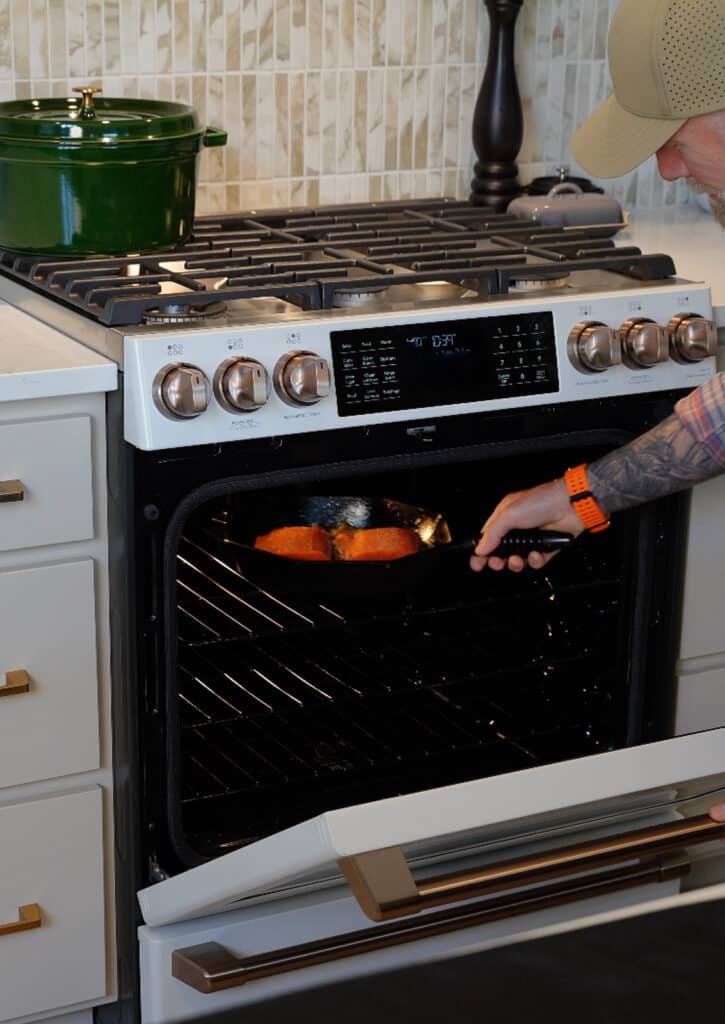
This is the step that makes or breaks the dish. The broiler has to be fully preheated and blazing hot before the skillet goes in. If you slide the fish under a broiler that’s still warming up, it bakes in the sauce instead of browning on top.
Preheat it for at least 10 minutes on high. Look at the element or burner before the pan goes in. It should be glowing red or showing a full flame, not just warm. If the burner isn’t active, opening the oven door for 30 seconds will kick it back on.
Oven broilers are programmed to turn off when the oven gets to a certain temp so opening the oven door will activate the burner again.
Get the fish as close as you can. Move the rack to the top position so the tops of the fish sit about 3 to 4 inches from the element. Closer means faster browning and less time for the fish to dry out.
Watch out for the shutoff. A lot of ovens turn the broiler off once the inside of the oven gets hot enough, even if you never touched the dial. If the element stops glowing, you’re baking, not broiling.
Some ovens, mostly older electric models, are designed to broil with the door propped at a “broil stop” to keep the element on, while most newer ones broil with the door closed. Check your oven’s manual and do what it says.
How to Make Apple Cider Salmon:
Step 1: Prep the salmon and the broiler. Pat the filets dry, lightly coat with a neutral oil, and salt the flesh side. Move your oven rack to the top position and crank the broiler to high so it’s fully hot by the time the sauce is done.
Step 2: Char the fruit. Get a cast iron skillet hot over medium-high heat and add a thin film of oil. Add the diced apples and pear (if using) and leave them alone for 2 to 3 minutes until they brown, then toss and color the other sides.
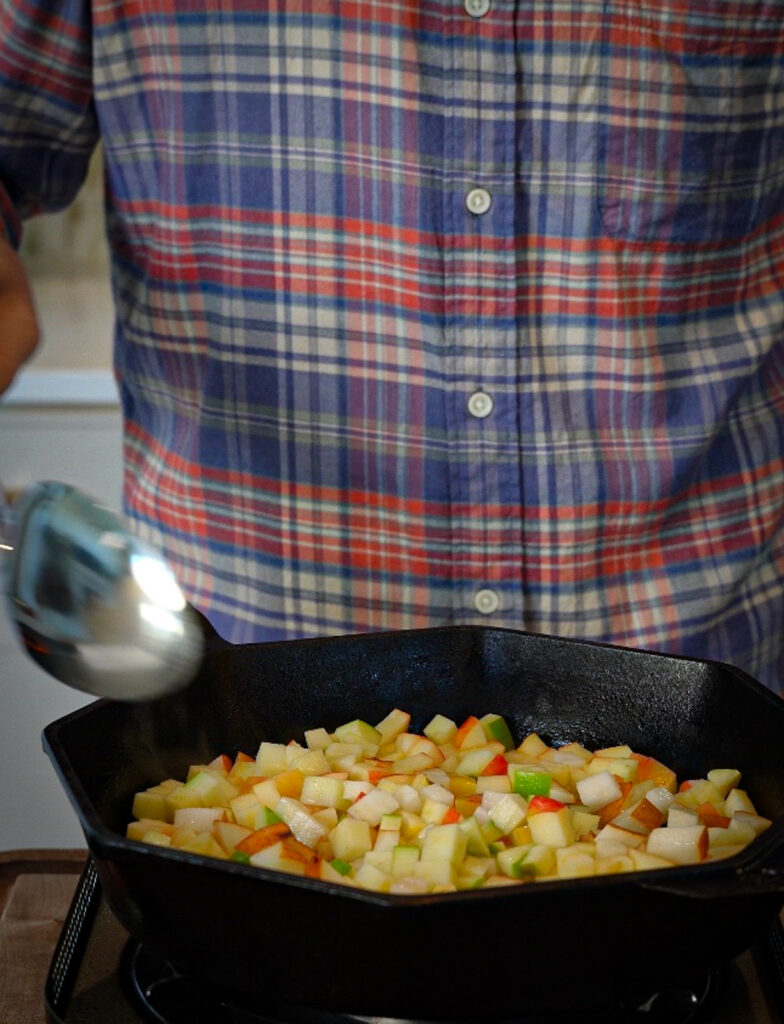
Step 3: Pull most of the fruit. Scoop out about 85% of the charred fruit and set it aside. The little bit left behind will break down and flavor the sauce.
Step 4: Brown the butter. Drop the heat to medium and add the butter. Let it foam until it turns golden and smells nutty, about three minutes, then add the shallot and cook until soft, about a minute.
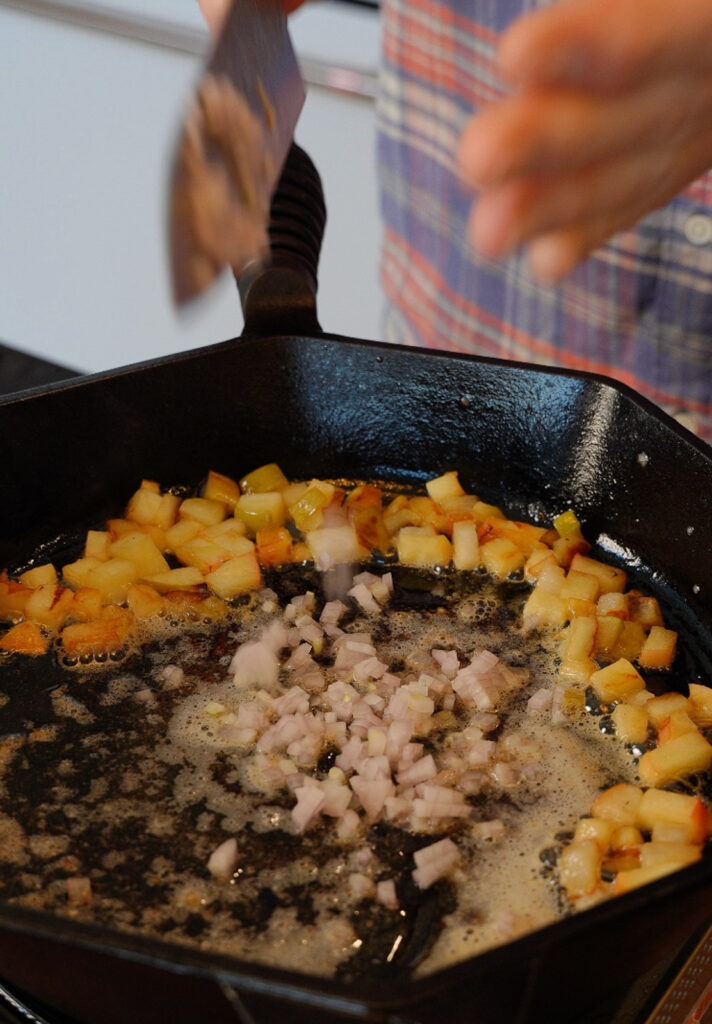
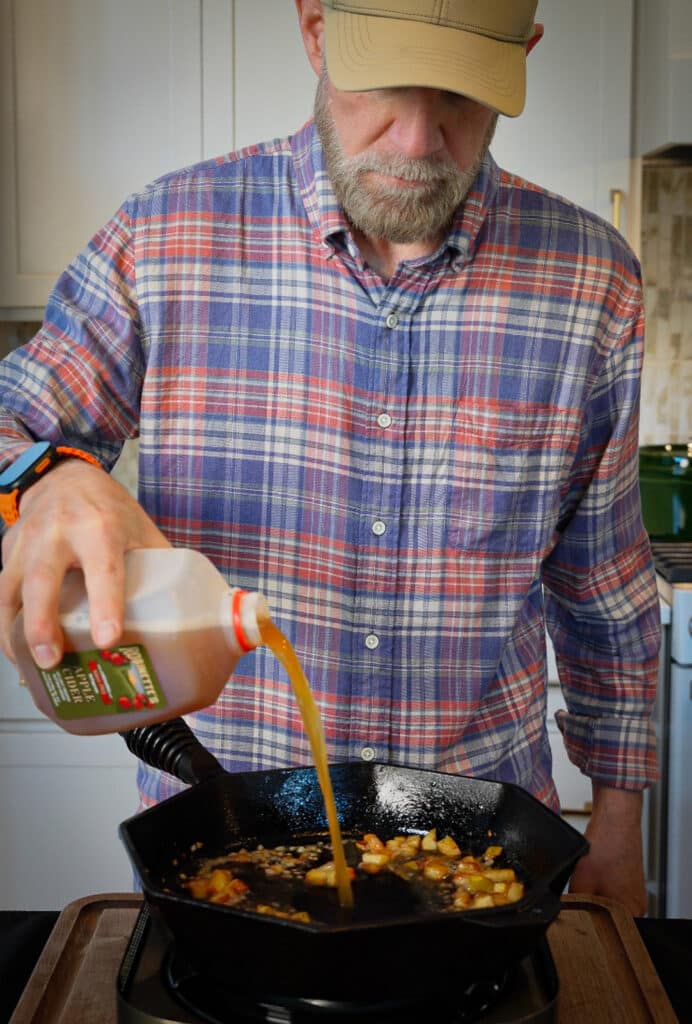
Step 5: Reduce the cider. Pour in the cider, which will hiss and spit at you. Simmer until it’s cooked down by about two thirds, roughly 6 – 8 minutes, and looks thick and amber.
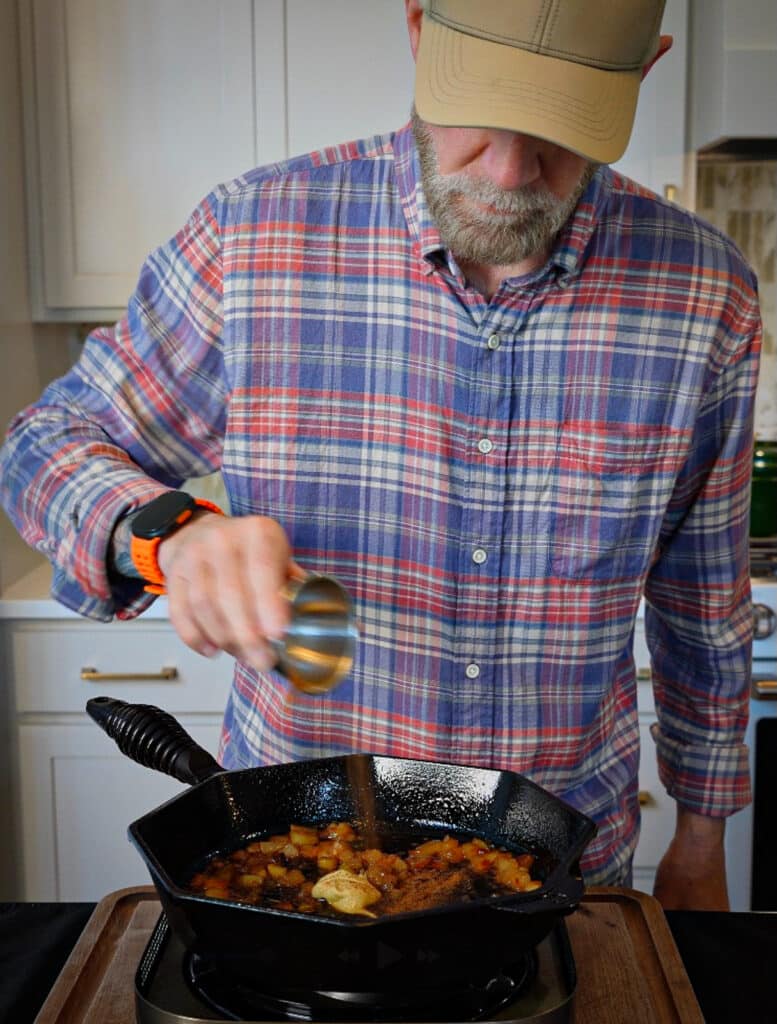
Step 6: Finish the sauce. Pull the pan off the heat and whisk in the Dijon, cinnamon and nutmeg. Swirl in the cold butter until glossy, then taste for salt.
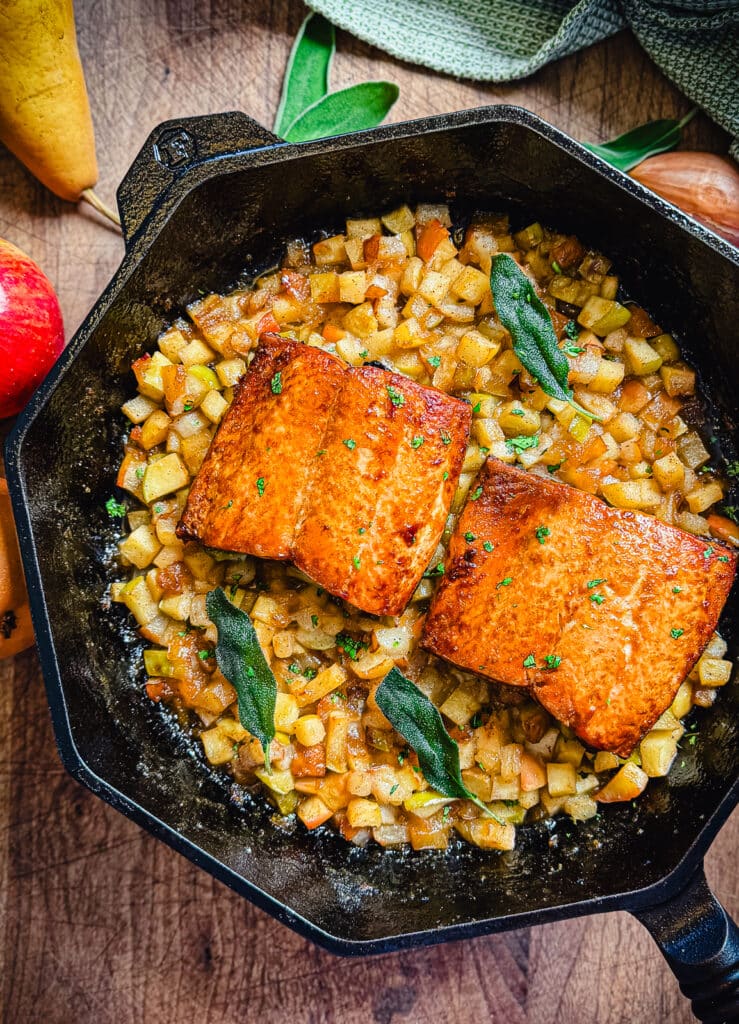
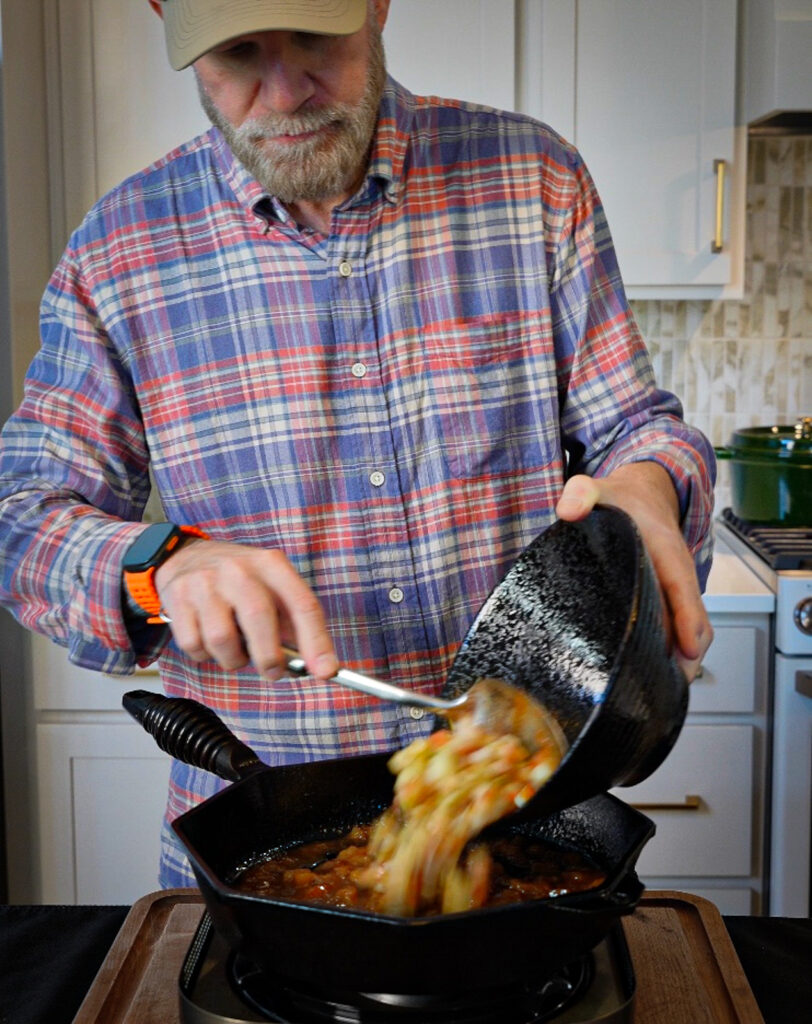
Step 7: Broil. Stir the reserved fruit back into the sauce and set the salmon on top, skin side down. Slide the skillet under the screaming hot broiler and cook 5 to 7 minutes, until the top of the fish is browned and the center hits 125 to 130°F.
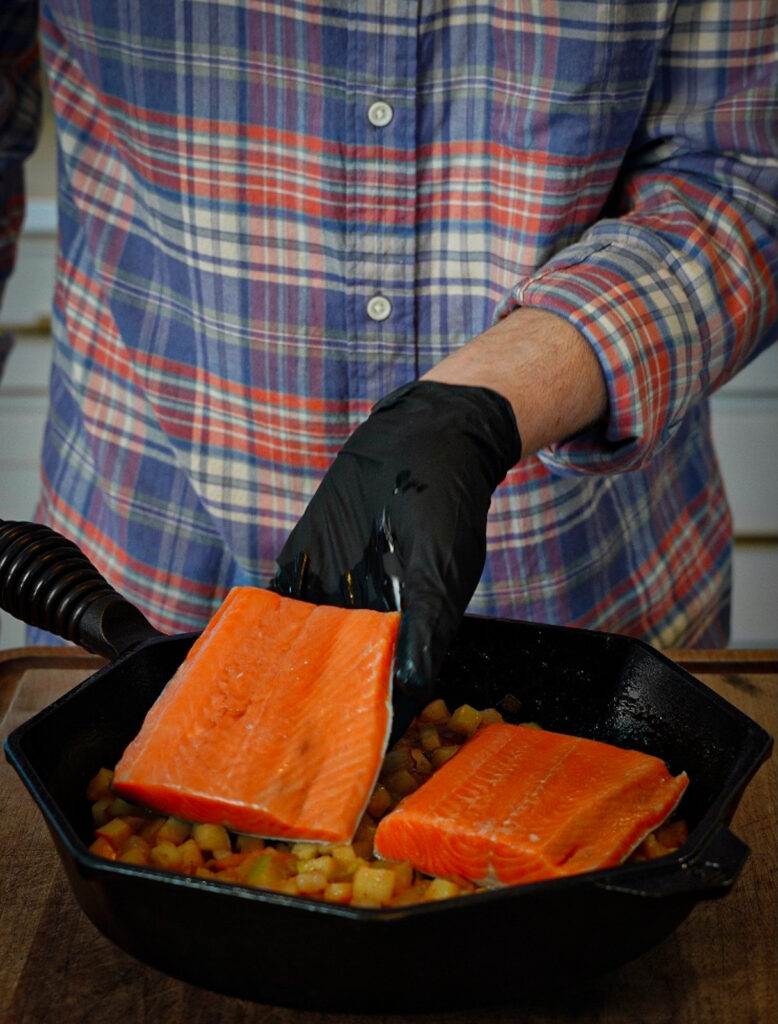
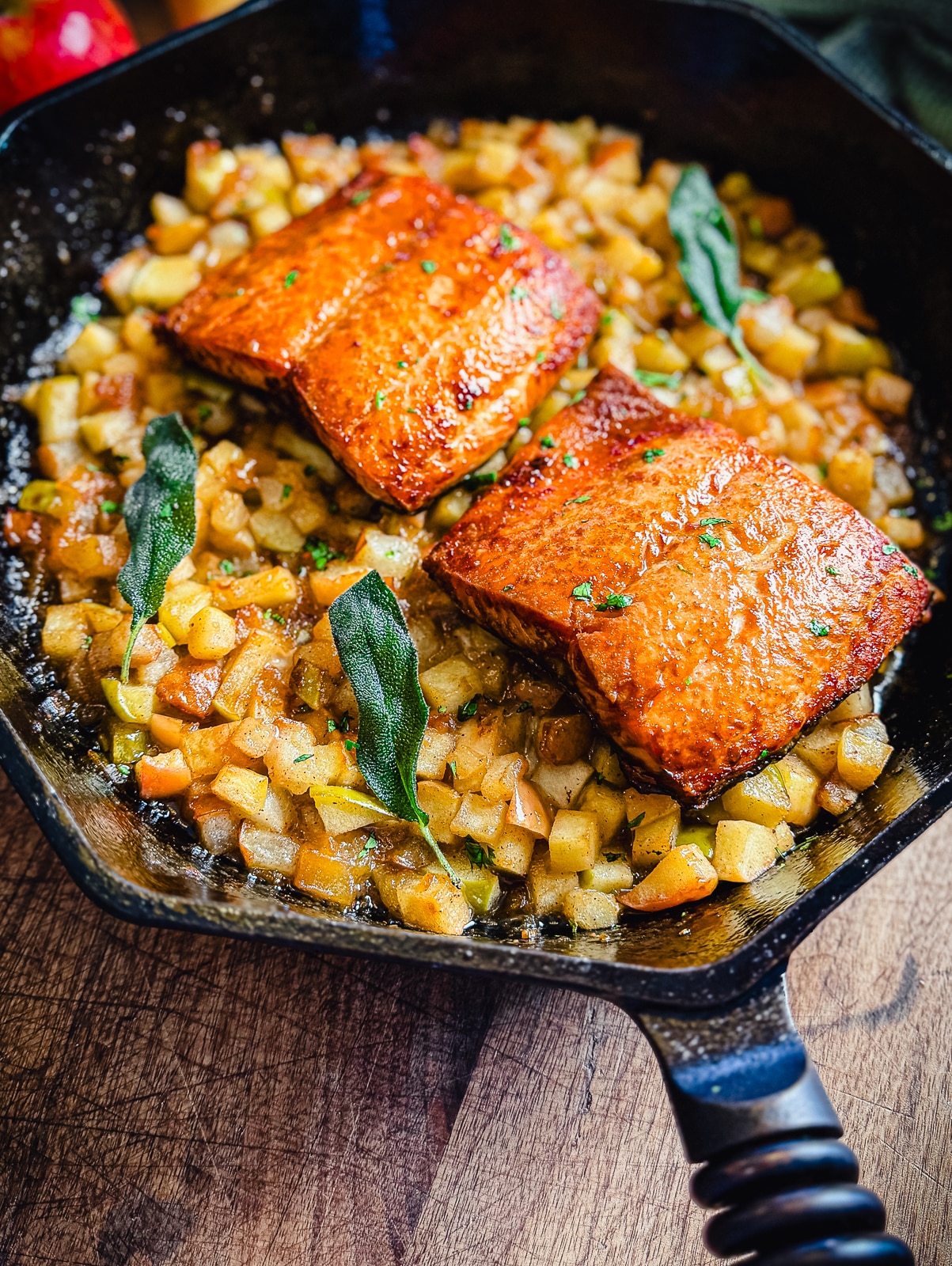
Step 8: Serve. Hit it with parsley and sage and take the whole skillet to the table. Use a good oven mitt, because that handle is hot enough to brand cattle.
Apple Cider Salmon FAQs
Not frozen. Thaw it overnight in the fridge and pat it very dry before salting.
Yes. Use unfiltered apple juice and add 1 teaspoon of apple cider vinegar to the sauce.
Pull it at 125 to 130°F for moist, just-flaky salmon. The USDA recommends 145°F.
The broiler wasn’t hot enough or it shut off. Preheat it fully, move the rack to the top and make sure the element is glowing when the pan goes in.
Any heavy oven-safe skillet works. Skip nonstick, since most can’t handle the broiler.
Yes. Make it up to 2 days ahead, rewarm it in the skillet, then add the salmon and broil.
No. It adds a softer sweetness, but the dish works with just apples.
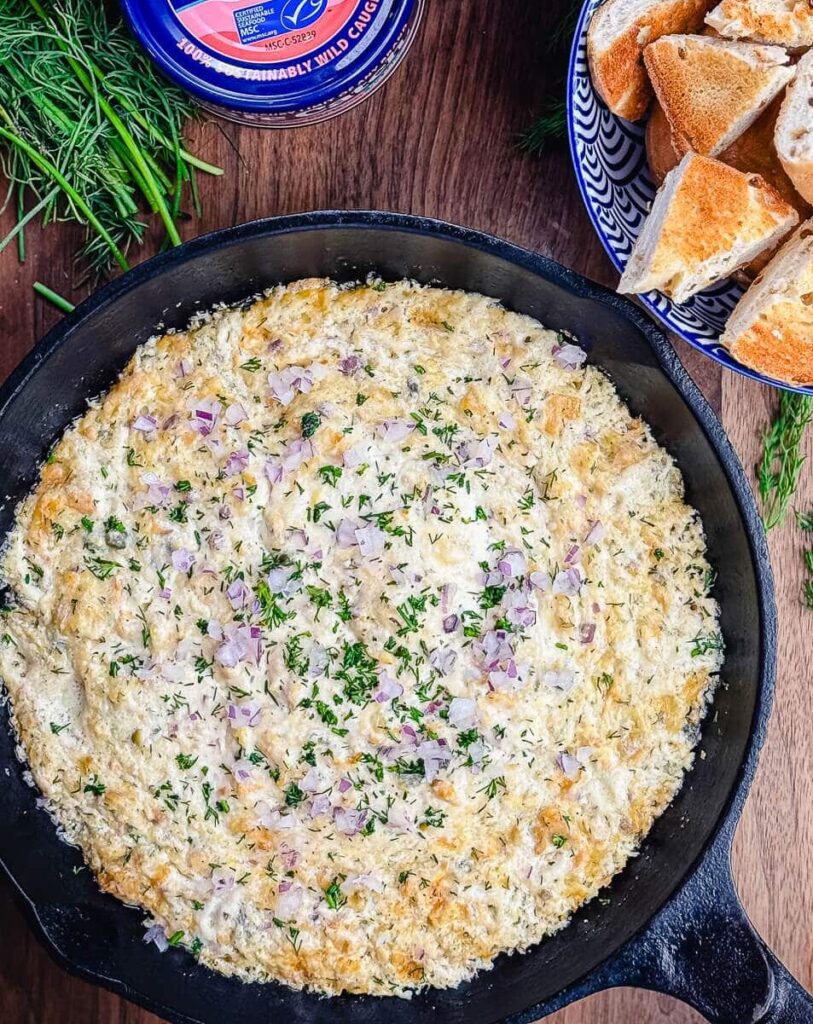
Tap Images Below For More Amazing Salmon


Ingredients
- 2 salmon filets any variety, 6 to 8 oz each
- ½ tsp kosher salt plus more to taste
- 2 tsp neutral high smoke point oil avocado or canola, divided
- 1 Honeycrisp apple diced into 1/2-inch pieces
- 1 Granny Smith apple diced into 1/2-inch pieces
- ½ Bosc pear diced into 1/2-inch pieces (optional, any ripe pear works)
- 3 tbsp unsalted butter for browning
- 1 shallot finely minced
- 1 ½ cups fresh pressed apple cider
- 1 tbsp Dijon mustard
- ¼ tsp ground cinnamon
- ⅛ tsp ground nutmeg
- 1 tbsp cold unsalted butter to finish
- 2 tbsp flat leaf parsley roughly chopped
- 4 fresh sage leaves
Instructions
- Pat the salmon dry, evenly coat with one teaspoon of oil, and season the flesh side with salt. Move the oven rack to the top position, 3 to 4 inches from the element, and preheat the broiler on high for at least 10 minutes.
- Heat the skillet over medium-high until a drop of water sizzles away instantly. Add the half of the oil, then the diced apples and pear (if using) in a single layer. Cook untouched 2 to 3 minutes until browned, toss and brown the other sides briefly.
- Remove about 85% of the fruit and set aside, leaving the rest in the pan.
- Reduce heat to medium. Add 3 tbsp butter and cook until golden brown and nutty, about three minutes. Add the shallot and cook until softened, about a minute.
- Add the cider and bring to a simmer. Reduce by about two thirds, 6-8 minutes, until thick and amber.
- Remove from heat. Whisk in the Dijon, cinnamon and nutmeg, then swirl in the cold butter until glossy. Taste and adjust salt.
- Stir the reserved fruit back in and place the salmon on top, skin side down. Make sure the broiler element is glowing hot, then broil 5 – 7 minutes until browned on top and 125 to 130°F in the center.
- Garnish with parsley and sage and serve straight from the skillet.
Video
Notes
- Any salmon works. Thicker cuts like king or Atlantic may need 1 to 2 extra minutes, thin cuts like sockeye cook fast.
- The pear is optional. It adds a softer, honey-like sweetness that balances the tart Granny Smith. Skip it and add a little more apple.
- Many ovens shut the broiler off once the oven gets hot. If the element stops glowing, check your manual. Some older electric ovens are designed to broil with the door cracked, while most newer ones broil with it closed.
- Use fresh pressed or unfiltered cider.
- The sauce can be made up to 2 days ahead and rewarmed before broiling.