

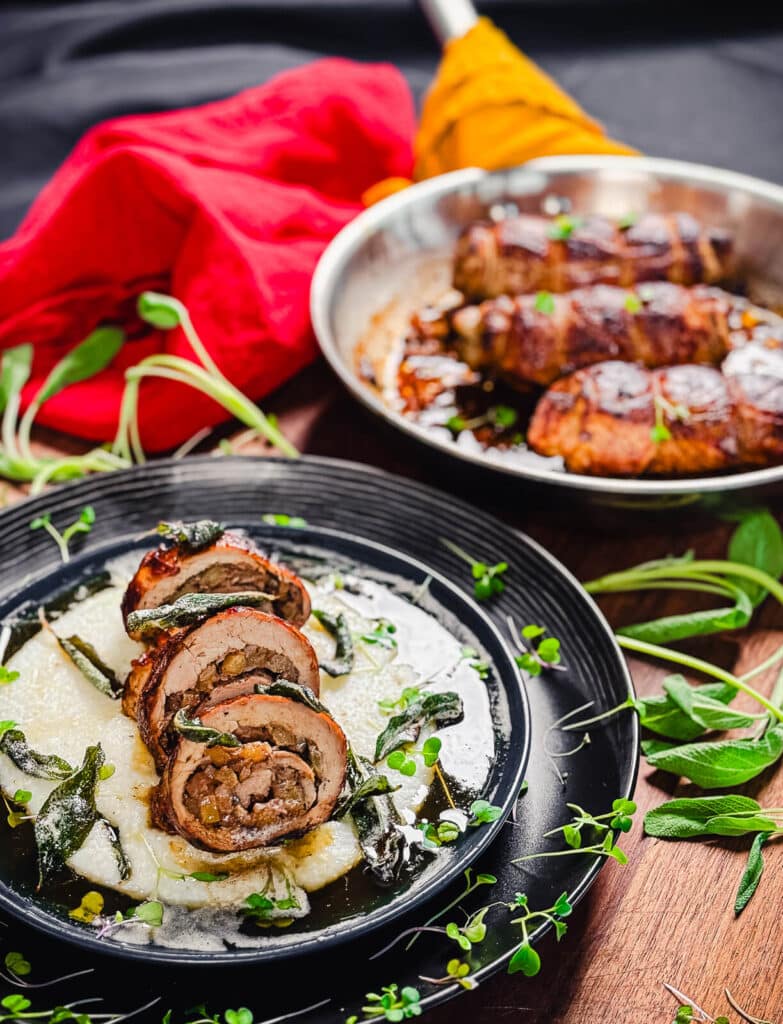
I grew up in Michigan where apple trees are basically a way of life. My grandmother had a ton of them in her backyard, and I’m still dreaming about her stuffed apple pies, which were the inspiration for this stuffed pork tenderloin.
These days I’m cooking in Houston where a “cool fall day” means anything under 95°F. So this stuffed pork tenderloin lets me hold onto that cozy apple season without needing to put on a jacket.
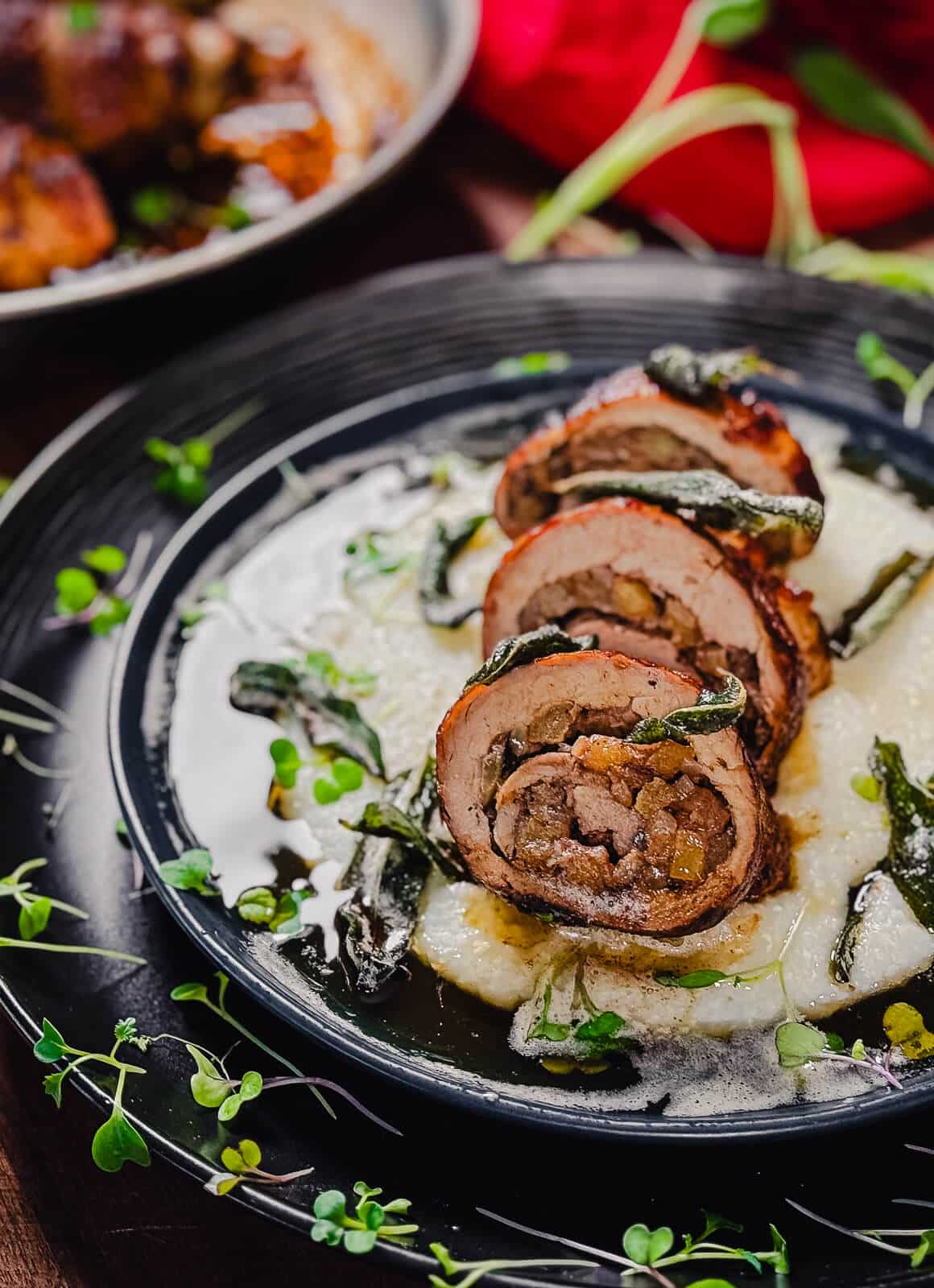
The apple and sage filling keeps things savory, and the brown butter drizzle makes it feel like you worked way harder than you actually did.
It looks fancy enough to impress your friends, but trust me, if you can roll a sleeping bag, you can make this pork.
Why This Recipe Works
Stuffed pork tenderloin looks impressive, but it couldn’t be easier to pull off. The apple and sage bring a cozy fall flavor that keeps everything savory instead of dessert-like. Lemon juice and Dijon give the filling just enough brightness to balance out the rich pork.
Finishing the stuffed tenderloins with brown butter and crispy sage leaves adds a restaurant-quality touch. And since we’re searing in a skillet and finishing in the oven, you get perfect juiciness every time. It’s approachable comfort food that feels special.
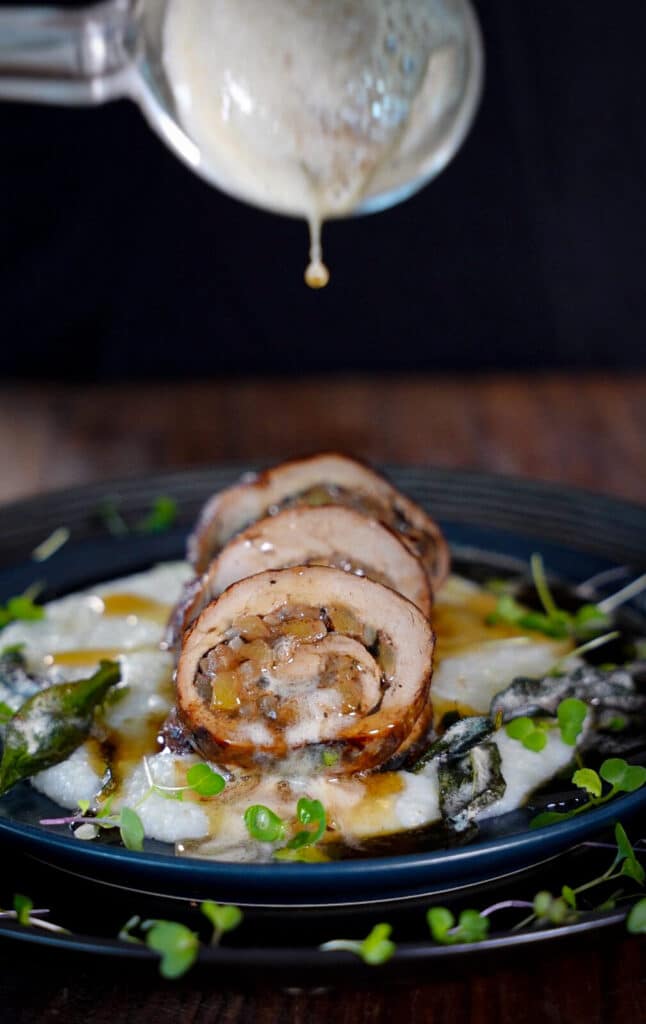
This recipe also scales really well for entertaining. Each tenderloin serves one person, so everyone gets their own roll of flavor-packed pork. That’s a win for presentation while offering each person the perfect portion.
How To Butterfly and Roll a Pork Tenderloin
We’re not doing the typical butterfly cut here for this stuffed pork tenderloin. Instead, we’re gently unrolling the tenderloin so it becomes one long sheet you can stuff and roll back up. It’s a simple knife technique that gives you way more surface area for that apple sage filling.
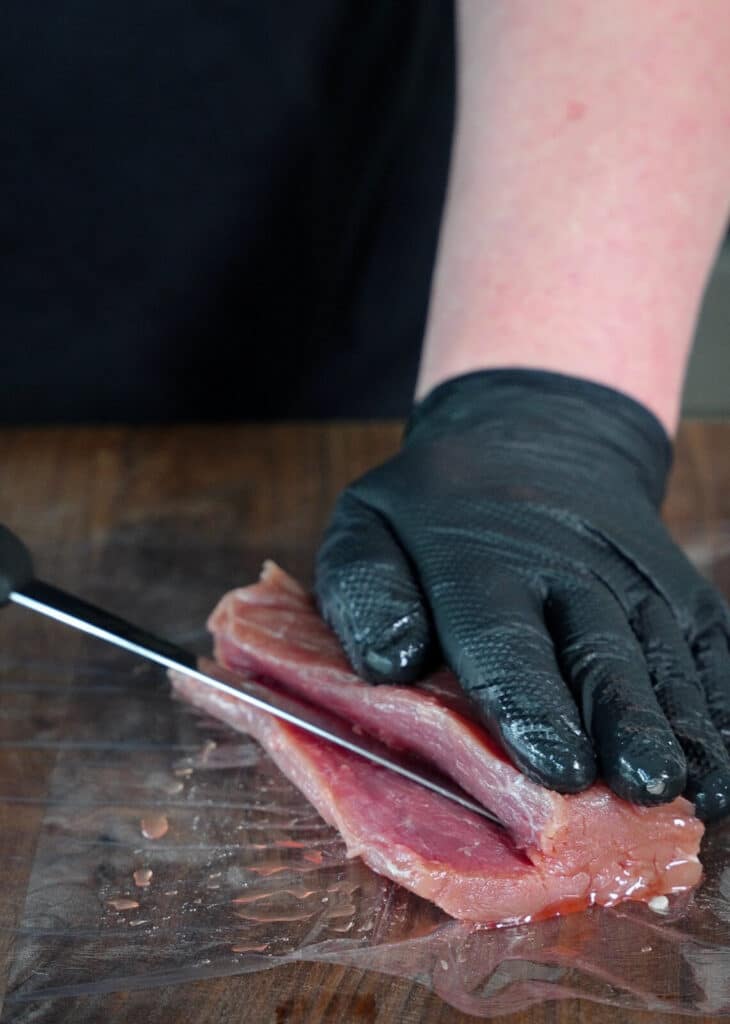
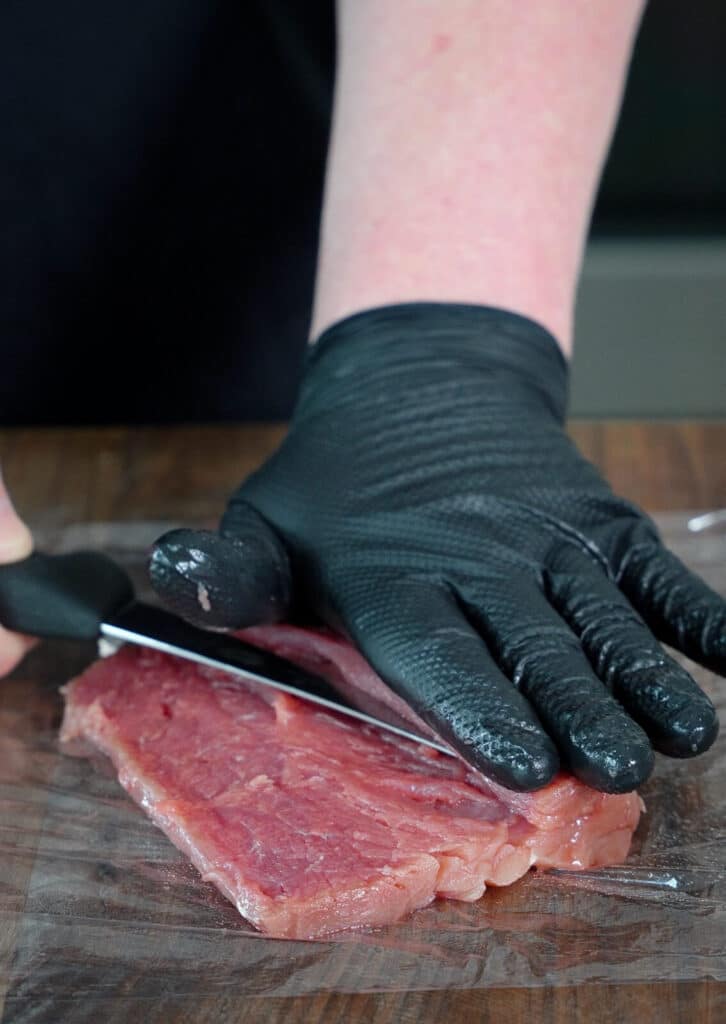
Start by making a shallow cut down the length of the tenderloin, being careful not to cut all the way through. Open it up, then make another shallow cut into the thicker side and unroll again. Keep gently cutting and unrolling until the whole piece lays flat like a long rectangle.
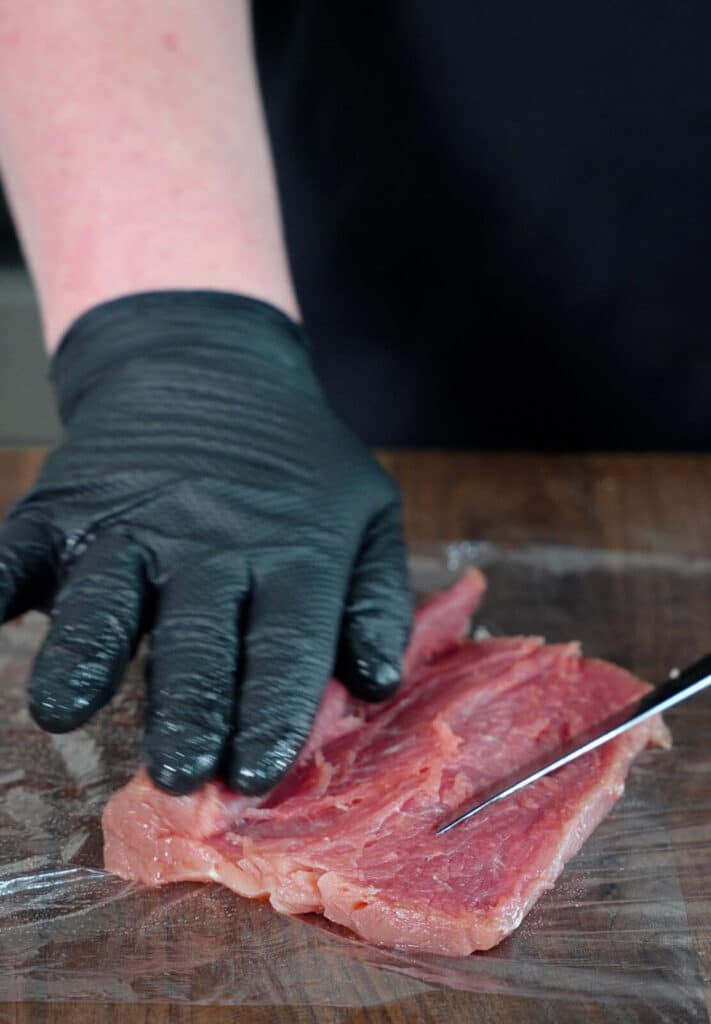
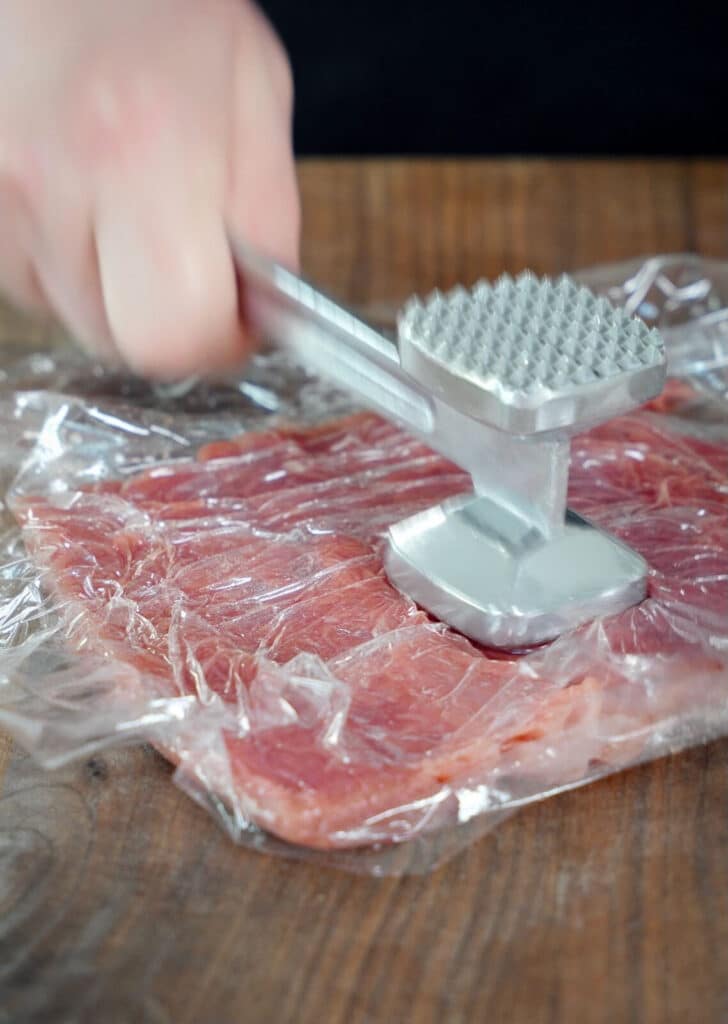
Once it’s open, lay the pork between two layers of plastic wrap and pound it gently with a meat mallet. This evens out any thickness differences so the pork cooks evenly and the stuffing doesn’t try to escape while rolling. It also helps the pork stay rolled tight, which makes slicing look professional in the end.
🔥 Grillseeker Tip🔥
Tightly tie each end of the rolled tenderloin first, that locks the filling inside. Then, tie the middle sections a little looser. If you tie the tenderloin from one end to the other, in a straight run, you’ll force the stuffing out the opposite side.
Ingredient Swaps and Variations
This apple and sage is tough to beat, but stuffed pork tenderloin is also a great canvas for new flavors. You can swap out the filling to match the season or just what you’ve got in the fridge. Here are a few ideas to try.
Pear and Thyme
Swap the apples for diced pear and use fresh thyme instead of sage. It’s a little more elegant but still fits the cool-weather comfort vibe.
Peruvian-Inspired Aji Verde
Use a spoonful of Aji Verde inside the roll or serve it alongside as a dipping sauce. It brings bright heat and a pop of color that pork loves.
Mediterranean Spinach and Feta
Cook down some spinach and mix in crumbled feta and chopped olives. A squeeze of lemon keeps the savory flavors bright.
Mushroom and Swiss
Sauté mushrooms with garlic and mix in shredded Swiss cheese. It’s earthy, cheesy, and tastes like fall in a different way.
How To Know When Pork Is Done
Pork is juiciest when it’s cooked to a nice medium finish. For me, that’s an internal temperature of 135-137°F. The pork stays tender and flavorful with a slight blush in the center.
The USDA recommends cooking pork to 145°F for safety. That’s totally fine too, and you’ll still get a good result. You do you here, just grab an instant-read thermometer and check the center of the thickest part.
Pull the tenderloins from the oven a few degrees early because they’ll rise in temperature as they rest. This avoids drying out your hard work and keeps every slice juicy.
What to Serve With Stuffed Pork Tenderloin
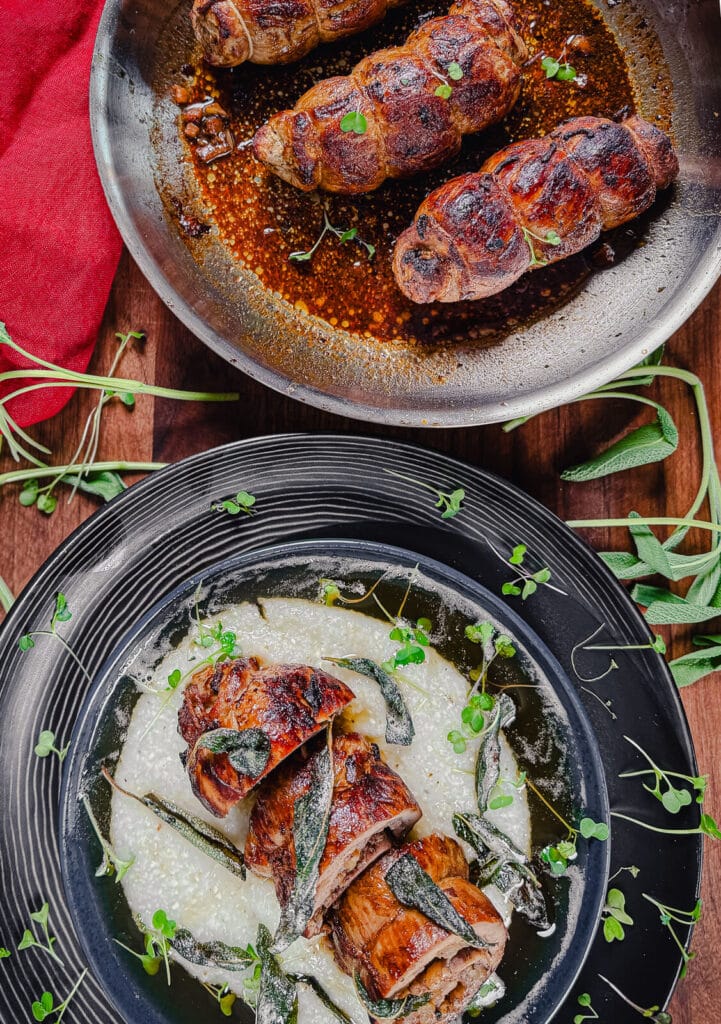
I like serving this pork over a bed of cheddar grits. The pork juices and brown butter soak right in, and it looks awesome on the plate. It’s a simple move that makes dinner feel like a restaurant dish.
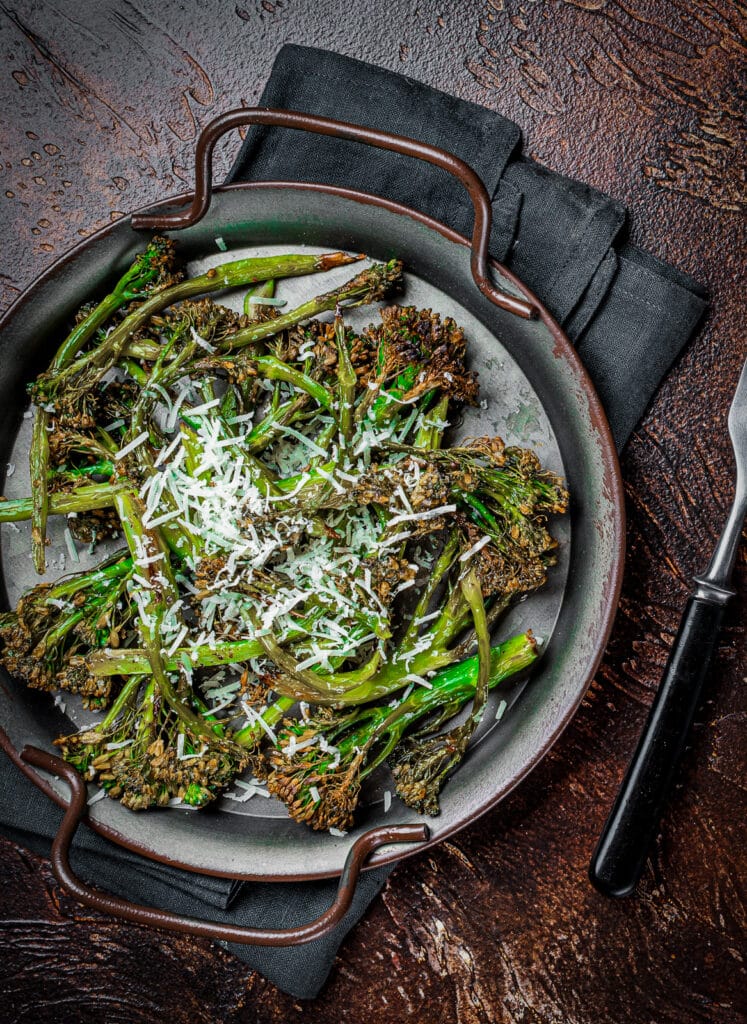
Broccolini is a great side too. It cooks fast, tastes fresh, and adds a pop of green that makes the pork slices stand out.
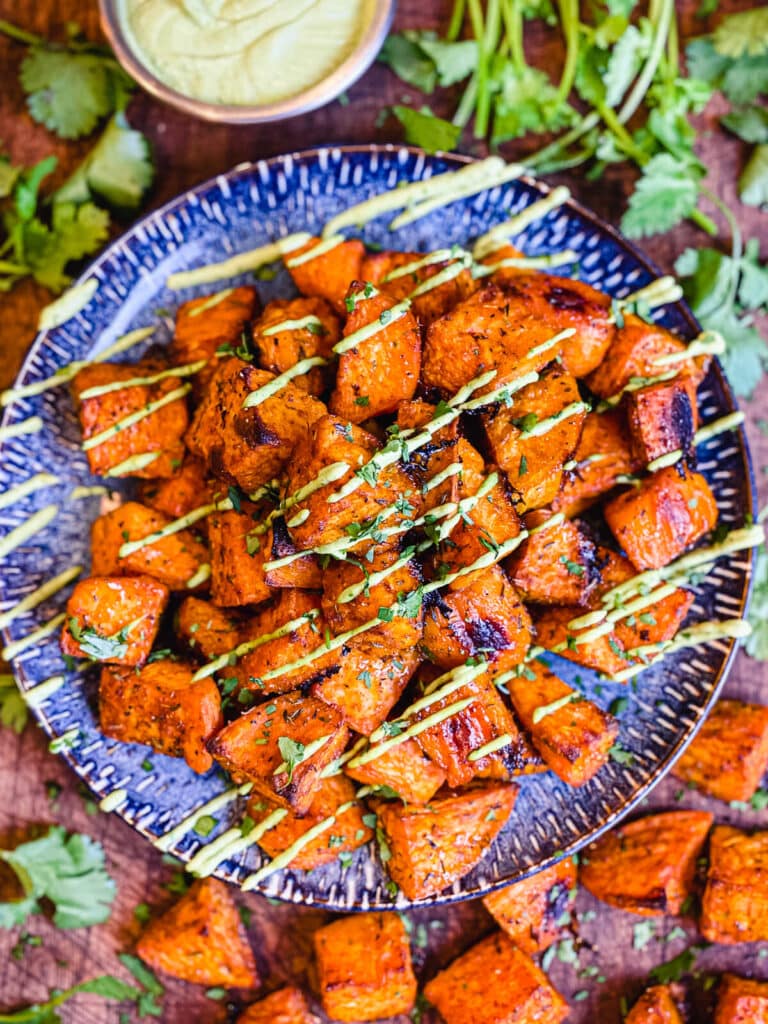
Roasted sweet potatoes are another solid option. They play well with the apple filling and fit right in with fall flavors.
Pork Tenderloin vs Pork Loin: What’s the Difference?
Pork tenderloin and pork loin sound similar, but they’re totally different cuts. Tenderloin is the long, skinny muscle that runs along the backbone. It doesn’t do much work, so it stays naturally tender and cooks fast.
Pork loin is the wide, thicker cut that sits above the ribs. It’s where pork chops come from, and it can be sold bone-in or boneless as a roast. Since it’s a bigger muscle, it needs more time and lower heat to stay juicy.
So here’s the simple rule. If you’re making this stuffed pork tenderloin recipe, grab the long skinny one that weighs about a pound. Save the big roast for another day.
FAQs
Can I make this ahead of time?
Yep. Roll and tie the pork earlier in the day and keep it in the fridge. When you’re ready, sear and finish it in the oven. Just add a couple extra minutes if it’s going in cold.
What’s the best pan to use for searing?
Stainless steel is my go-to. It holds heat evenly, gives you a beautiful sear, and it’s low-maintenance. Carbon steel, and cast iron work great too.
How do I keep the stuffing from falling out?
Tie each end first to trap the filling in the center. Then tie the rest of the tenderloin slightly looser. A sharp knife and gentle slicing also help keep everything in place.
What temperature should pork be cooked to? I like pulling pork at 133°F and letting it rest to finish around 137°F. The USDA however, recommends 145°F. An instant-read thermometer keeps guessing out of the equation.
How to Make Stuffed Apple Sage Pork Tenderloin
Serves: 4 | Prep Time: 20 mins | Cook Time: 30 mins
Ingredients:
4 pork tenderloins, about 1 pound each
3 tbsp olive oil, divided
3 medium apples, diced small (Honeycrisp or Pink Lady)
1 large yellow onion, diced small
6 tbsp butter
¼ cup fresh sage, minced
1 ½ tbsp Dijon mustard
½ tsp ground cinnamon
¼ tsp ground cloves
3 tsp fresh lemon juice
Salt and black pepper to taste
For the Sage Brown Butter:
6 tbsp butter
10 to 12 whole sage leaves
Salt and black pepper to taste
Step 1: Slice the pork tenderloins lengthwise, unrolling each one like a roll of wrapping paper.
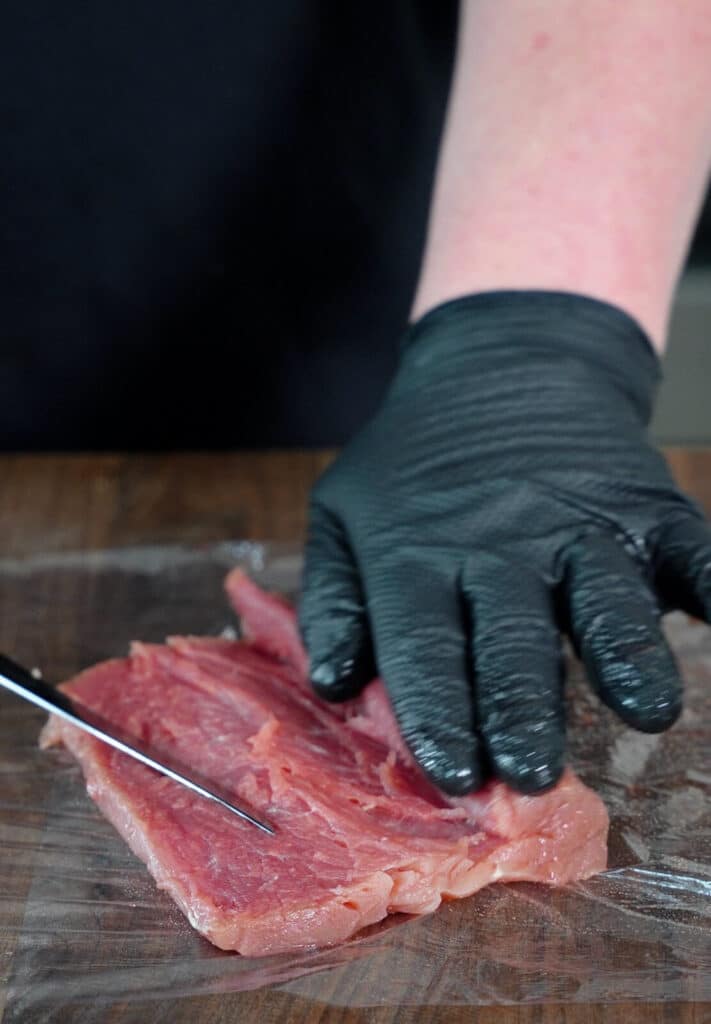
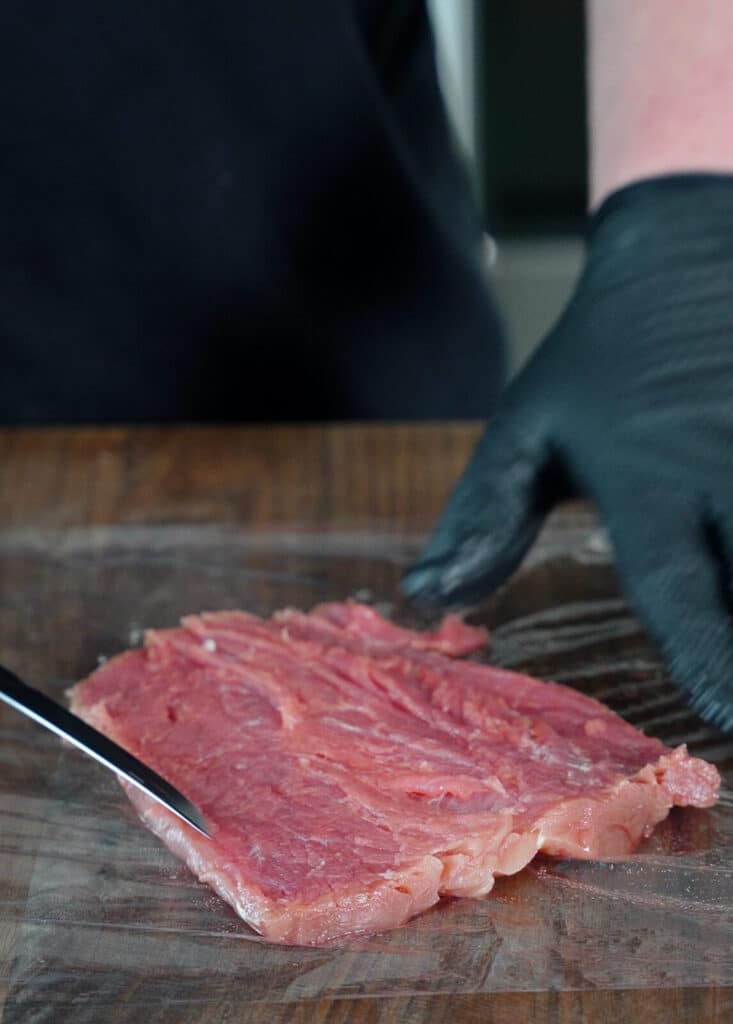
Step 2: Wrap loosely in plastic wrap and gently pound to an even thickness. Lightly season the cut side with desired amount of salt and pepper and set aside.
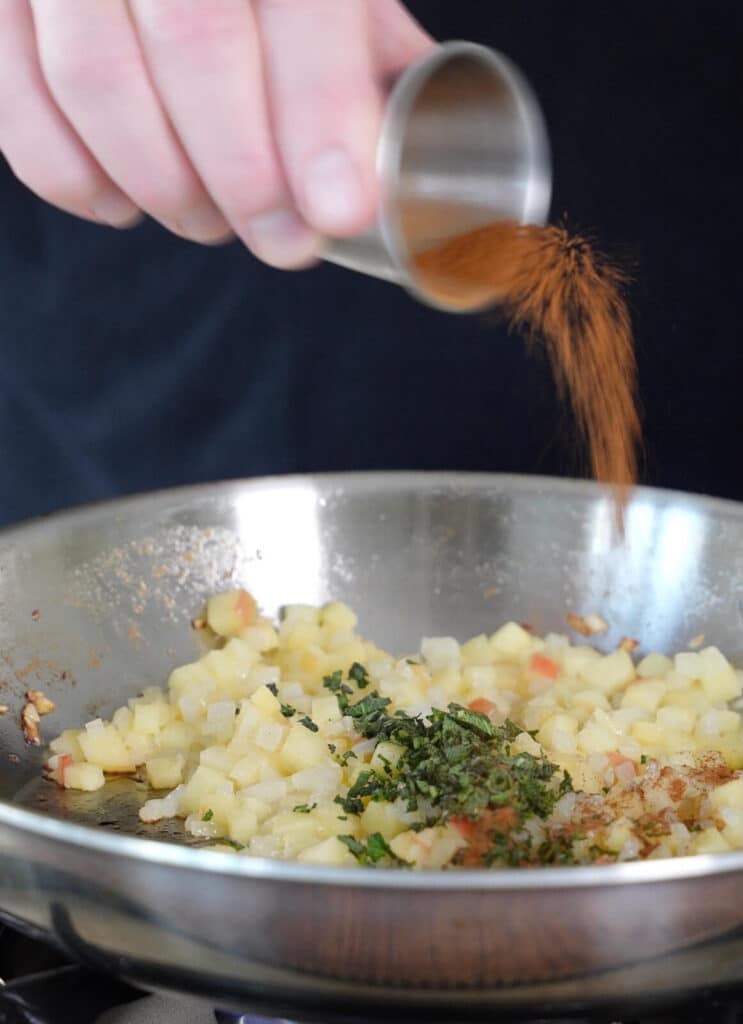
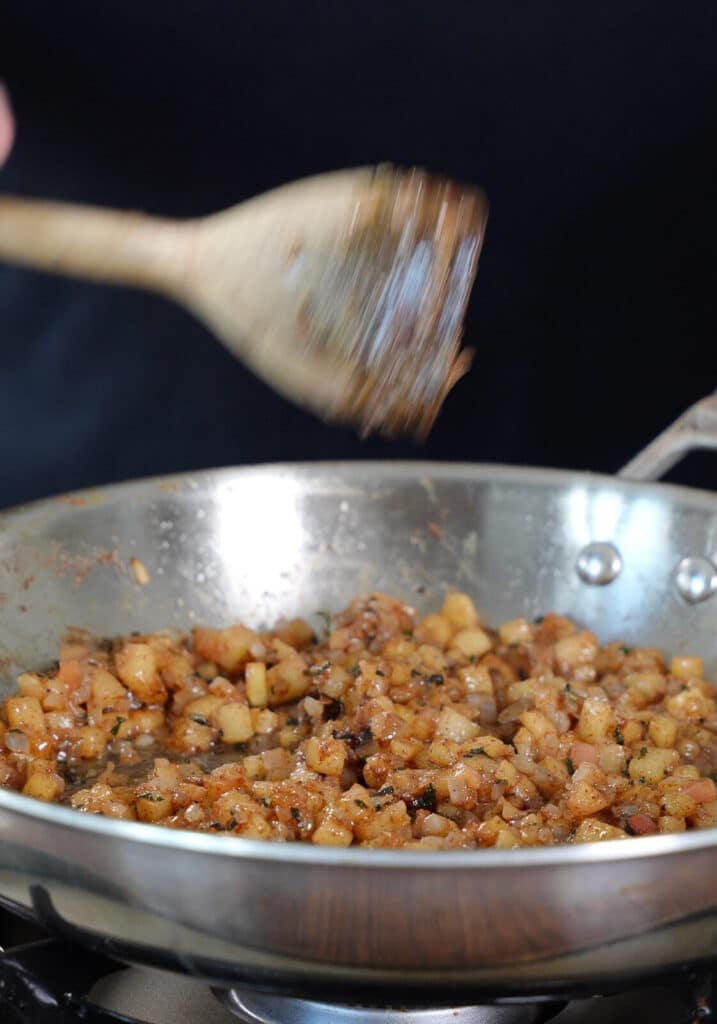
Step 3: Melt six tablespoons of butter in a large skillet over medium heat. Add the onions and cook until softened, about four minutes. Add the apples and cook until they just start to soften, about two minutes. Stir in the minced sage, cinnamon, and cloves. Remove from heat and stir in the Dijon and lemon juice. Season lightly with salt and pepper to taste.
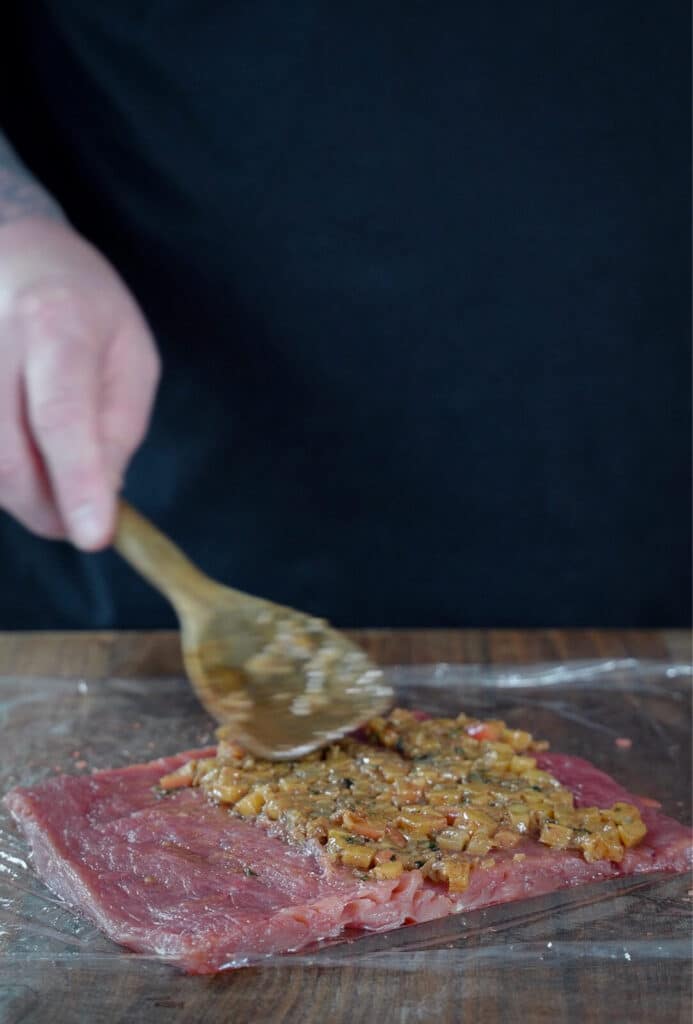
Step 4: Divide the stuffing evenly among the four tenderloins and spread a thin layer over the surface of the cut sides.
Step 5: Roll up gently and tie with butcher’s twine every 1 to 2 inches, being sure to tie each end first, so as not to force the stuffing out of the end of the roll. Brush the outsides with olive oil and season with salt and pepper.
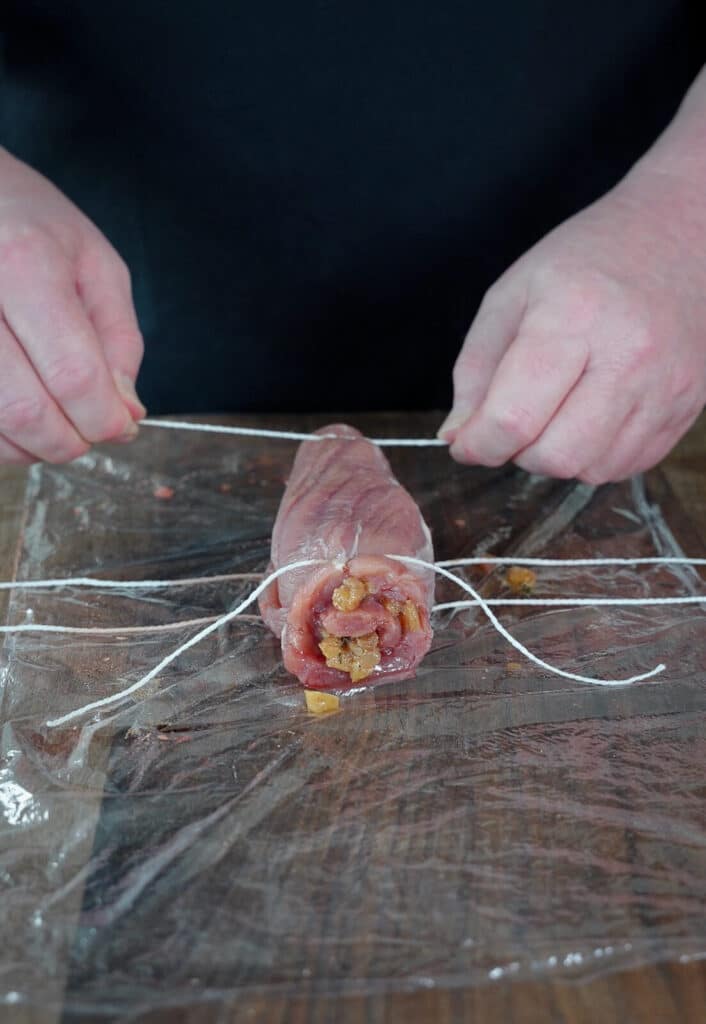
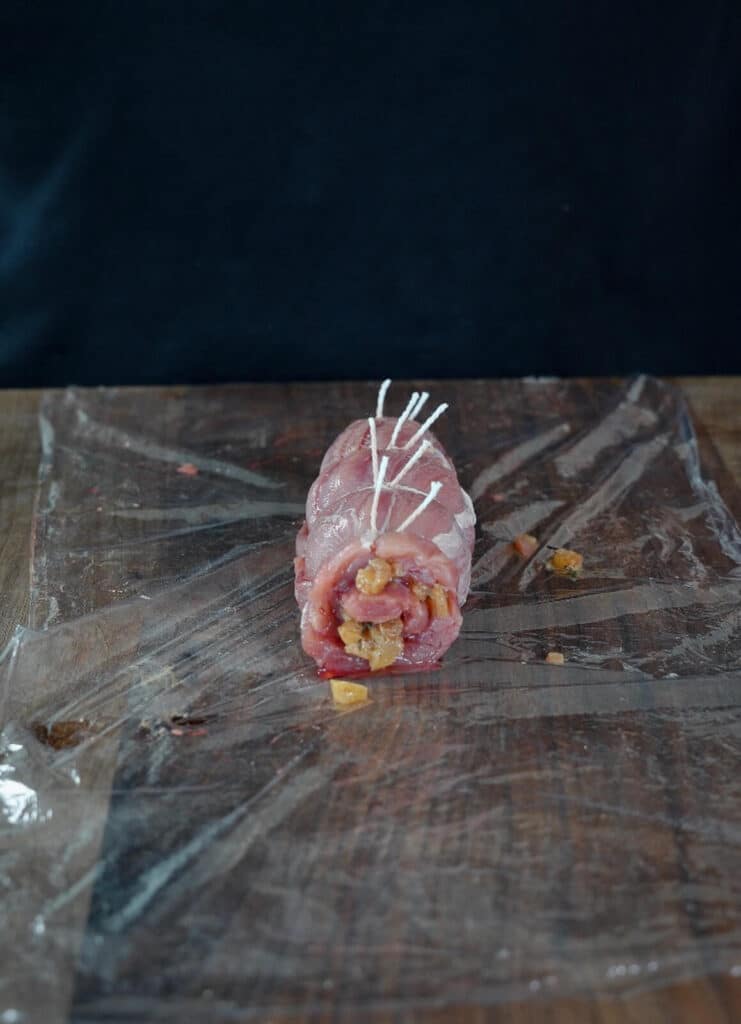
Step 6: Preheat the oven to 375°F. While the oven is preheating, heat the remaining olive oil in a large stainless steel skillet (or two if needed) over medium-high heat. Sear each stuffed tenderloin on all sides until golden brown.
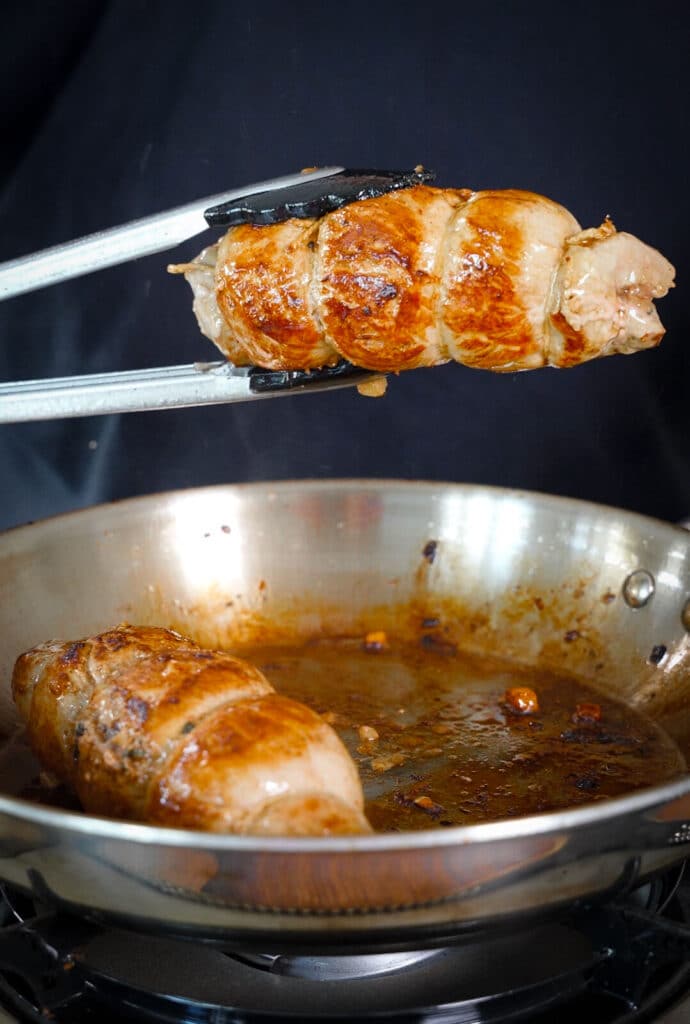
Step 7: Transfer the skillet to the oven and roast until each tenderloin reaches desired internal temperature, about 15 minutes depending on size. Remove and let rest for 5 to 10 minutes before slicing.
Step 8: While pork is resting, melt six tablespoons of butter in a pan over medium heat. When butter starts to foam, and you see brown bits forming in the bottom of the pan, add the whole sage leaves and let them sizzle until crisp, about 30 seconds. Turn off the heat and season with salt and pepper.
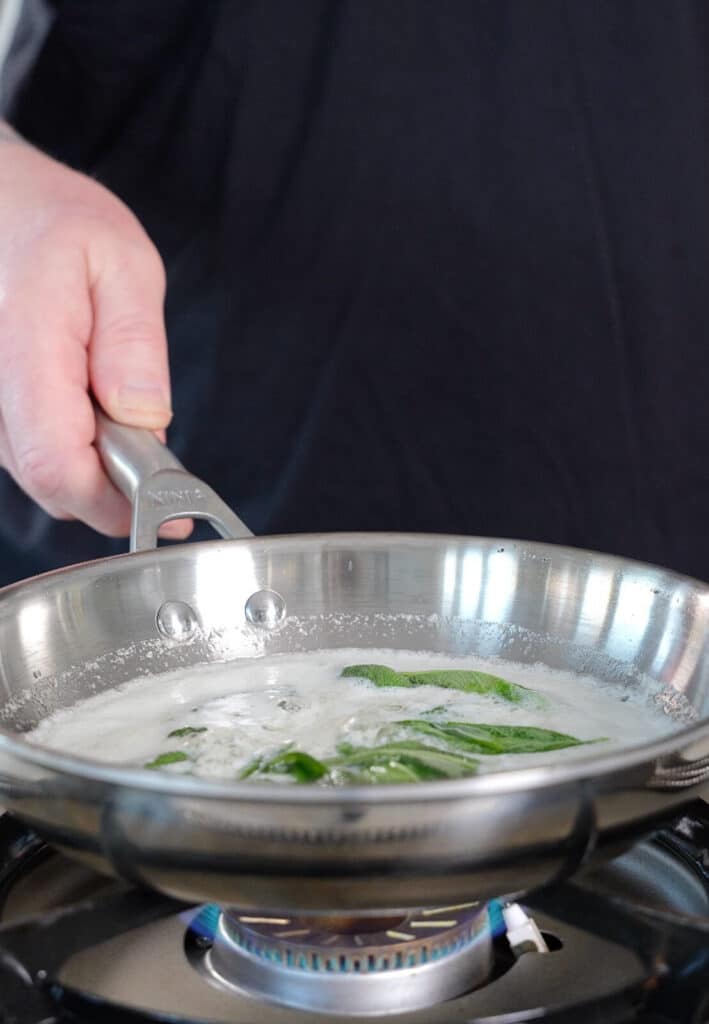
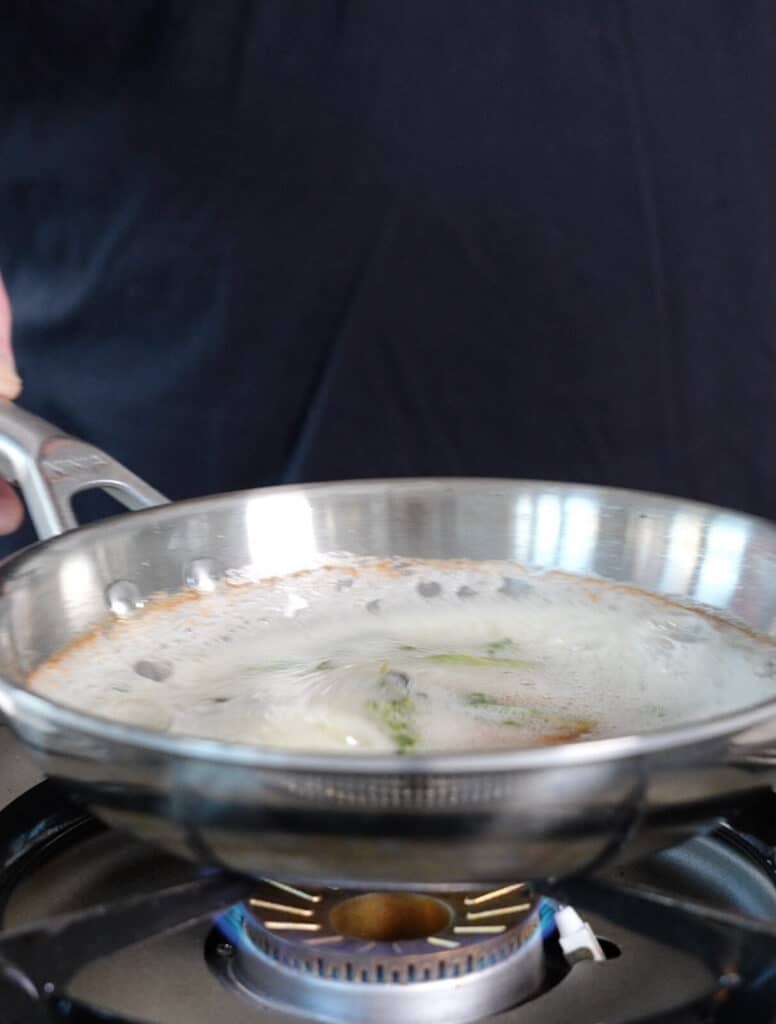
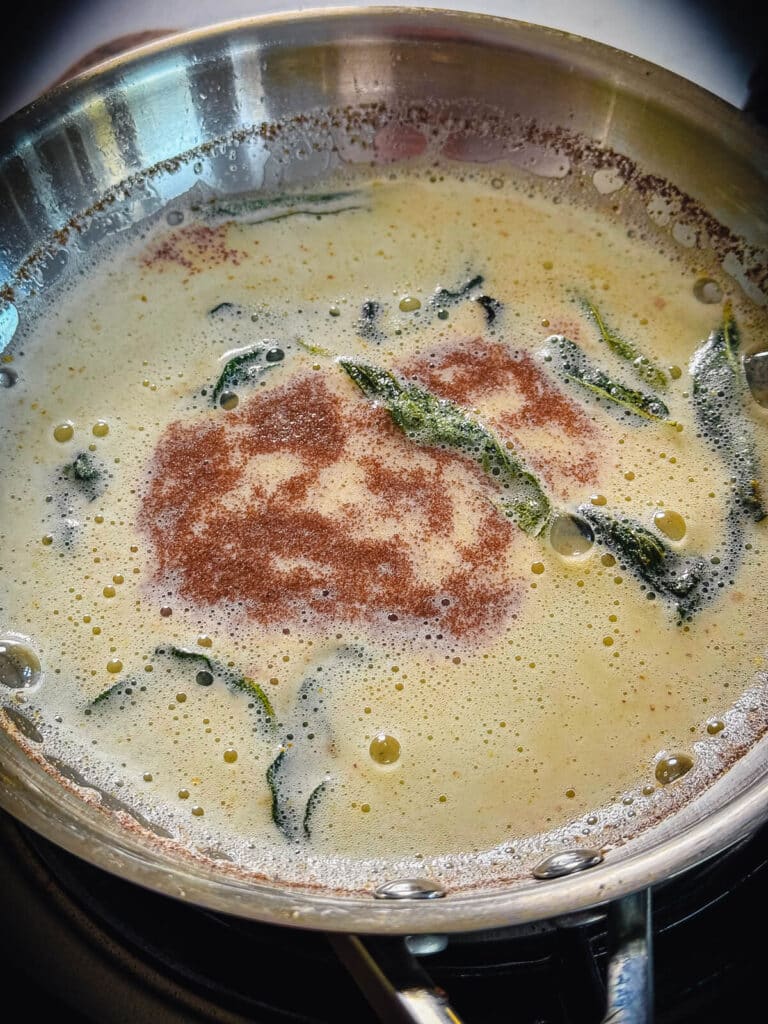
Step 9: Slice the tenderloins and spoon the brown butter over the top, letting the crisp sage leaves rest on each serving.
Ingredients
- 4 1 lb pork tenderloins
- 3 tbsp olive oil divided
- 3 medium apples, small diced Honeycrisp or Pink Lady
- 1 large sweet onion finely diced
- 6 tbsp butter
- ¼ cup fresh sage finely chopped
- 1½ tbsp dijon mustard
- ½ tsp ground cinnamon
- ¼ tsp ground cloves
- 3 tsp fresh squeezed lemon juice
- salt and pepper to taste
Brown Butter
- 6 tbsp butter
- 10-12 whole sage leaves
- salt and pepper to taste
Instructions
- Slice the pork tenderloins lengthwise, unrolling each one like a roll of wrapping paper. Wrap loosely in plastic wrap and gently pound to an even thickness. Lightly season the cut side with desired amount of salt and pepper and set aside.
- Melt six tablespoons of butter in a large skillet over medium heat. Add the onions and cook until softened, about four minutes. Add the apples and cook until they just start to soften, about two minutes. Stir in the minced sage, cinnamon, and cloves. Remove from heat, and let cool slightly. Then stir in the Dijon and lemon juice. Season lightly with salt and pepper to taste.
- Divide the stuffing evenly among the four tenderloins and spread a thin layer over the surface of the cut sides. Roll up gently and tie with butcher’s twine every one to two inches, being sure to tie each end first, so as not to force the stuffing out of the end of the roll. Brush the outsides with olive oil and season with salt and pepper.
- Preheat the oven to 375°F. While the oven is preheating, heat the remaining olive oil in a large stainless steel skillet (or two if needed) over medium-high heat. Sear each stuffed tenderloin on all sides until golden brown.
- Transfer the skillet to the oven and roast until each tenderloin reaches desired internal temperature, about 15 minutes depending on size. Remove and let rest for 5 to 10 minutes before slicing.
- While pork is resting, melt six tablespoons of butter in a pan over medium heat. When butter starts to foam, and you see brown bits forming in the bottom of the pan, add the whole sage leaves and let them sizzle until crisp, about 30 seconds. Turn off the heat and season with salt and pepper.
- Slice the tenderloins and spoon the brown butter over the top, letting the crisp sage leaves rest on each serving.