

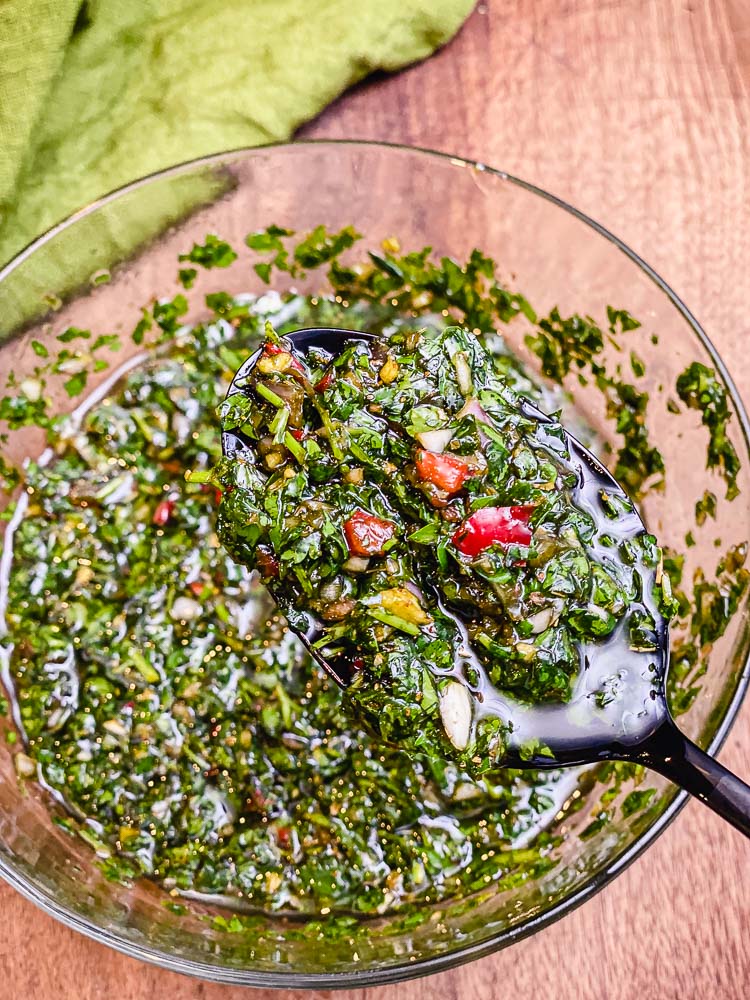
Sometimes your meal just needs one thing to take it from good to great. For me, that thing is almost always chimichurri.
I’ve made a lot of chimichurri over the years, and I’ve tried most of the recipes floating around online. This version isn’t strictly traditional, but my tweaks add a serious punch of flavor without messing with what makes chimichurri great in the first place.
Fair warning: once you make this, jarred chimichurri will never cut it again.
What is Chimichurri?
Originating from Argentina and Uruguay, chimichurri is a condiment that combines olive oil and vinegar with fresh herbs. It’s full of flavor, and complements any grilled meat. It’s best served at room temperature and as a dipping sauce, or applied directly to grilled meat or fish.
It can also be used as a marinade and screams freshness. In fact, some of the best chicken thighs I’ve ever eaten were marinated all day in chimichurri sauce and then grilled — amazing!
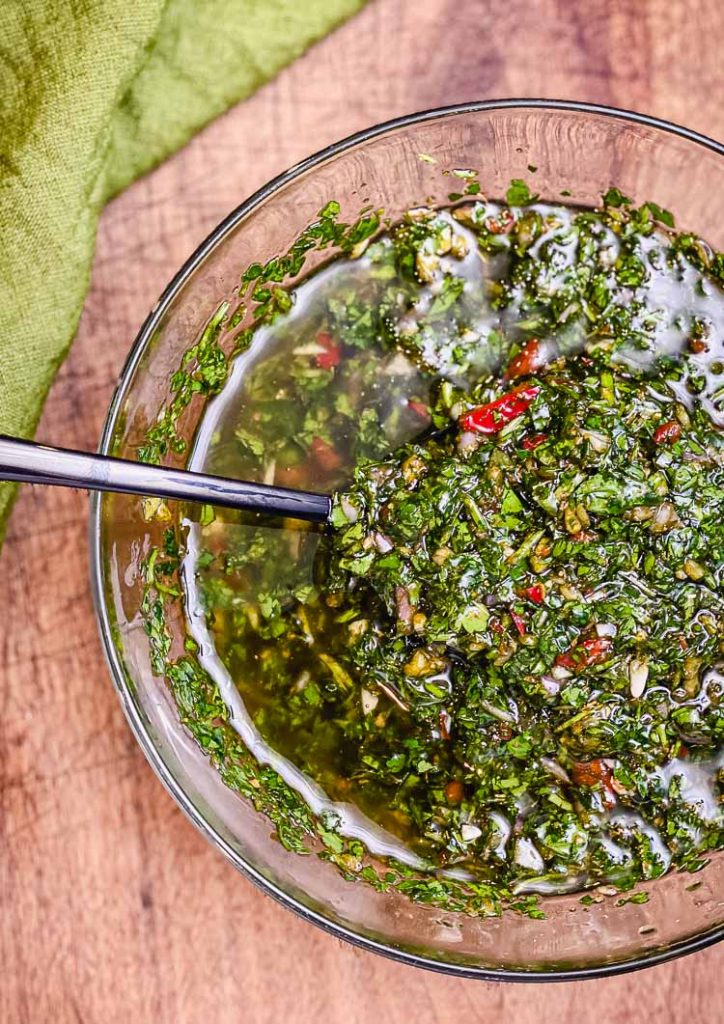
What To Serve Chimichurri Sauce With
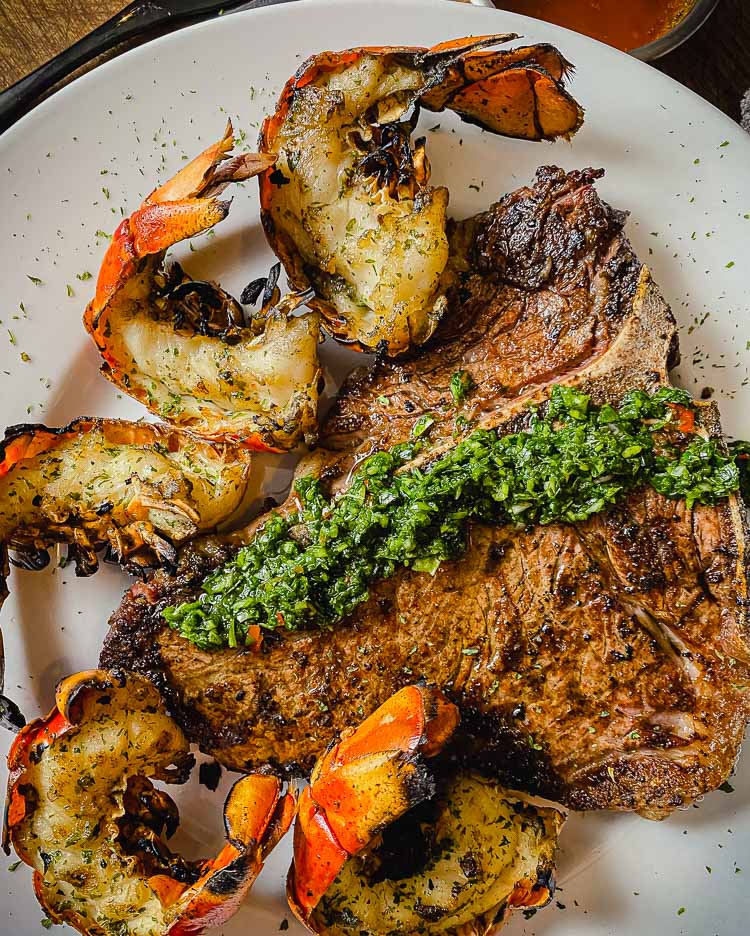
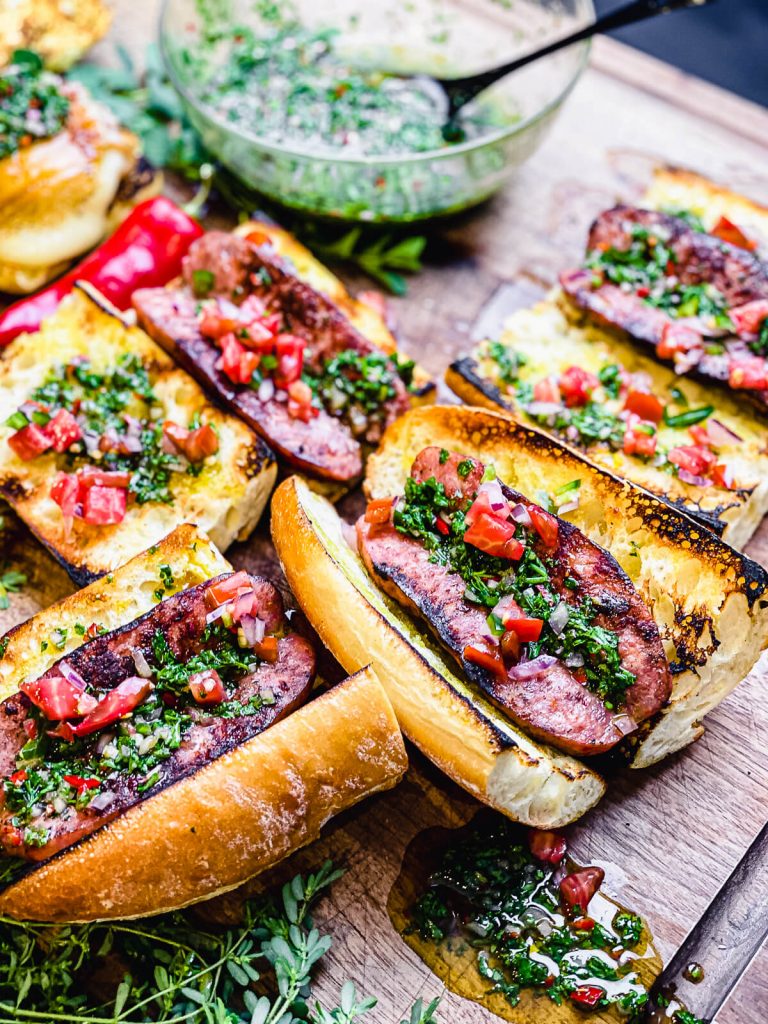
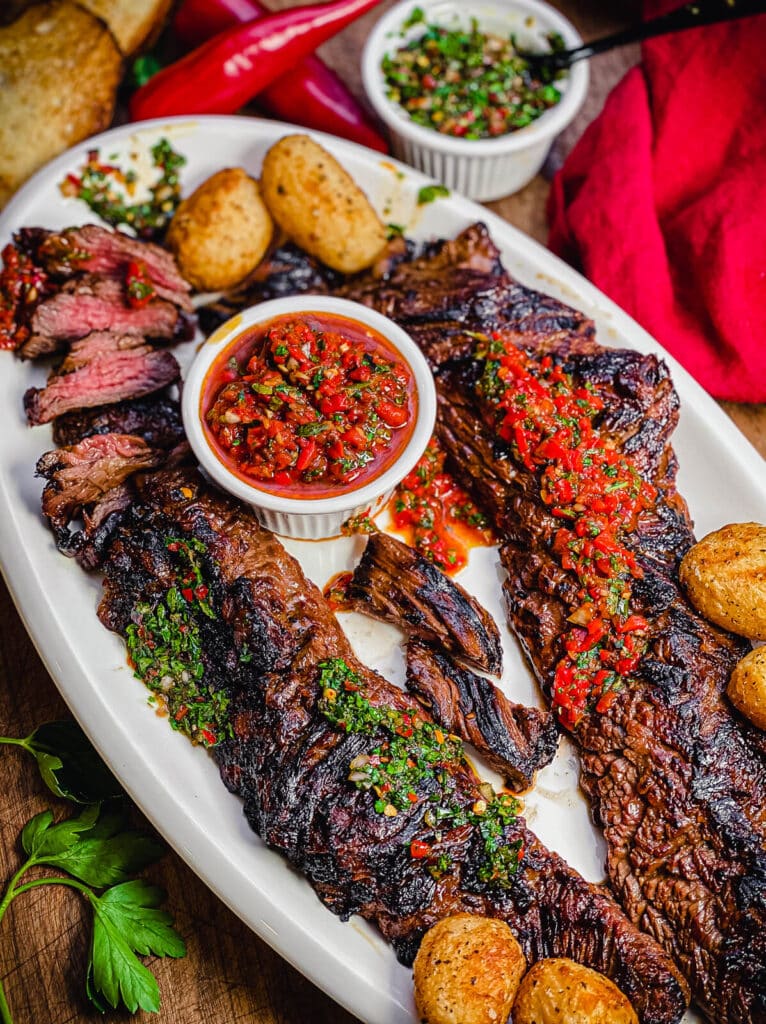
Honestly, the easier question is what chimichurri isn’t good on. I love it on a perfectly grilled NY strip or a churrasco steak. I mean, it’s practically the official sauce of Argentine grilling. If you’ve never made choripán, that’s the next recipe you’re making after this one. The chimichurri is non-negotiable on those.
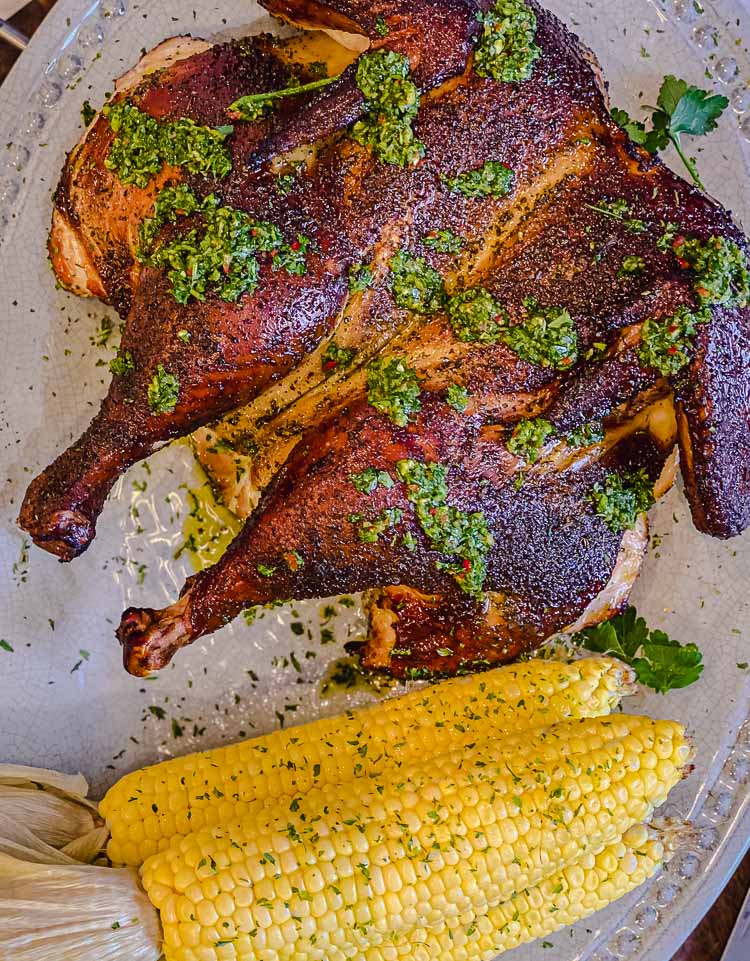
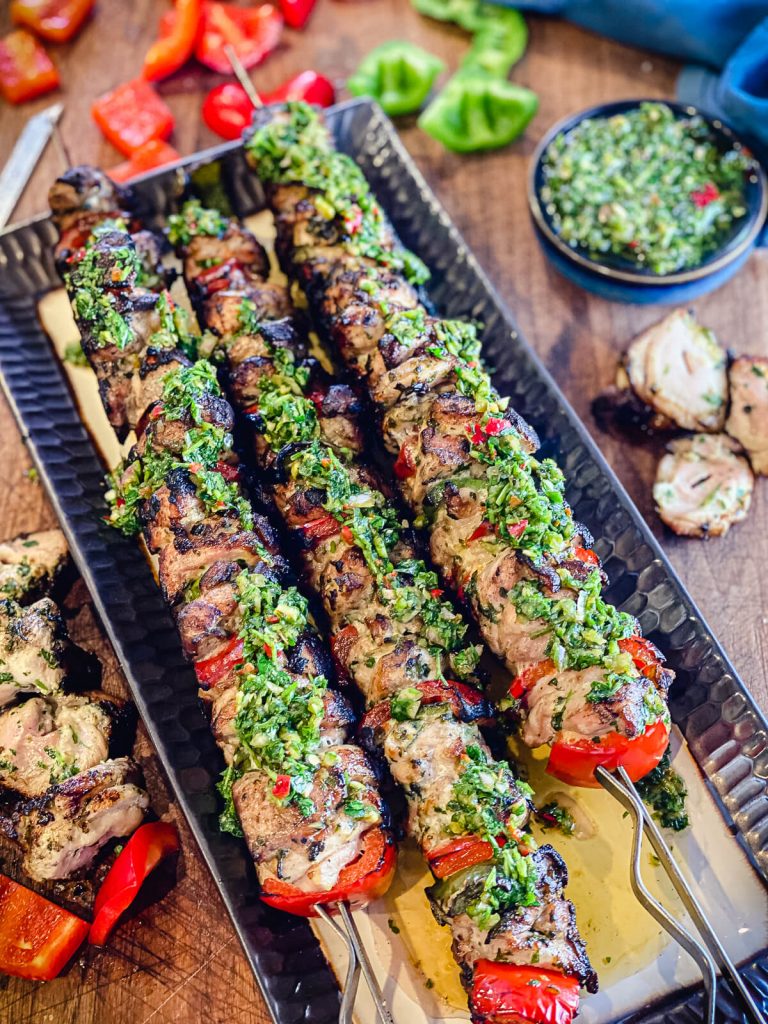
It’s also killer on chicken. I’ve used it as a marinade for grilled chicken kabobs and the results are ridiculous. The herbs and acid tenderize the meat all day and then you get that fresh hit of flavor right off the grill.
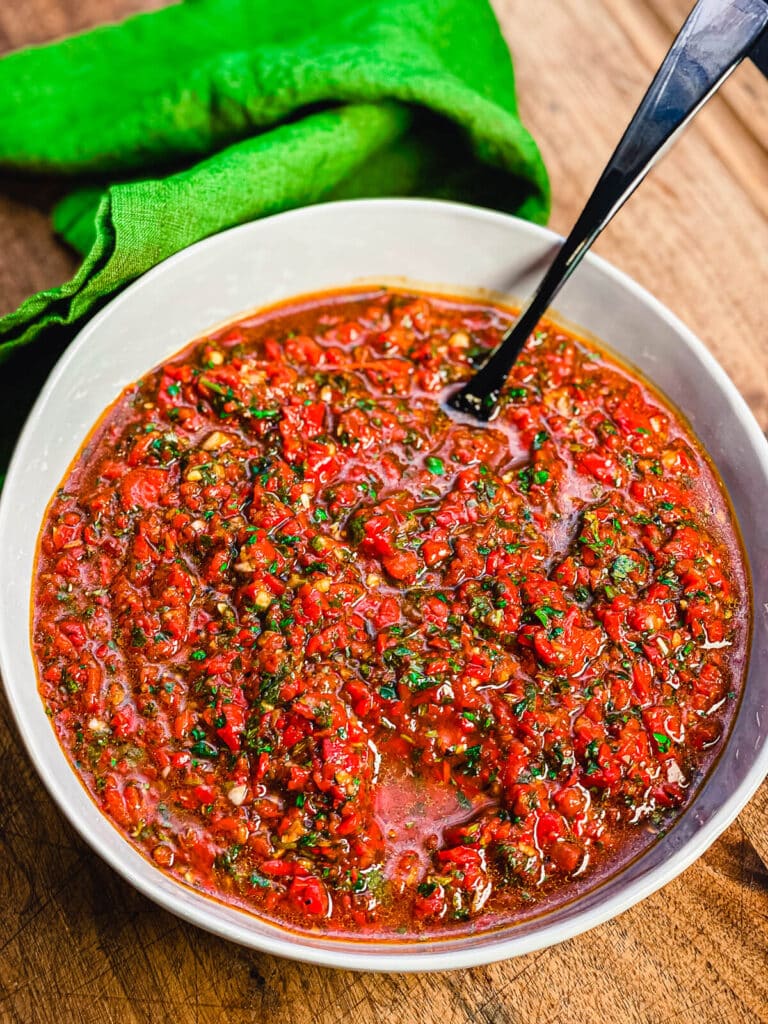
Beyond that, it has enough acidity to cut through rich dishes like beef short ribs and pork belly, but it’s gentle enough that it doesn’t overpower fish or scallops. And if you want to go deeper on the sauce side of things, my red chimichurri is a killer companion to this one. Serve them side by side and let people choose their adventure.
Try These Next For The Grill (Tap Image)
What Is Chimichurri Sauce Made Of?
Authentic chimichurri sauce from South America consists of only a few ingredients. Mostly freshly chopped parsley, combined with olive oil, red wine vinegar, garlic, oregano, red pepper flakes and salt & pepper.
I like to add a few more ingredients to my chimichurri recipe. I think they amplify the sauce; without taking away from the traditional flavors that made this so popular around the globe.
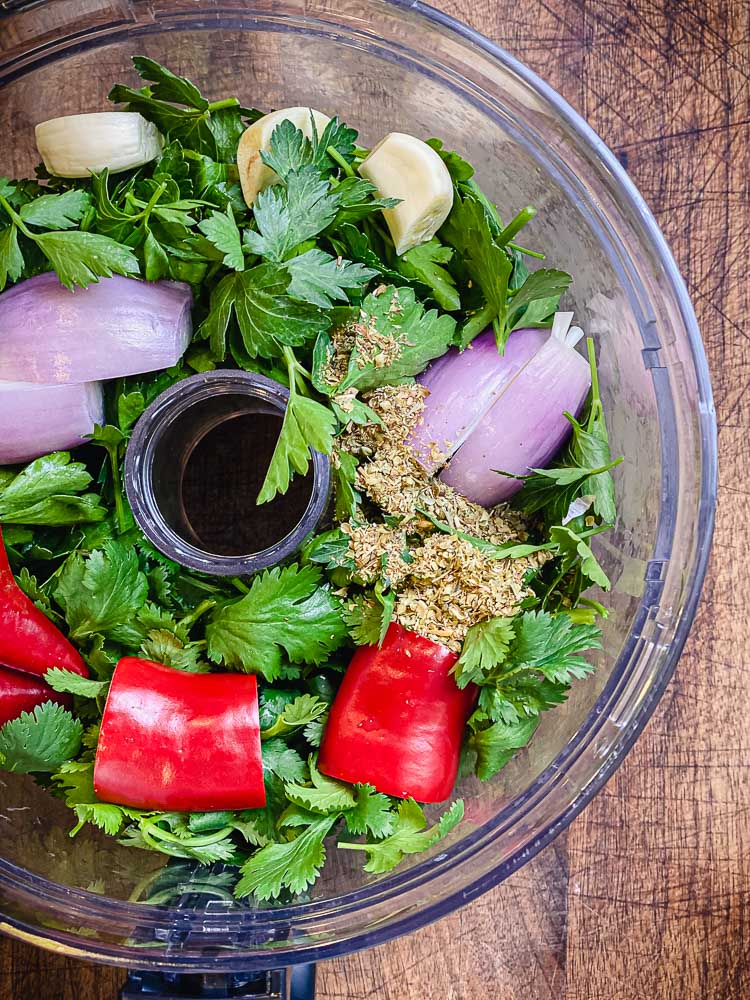
Chimichurri Ingredients
- Fresh Parsley: This is really the base of the sauce. Be sure to get the Italian flat leaf parsley, not the curly parsley that’s generally used as a garnish. There’s a big difference between them. An interesting variation on this is to substitute the parsley for beet greens.
- Cilantro: While not at all traditional, the addition of cilantro really adds a nice freshness to the sauce. Just be sure to rinse cilantro under cold water very well; it’s often very sandy from the harvest.
- Shallot: Another ingredient that isn’t “traditional” but makes a nice addition to the sauce. I almost always find that shallot and garlic go together like Kool-aid and sugar.
- Fresno Pepper: Often mistaken for a fully ripened or red jalapeño, there is a difference between the peppers. I prefer the Fresno, but the red jalapeño works as well; and I prefer either chili pepper to dried red pepper flakes that some recipes call for.
- Oregano: This is one of the rare cases where you can use the dried version of the herb with very little fall off to flavor. That said, if you grow Oregano in your garden or just have some on hand, by all means use it here.
How To Store Chimichurri Sauce
Chimichurri is best fresh, for sure. I think it hits peak flavor about 30 minutes after you make it, once everything has had a chance to meld. After about 4 hours it starts losing that bright, vibrant quality, so if you can make it the same day you’re serving it, do that.
If you need to store it, put it in a zip-top bag and press out as much air as possible before sealing. Air is what turns it from brilliant green to olive drab. It’ll keep in the fridge for up to 3 days, but don’t expect it to taste as fresh as the day you made it.
Can you freeze chimichurri? Yes. Freeze it flat in a zip-top bag or in an ice cube tray for easy portioning. Frozen chimichurri works great as a marinade or stirred into cooked dishes, though the fresh herb texture softens after thawing. Use within 3 months.
Tips For Making Chimichurri
The Prep: I like to use a food processor for this, it’s just so convenient to add the ingredients to the processor and pulse a few times, and certainly takes less time than hand dicing everything. That said, if you don’t have a food processor, you can absolutely use a knife to prepare the ingredients.
The Oil: If you’re using a food processor, DO NOT add the oil into the food processor and pulse. The result will taste fine but the color will dull and the oil turns a muddy green immediately. It gives the sauce a less than fresh appearance.
The Salt and Vinegar: I suggest starting with slightly less than I call out in this recipe and add more to taste. Remember, you can always add more, but you can’t take it back after you mix it in.
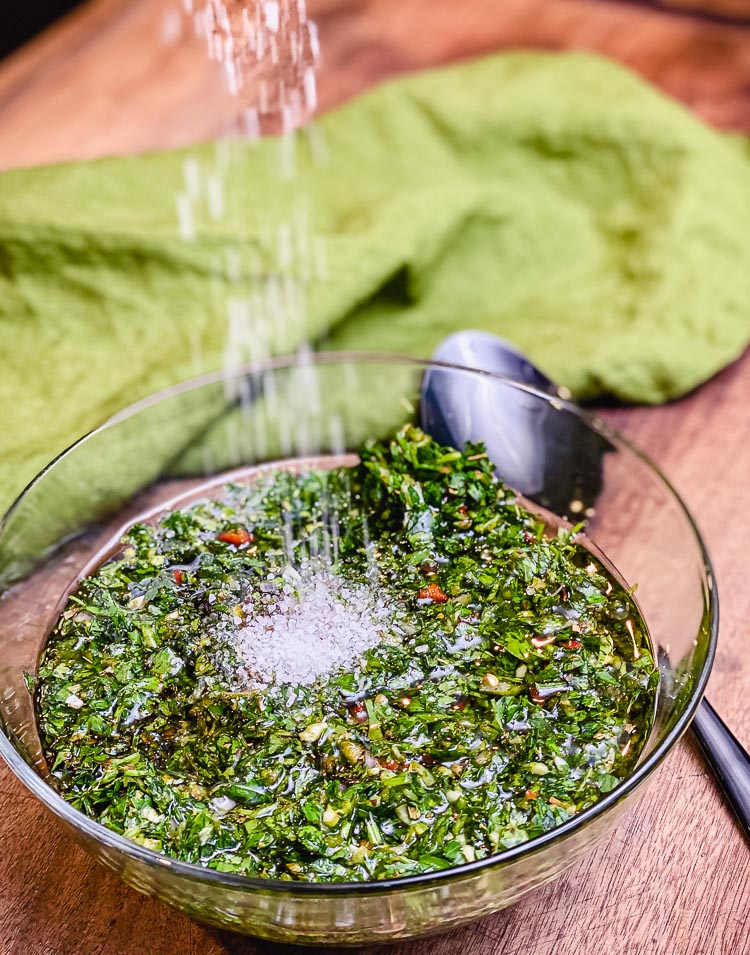
Chimichurri Sauce Recipe
Serves: 6-8 | Prep Time: 10 min
Ingredients
2 cup fresh Italian flat-leaf parsley, finely chopped
½ cup fresh cilantro, finely chopped
3 cloves garlic, finely minced
1 shallot, finely chopped
1 Fresno pepper, seeded and finely diced (or red jalapeño)
2 tsp dried oregano
3/4 cup extra-virgin olive oil
¼ cup red wine vinegar
1 ½ tsp coarse sea salt (or salt to taste)
½ tsp black pepper, fresh coarse ground
½ tsp smoked paprika
How to Make Chimichurri Sauce
Step 1: Prep your ingredients by rough chopping them. Then, place them into a food processor (minus the oil, vinegar and salt.)
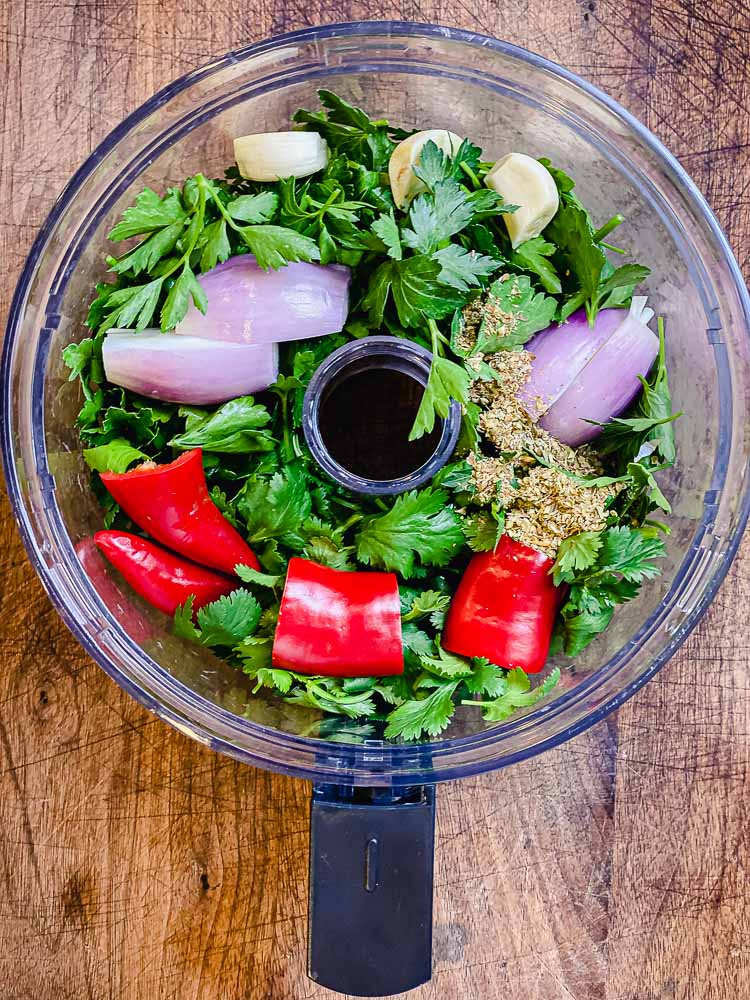
Step 2: Pulse the food processor several times, until the ingredients are finely minced.
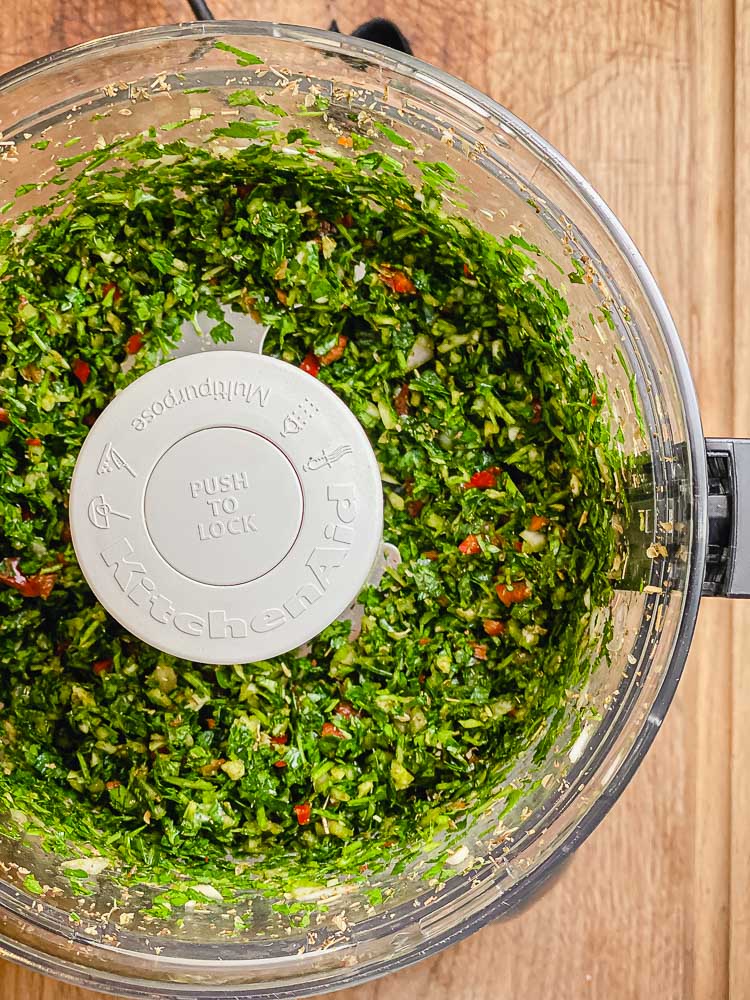
Step 3: Transfer the minced ingredients into a mixing bowl, and add in the oil, vinegar, and salt.
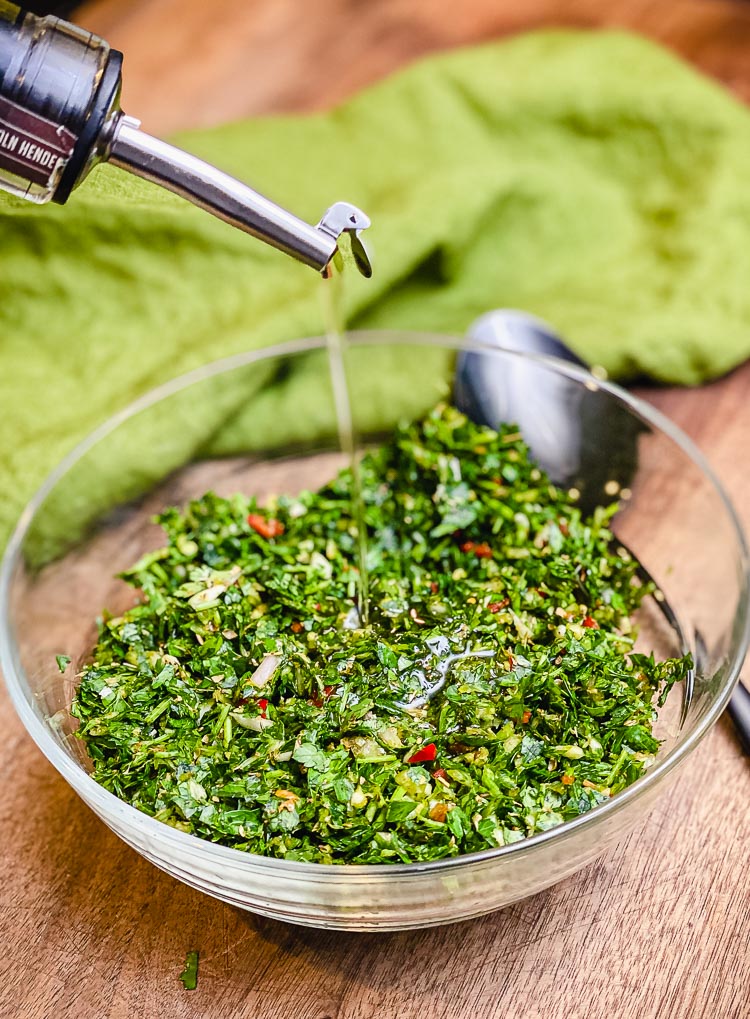
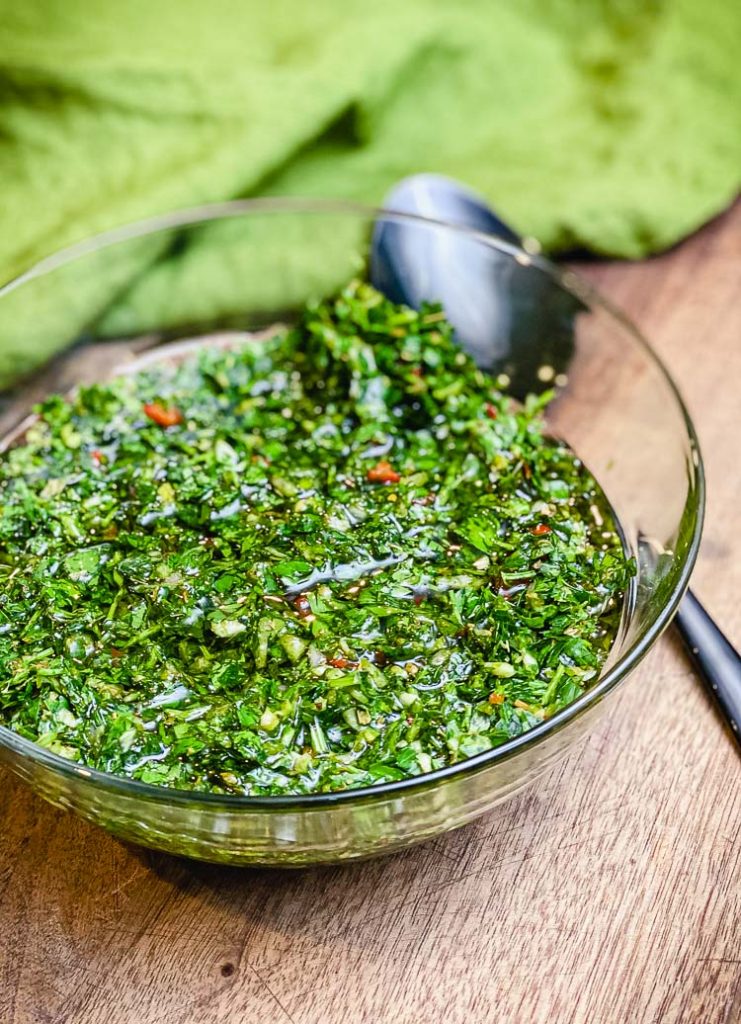
Step 4: Mix thoroughly, and taste. Adjust the salt and vinegar as needed.
Chimichurri Sauce FAQ
Both are herb-based sauces, but they’re pretty different. Pesto is Italian, made with basil, pine nuts, parmesan, and olive oil. It’s rich and creamy. Chimichurri is Argentine, made with parsley, garlic, vinegar, and olive oil. It’s bright, acidic, and herb-forward. Pesto is heavier; chimichurri cuts through rich grilled meats instead of adding to them.
Absolutely. A sharp knife and a little patience gets you there. The hand-chopped version actually has a slightly more rustic texture that some people prefer. Just get everything as finely minced as you can and the flavor will be identical.
Air is the culprit. Exposure to oxygen oxidizes the fresh parsley and turns it from bright green to olive drab. To slow this down, press plastic wrap directly against the surface of the sauce before refrigerating, or use the zip-top bag method with all the air pressed out.
They’re similar in concept but not the same. Italian salsa verde, originating from the Piedmont region, is the more direct comparison to chimichurri. Both are herb-based and parsley-forward, but Italian salsa verde leans brinier with capers and anchovies in the mix. Chimichurri skips those completely and gets its punch from red wine vinegar, garlic, and fresh herbs. Same general idea, pretty different flavor profiles. Mexican salsa verde, is a totally different sauce built on tomatillos and green chilies, not really in the same family at all.
Up to three days in an airtight container with the air pressed out. It won’t be as vibrant as fresh, but it’ll still be good. Beyond three days the herbs start to break down noticeably.
Extra-virgin olive oil, full stop. This is a raw sauce so the oil flavor comes through directly, it’s not the place to use a neutral oil or anything low quality. Use the best EVOO you have.
Yes. Freeze it flat in a zip-top bag or in an ice cube tray for easy portioning. Frozen chimichurri works great as a marinade or stirred into cooked dishes, though the fresh herb texture softens after thawing. Use within 3 months.
Ingredients
- 3 cloves garlic finely minced
- 1 shallot finely minced
- 1 Fresno pepper seeded and finely chopped
- 2 tsp dried oregano
- ½ cup fresh cilantro minced
- 2 cup Italian flat-leaf parsley finely minced
- 3/4 cup extra-virgin olive oil
- 1/4 cup red wine vinegar
- 1½ tsp coarse sea salt
- ½ tsp black pepper fresh,coarse ground
- ½ tsp smoked paprika
Instructions
- Prep your ingredients by rough chopping.
- Add all ingredients except oil, vinegar, and salt to food processor. Pulse till finely minced.
- Transfer ingredients to a bowl, and add the oil, vinegar, and salt.
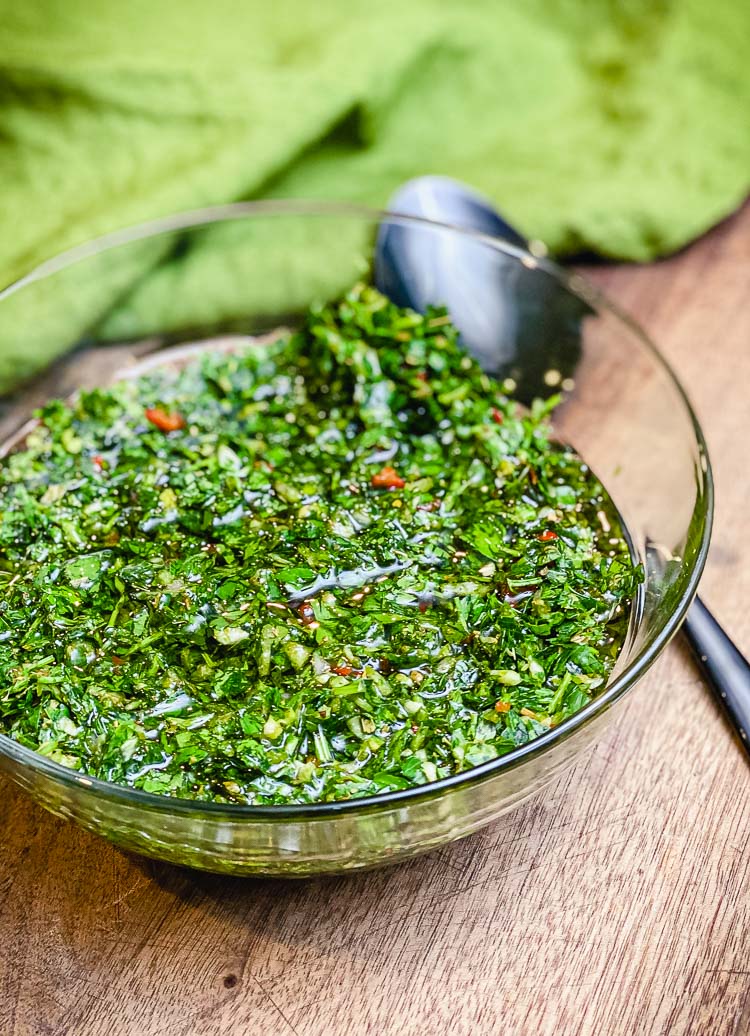
- Mix Thoroughly, and taste. Adjust salt and vinegar as needed.
Absolutely outstanding! Drizzled over a grilled London broil on a bed of polenta and pepper jack cheese. My family was blown away and very pleased. The chimichurri is such wonderful explosion of flavor. I did substitute hickory smoked sea salt, because its what I had. Thanks Matt, that was delicious, and I will definitely make this again.
Thanks Josh – so glad you and your family loved it!
-M
I used this recipe sans fresno chiles, and my Argentinian friend now always asks for it at the barbecues. Good stuff!
Thanks for sharing that Lionel!
-M