

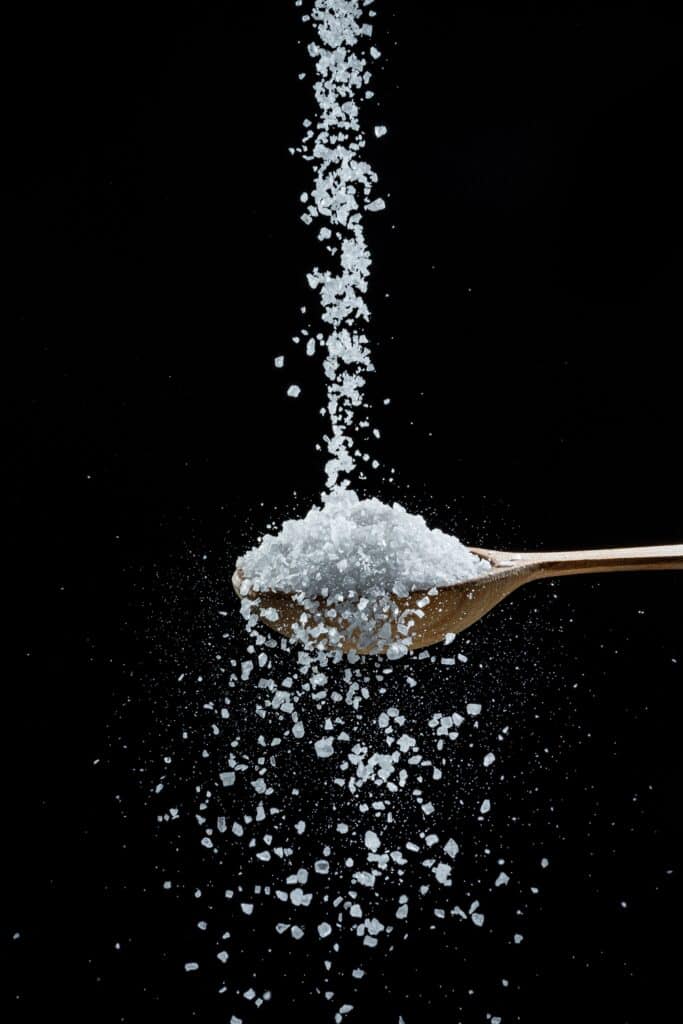
I grew up thinking salt was salt. It came in mom’s salt shaker and poured out of an old rusty spout; and nobody questioned it. Somewhere along the way, kosher salt showed up and it changed the way I season food. Diamond Crystal and Morton’s kosher salt may look similar, but they behave very differently in the kitchen, and knowing why explains a lot about seasoning.
This isn’t about choosing sides or declaring a winner. It’s about understanding the tools you’re using and why your results may differ from someone else’s. Once you understand how different kosher salts behave, seasoning becomes pretty intuitive.
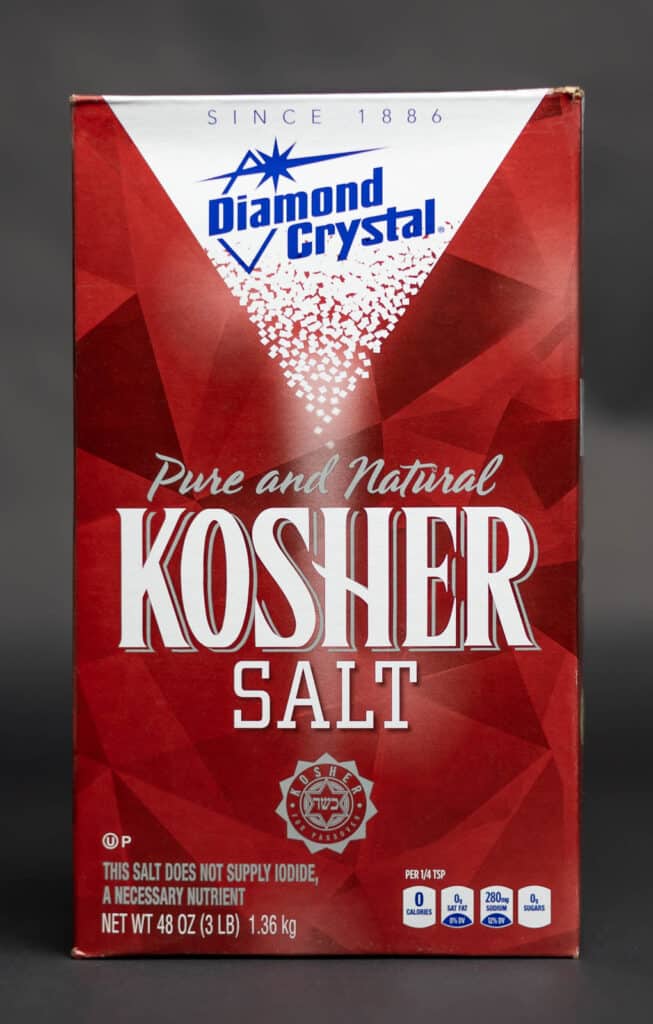
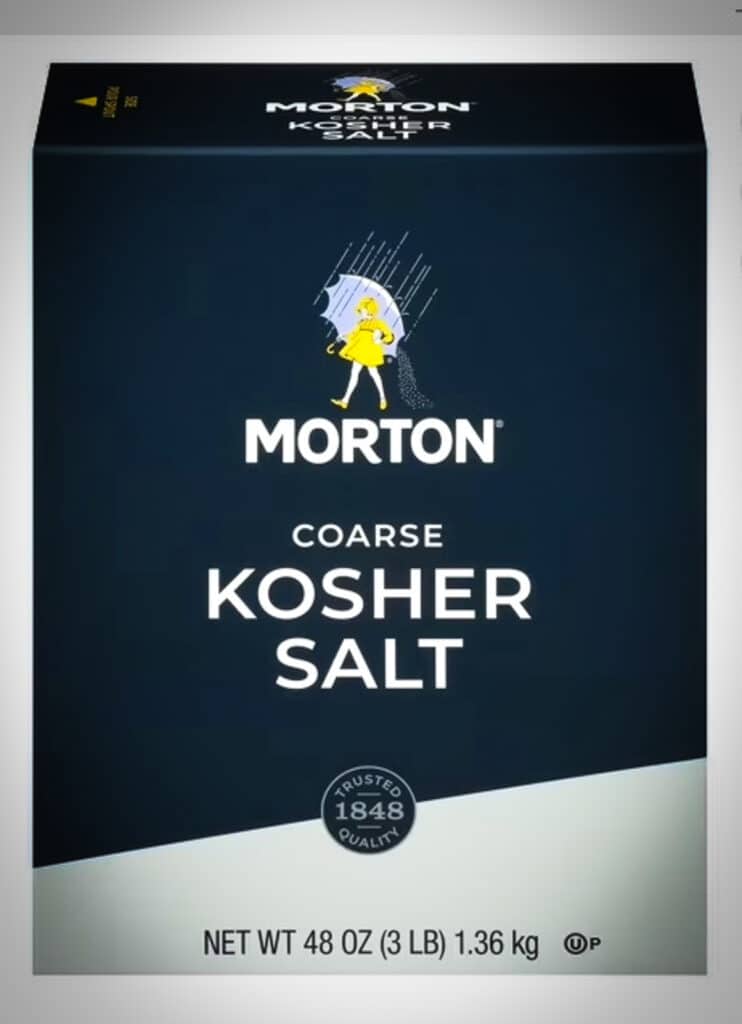
What’s the Difference Between Diamond Crystal and Morton’s Kosher Salt?
At a glance, DC and Morton’s kosher salt look pretty similar. They’re both coarse salts designed for cooking, not finishing. The real difference comes down to how the salt crystals are formed, and how densely they pack together.
Diamond Crystal has larger, lighter flakes that take up more space. Because those flakes are less dense, a tablespoon of DC contains less salt by weight.
Morton’s has a more compact crystal structure. The flakes are denser and pack together more tightly, which means the same tablespoon delivers more salt.
That difference in crystal size and density is why these two salts are not interchangeable in recipes without quantity adjustments.
Why Is Diamond Crystal Less Salty Than Morton’s?
This is where things usually click for people. It isn’t that Diamond Crystal has less sodium, or that Morton’s is somehow stronger. The difference comes down to volume versus weight.
Diamond Crystal’s flakes are larger and lighter, so they take up more space in a measuring spoon. That means when you grab a tablespoon, you’re physically adding less salt by weight. Morton’s flakes are denser and pack together more tightly, so that same tablespoon delivers more salt.
This is also why Diamond Crystal is more forgiving. If you overshoot a little while seasoning by hand, you’re less likely to blow past the point of no return. For grilling, smoking, and live fire cooking where seasoning happens fast and often by feel, that margin of error matters.
Why I Use Diamond Crystal in My Recipes
First, I’m not sponsored by Diamond Crystal, though if those folks read this blog and want to send me some, I won’t say no!
In any case, for me a big part of it comes down to coverage. Diamond Crystal’s larger, lighter flakes spread out more evenly, which makes it easier to season food consistently from edge to edge.
When I season a steak with Diamond Crystal, I can cover the entire surface and know that every bite will be properly salted. The flakes disperse well, they stick to the meat, and they melt in evenly as the steak cooks. You get balanced seasoning without any harsh salty pockets.
If I tried to season that same steak the same way with Morton’s, it would be too much. Because the salt is denser, that full, even coverage would push the seasoning past where it should be. The result isn’t better flavor, just more salt than the meat needs.
That consistency is why I use Diamond Crystal in my recipes. It is not about one brand being better than the other. It is about using a salt that gives you control, even coverage, and repeatable results.
Can You Substitute Morton’s for Diamond Crystal?
Yes, you can absolutely substitute one for the other. You just have to adjust the amount called for in the recipe.
Because Morton’s kosher salt is denser, you need less of it to achieve the same level of seasoning as Diamond Crystal. As a simple rule of thumb, use about half as much Morton’s kosher salt when a recipe calls for Diamond Crystal. This isn’t exact, and will change depending on how much salt is used, but it’s a good starting point.
If you season by hand instead of measuring, just be aware that full visual coverage with Morton’s will deliver more salt than the same coverage with Diamond Crystal. Back off slightly and taste as you go.
A Quick Note on Salt in My Recipes
If you’re using Morton’s kosher salt or another brand with denser crystals, reducing the amount slightly will keep your results consistent with what’s in my recipes.
Salt should enhance food, not dominate it. A quick awareness of the brand you’re using goes a long way toward getting it right every time.
Frequently Asked Questions About Kosher Salt
Diamond Crystal is not lower in sodium, but its flakes are lighter and less dense. That means a tablespoon of Diamond Crystal contains less salt by weight than the same tablespoon of Morton’s, which is why it tastes less salty when measured by volume.
Yes, but you should use less. When substituting Morton’s kosher salt for Diamond Crystal, reduce the amount slightly and season to taste to avoid oversalting.
Many cooks prefer Diamond Crystal because the larger flakes are easier to pinch, distribute evenly, and control while seasoning. That extra control makes it more forgiving, especially when seasoning meat by hand.
Yes, it can. Because different kosher salts have different crystal sizes and densities, using a different brand without adjusting the amount can change the final seasoning of a dish.